




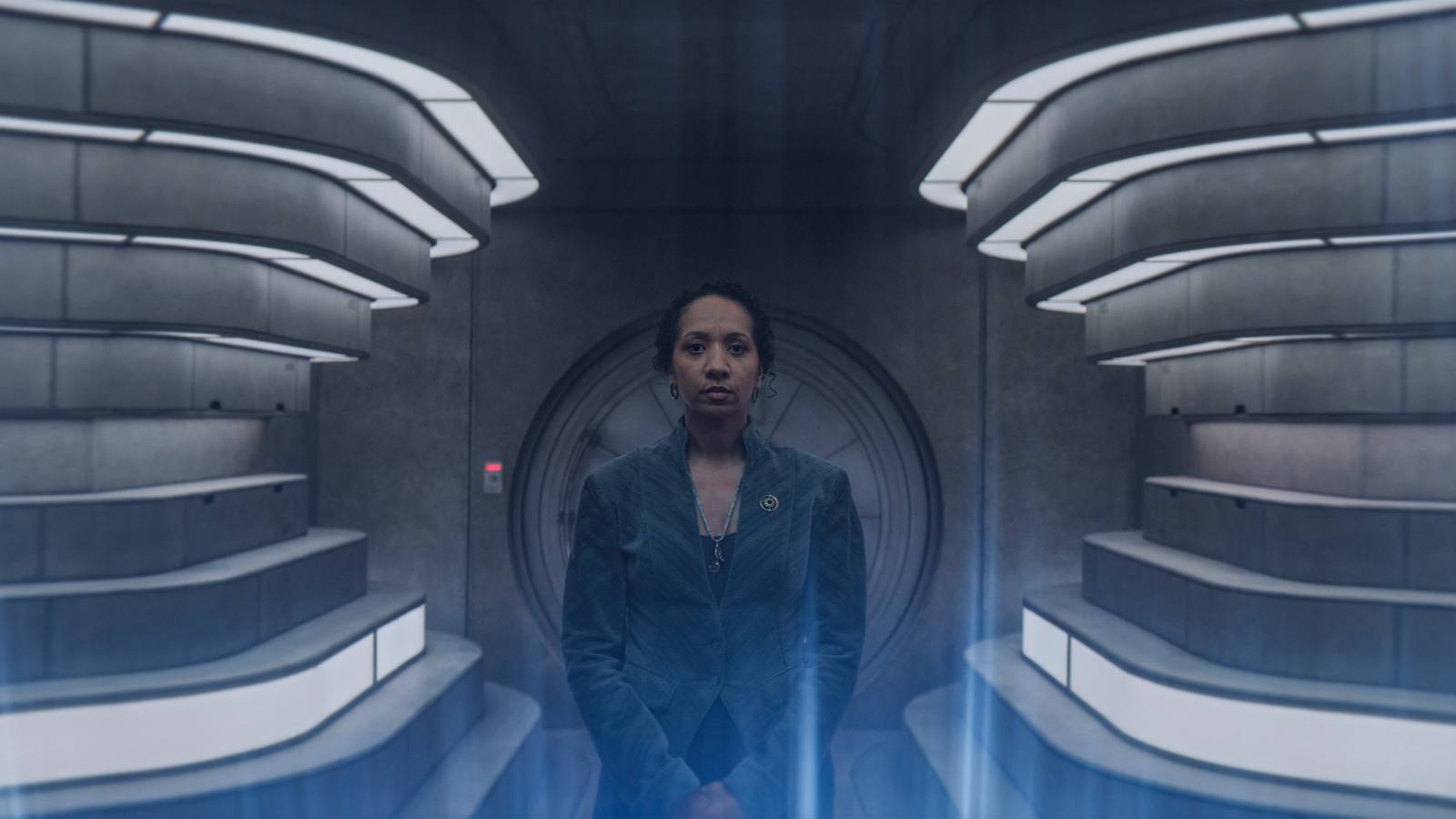
Apple TV has become known as a home for great science fiction television, but few shows sit eerily close to reality quite like Silo. Graham Yost’s claustrophobic post-apocalyptic thriller has provided a terrifying blueprint of what to expect in the potential event of a catastrophe — spoiler alert: it’s not great! — and Silo season 3, which debuts July 3, only heightens that realism. After two seasons spent in a mysterious, sprawling underground bunker system, Yost pans the camera away from the dark, industrial interiors of its namesake, teasing out the preceding events laid bare in Hugh Howey’s Shift, the second book in the Silo trilogy.
Rather than dedicate an entire season to the book, Yost and the season’s executive producer and writer, Fred Golan, weave in elements and flashbacks from the prequel story to counterbalance the unease in the silo. What you get is Silo’s brightest and least claustrophobic season yet, but one that doesn’t minimize the suffocating tension that makes the show so addictive to watch. The puzzle box storytelling is split this time between moments leading to the creation of the silos and the still ongoing events surrounding Juliette Nichols (Rebecca Ferguson) following her safe return from Silo 17.
Leading the prequel plotline is Daniel Keene (Ashley Zukerman), a United States congressman deeply disillusioned by the bureaucracy of his job, and Helen Drew (Jessica Henwick), a Washington, D.C. journalist in the throes of a story so big it could change the future itself. At first, I was dismayed by these sequences, as I felt they distracted from the overall mystery of the season. But as the story progressed, I started to welcome the prequel moments, almost like literal breaths of fresh air outside the silo’s cramped interiors. The show’s overarching mystery is still present in those moments; it’s just hiding in plain view.
In an interview with TVLine, Yost explains it best: “’Let’s make every effort to make the world that we see outside beautiful, so that we’re reminded of what’s been lost.'” The shift in Silo‘s more tragic tone this season is spelled out even in how the team approached the sets, where the outside world is given this thematic weight due to its inevitable fate.
That’s not to say the silo storyline was softened — far from it. Nichols’ memory loss, coupled with the untimely passing of Bernard Holland (Tim Robbins), creates a whirlwind of confusion and paranoia as the character (and the audience) tries to piece together some semblance of what’s going on. Thrust seemingly unceremoniously into the role of mayor, Nichols finds herself trapped in a strange confinement that sees her questioning everyone around her, even the people she should know best.
As that tension builds toward a crescendo in its finale, buttressed by the prequel scenes, Silo season 3 offers some truly powerful character moments from the most unlikely faces and duos. With Bernard out of the picture, Robert (Common) and Camille Sims (Alexandria Riley) get their moment to shine, but their dynamic is much more complex. Common also gets several heartwarming moments with his son (Alex Gomez) and a chance at some interesting nuance that challenges long-held assumptions about the character. Without spoiling why, the series peels back layers of a character who has long been defined by loyalty and duty, giving Common some of his strongest material yet beyond simply being the silo’s steadfast enforcer.


If there’s a weakness for Silo season 3, it’s that the increased scope occasionally comes at the expense of momentum. Some episodes spend more time laying narrative foundations, both inside and outside the silo, than delivering payoffs. Viewers accustomed to the relentless pace of Season 2 may find themselves wishing certain storylines moved a little faster, but patience is truly rewarded in the end. The slower build-up slightly blunts the urgency that made previous seasons so great, but at the end of every episode, you’ll still be dying for the next.
Perhaps most impressively, Silo season 3 never loses sight of the themes that defined it from the very beginning. This has always been a story about systems built on secrecy, about ordinary people forced to carry extraordinary burdens, and about the consequences of believing that survival justifies every compromise. Rather than replacing them, season 3 expands those ideas by giving the series a sense of historical weight that enriches everything that came before.
All the while, the uneasiness in Silo is as nail-biting as ever, with a newfound focus now given to engineers Shirley Wilkins (Remmie Milner) and Knox (Shane McRae) as they struggle to reconnect with Nichols and keep their dream of freedom intact. The anxiety this season is hard-fought across the silo on many different fronts, with complications springing up seemingly at every turn. Shirley, Knox, and the rest of Nichols’s group of friends are confronted with a slew of obstacles in their attempts to unravel the seemingly unending mysteries of the silos.
If Seasons 1 and 2 asked whether the truth was worth uncovering, season 3 asks what happens once there’s no turning back from that truth — and if you can live with yourself in the aftermath. It’s a haunting premise that sticks with you long after the credits roll on its season finale.
By trading some of its signature claustrophobia for a broader, more tragic perspective, Silo proves it has far more to offer than an intriguing central mystery. It’s that shift that makes this the show’s most ambitious season yet.
Silo season 3 premieres July 3 on Apple TV.