






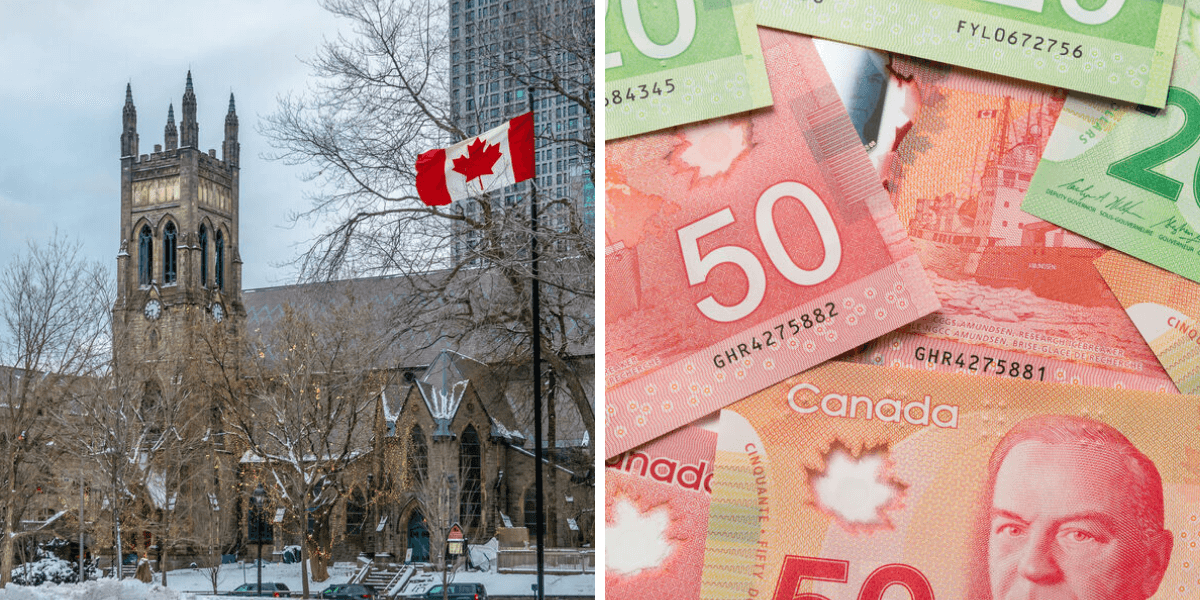
Everything costs more than it did a few years ago, and for workers at the lower end of the pay scale, every dollar counts. Some of them are getting a bit more of those dollars next month.
The federal government announced Tuesday that Canada’s federal minimum wage is climbing to $18.15 an hour as of April 1, 2026. The increase is tied to inflation (the Consumer Price Index rose 2.1% in 2025) and is part of an annual adjustment baked into how the federal rate works. Each year on April 1, the rate is recalculated based on the previous year’s annual average CPI, then rounded up to the nearest $0.05.
Since the standalone federal minimum wage was first introduced in 2021, the rate has risen a cumulative 21%. Employment and Social Development Canada says the measure has “supported thousands of workers in minimum-wage jobs across the federally regulated private sector.”
The catch is that the federal minimum wage doesn’t apply to everyone. It covers workers in federally regulated industries specifically: banks, airlines, airports, telecommunications companies, radio and television broadcasters, postal and courier services, and most federal Crown corporations. If your employer falls into one of those categories, $18.15 is your new floor starting next week.
For everyone else, minimum wage is set at the provincial level. Quebec’s current rate sits at $16.10 an hour, with a 50-cent increase coming in May. Other provinces have their own timelines — several are bumping their rates in the coming months, with more expected later in the year.
There’s also an important rule governing how the two rates interact. If a province’s minimum wage exceeds the federal rate, federally regulated employers operating in that province are legally required to pay the higher of the two. So the federal floor functions as exactly that.
The government framed the increase as part of a broader push on affordability. In Tuesday’s release, Employment and Social Development Canada noted the wage bump “complements other new measures aimed at bringing down the cost of groceries and other essentials,” pointing to the Canada Groceries and Essentials Benefit and the Food Security Fund as part of the same effort.

![25th Mar: Homicide (2026), 3 Seasons [TV-MA] – New Episodes (6.65/10)](https://occ-0-1711-1007.1.nflxso.net/dnm/api/v6/Qs00mKCpRvrkl3HZAN5KwEL1kpE/AAAABSnQyF9MdC6IYfGkRRolb7JgSdWIDvyike0rJ6XV0pQUjUWK_AanQqdblTsdkTrEUzYyYNfgqoVKgLFF-xWBF8B9cOKfKBOVb6aB0NUyNPYU3uh6Q-vDIMZA8i0Y_dfe2PI9tohl12U7oWMlgukgsJYh9sd8kUpy5Z5moaws.jpg?r=2f8 "25th Mar: Homicide (2026), 3 Seasons [TV-MA] – New Episodes (6.65/10)")