




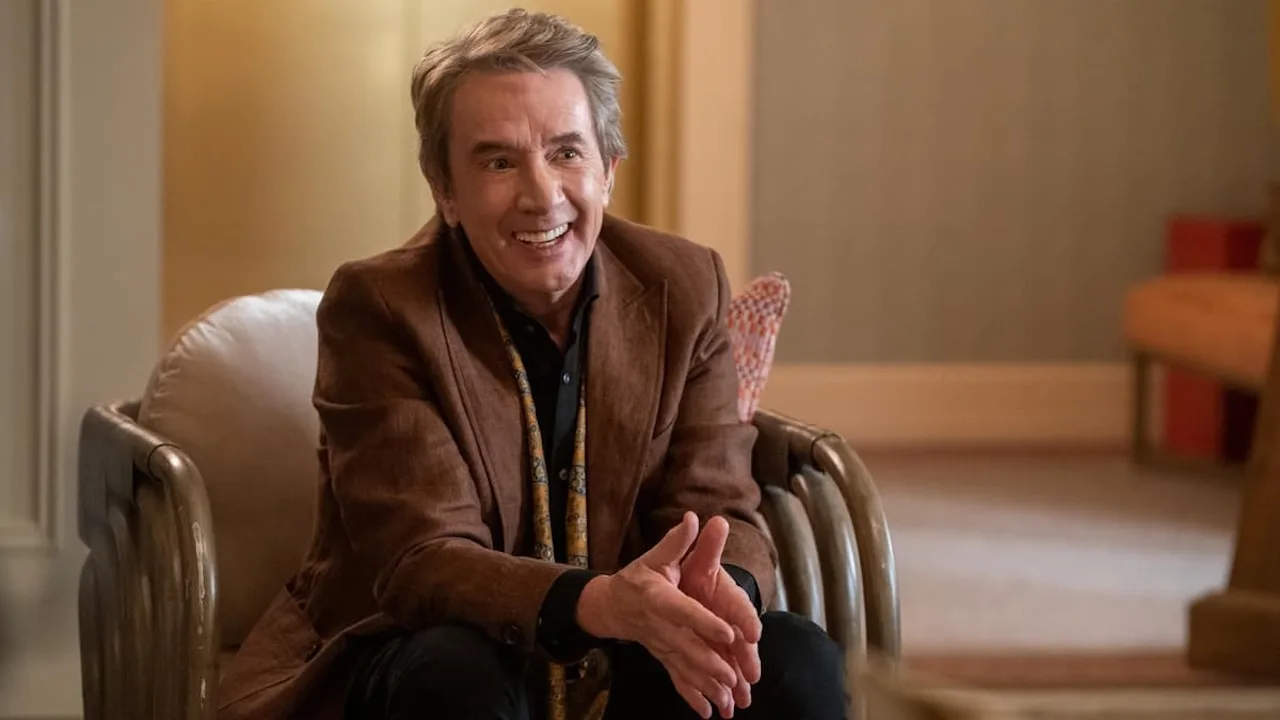
For generations of Canadians — especially in Toronto — Martin Short has embodied a uniquely Canadian style of comedy: quick-witted, self-deprecating, warm and just a little chaotic. And we love him for it.
Long before the fame of hit TV show Only Murders in the Building, or even Broadway acclaim, Short was a Hamilton kid imagining himself as a television star while growing up in Ontario. Later, he would make his way into Toronto’s theatre and improv scene, eventually helping create one of the most influential comedy movements Canada has ever produced alongside legends like the late Catherine O’Hara, Eugene Levy, John Candy, Andrea Martin and others through SCTV.
Now, Short is reflecting on that remarkable life and career in the new Netflix documentary Marty, Life Is Short, directed by Lawrence Kasdan.
And it was during a lengthy interview on CBS Sunday Morning promoting the documentary that Short also spoke candidly about grief, mental health, family including the devastating loss of his daughter, Katherine Short, earlier this year.
The emotional comments were part of a much broader conversation about his life, his career, and his philosophy that has helped him make his way through some extraordinary highs and painful losses.
“You can choose joy,” Short said near the end of the interview. “You can find the light even in the darkest moments.”
The documentary focuses on Short’s career and personal journey, using decades of home movies and archival footage — much of it filmed by Short himself and by his friend and not so bad filmmaker Steven Spielberg. He said that he had long resisted the idea of making such a personal documentary.
“I’ve written a book, and I’m Canadian,” Short joked. “We’re a little more conservative about revealing everything in our lives.”
But Kasdan — the acclaimed filmmaker behind The Big Chill and Grand Canyon — eventually convinced him.
The result is a film deeply rooted not just in Hollywood history, but also in Ontario and Toronto’s comedy scene.
At one point in the interview, Short reminisced about growing up in Hamilton in the 1960s and ’70s, imagining his possible television careers from his attic bedroom.
“It was fantasy that I thrived in,” he said. “When I was 15, I had an imaginary contract with NBC to do an hour show every other week, which left me time for my imaginary film career.”
He even created fake TV Guide listings for his imaginary variety show.
Later Short studied social work at McMaster University before being encouraged by a young struggling Toronto actor named Eugene Levy to seriously pursue performing.
“Eugene Levy, who was now a struggling actor in Toronto, said, ‘You should really give this a shot,’” Short recalled.
That advice changed everything, and he moved to the big city to give it a shot.
Short soon landed a role in a now-legendary Toronto production of Godspell, where he worked alongside a generation of future comedy legends, including Gilda Radner, Martin, Victor Garber, Levy and future wife Nancy Dolman. He also shared stories about the old Toronto theatre and entertainment scene, including nights at the Pilot Tavern in Yorkville and performer-filled parties he and Levy hosted while living together on Avenue Road.
“We used to do these parties in Toronto,” Short said. “Paul Shaffer would play piano, Gilda would sing, and everyone would perform.”
The documentary also highlights Short’s decades-long friendship with Catherine O’Hara, whom he described as “like a sister.”
“There was no one more brilliant, there was no one sweeter, and there was no one funnier,” he said during the interview.
The interview got quite emotional when the conversation turned to the death of his daughter Katherine, who died earlier this year after a long struggle with mental illness, which Short has never spoken about until this interview.
“You know, it’s been a nightmare for the family,” Short said. “But the understanding that mental health and cancer, like my wife’s, are both diseases, and sometimes with diseases, they are terminal.”
He added that Katherine “fought for a long time with extreme mental health, borderline personality disorder, other things, and did the best she could until she couldn’t.”
Short said he hopes speaking out on the issue can help reduce stigma around mental illness and suicide.
“Not hiding from the word suicide, but accepting that this can be the last stage of an illness,” he explained.
The actor also spoke about the recent accumulation of loss in his life, saying that within just four months he lost multiple close friends and family members in addition to his daughter.
“I mean, it’s been in four months staggering, staggering,” he said.
Still, throughout the interview, Short repeatedly returned to themes of resilience, humour and gratitude — ideas that longtime fans of his work will instantly recognize.
“I think I do have the happy gene,” he said. “My orientation is to be happy.”
If we take anything from the interview, from the life of this Canadian icon, it is simply that: Be happy, choose to smile.