




From The Senator and Scaramouche to Barberian’s Steak House, Toronto has some decades-old restaurants that have stood the test of time. But, with a dining scene as revolving as this one, others that may have been short-lived have been just as influential.
Such is the case for Acadia, a quaint restaurant at 50 Clinton, north of College Street, that served Southern fare from 2011 to 2013. With a minimal though intentional menu that kickstarted the careers for some of today’s most recognizable chefs, Acadia continues to be remembered despite only being open for two short years.
The first: Matt Blondin. Before hypnotizing Toronto and beyond with a neon pink pizza empire beginning in 2018, Blondin was in Acadia’s kitchen at just 28 years old. The emerging chef garnered rave reviews for the new restaurant, though left just ten months later to pursue opportunities with Toronto’s expansion of New York’s Momofuku.
In stepped Patrick Kriss. Though today Kriss’ reputation proceeds him, little was known about him when he left his role as chef de cuisine at Splendido to join Acadia. Kriss says the opportunity arose at the right time — and it didn’t hurt that Acadia already had a lot of buzz.
“It was more of a gut feeling than anything,” he says now about his decision to join Acadia. “It felt like the right move for me professionally.”

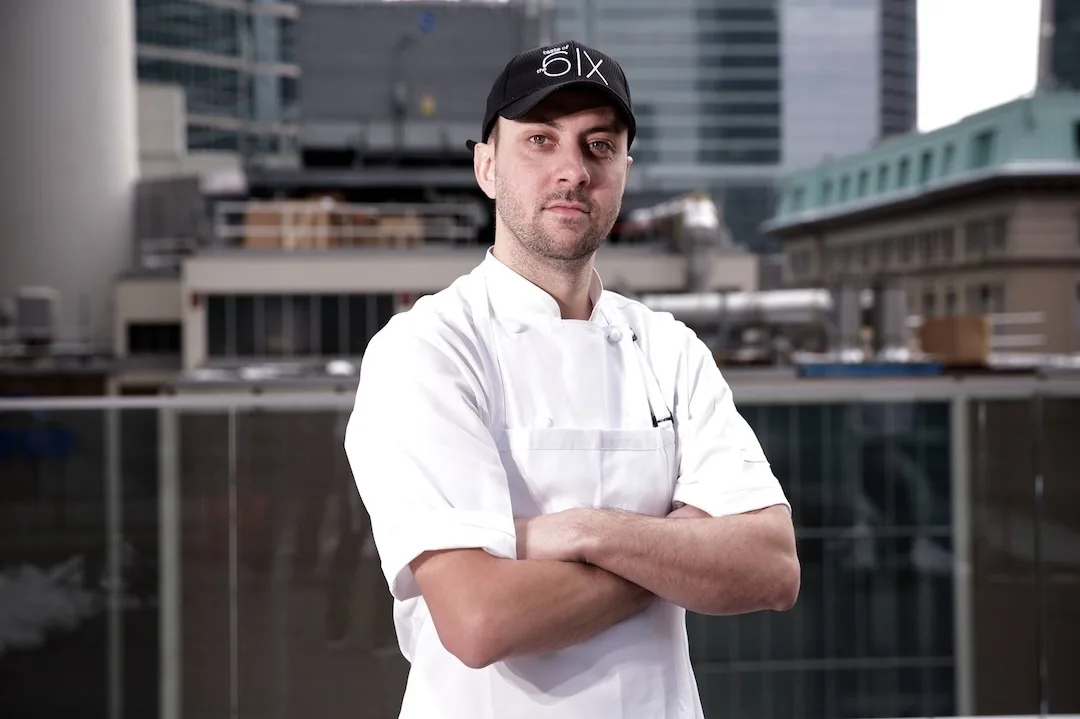
Kriss fondly recalls the minimal small menu was rooted in Southern American and Louisiana-inspired flavours “approached in a refined way.”
“One of my favourite dishes was a smoked sturgeon dish with sweet pickles that was almost like our take on a Po’ boy,” he says. “We also had a shrimp and grits dish with cheddar that was popular. Matt Blondin had originally created it, and I later evolved it a bit by changing the shrimp preparation and updating certain elements of the dish.”
“The restaurant had a lot of media attention and was consistently recognized on various lists, so it was my first experience truly carrying those expectations myself,” he says. “It taught me how to shoulder responsibility and navigate that level of visibility.”


Shortly after his departure from Acadia, he began developing the concept of Alo, which opened in 2015 and has become a Michelin-starred staple in the city. Over the past decade, Kriss has continued to dominate Toronto’s dining scene with a slew of concepts including Aloette and Alobar.
“Acadia was a very formative experience for me,” says Kriss. “I worked incredibly hard there, and it really introduced me to the city in a meaningful way. It was also where I started building relationships with many long-standing regulars and guests. In fact, we still have guests dining at our restaurants today who used to dine at Acadia.”
Following Kriss’ departure, Acadia was taken over by chef Dustin Gallagher, whose resume included executive chef at Grace and a runner-up on Top Chef Canada. His stint at the restaurant was similarly short-lived, and years later, he went on to serve as executive chef at 416 Snack Bar and Short Turn and launched Noble House in 2020.

With Gallagher out of the kitchen, by late 2013, Acadia’s owners Scott and Lindsey Selland transformed the venue into Red Sauce, a casual Italian-American restaurant. The refined concept didn’t pan out and Red Sauce subsequently shut down just months later.
Despite Acadia’s short-lived tenure, if the vibrant success of chefs Blondin, Kriss and Gallagher are any indication, Acadia remains a significant part of Toronto’s culinary history.
“I think Acadia was an ambitious restaurant for both its size and the neighbourhood at the time,” says Kriss. “It pushed boundaries and helped shape conversations around dining in Toronto during that period, which is part of why people still remember it today.