![30th Jul: Wild Sing (2026), 1hr 49m [TV-14] (6/10)](https://occ-0-533-1007.1.nflxso.net/dnm/api/v6/0Qzqdxw-HG1AiOKLWWPsFOUDA2E/AAAABWYAGbRbcA6GGQHA6l71Ra5aG2IULP-VNYdjThYlLShZkVEe8FOvXYCVhcWXx_cXBFsEjXIySKX9HPHv0dUQb1gYA9ZSjlnLlpvXwGZSD3eTxJH5dcKVUM7alfQwwz7eKYGbsG5DNpowkp50VOwD8FIy9xYrvqSAfEaXhKgo9Vlblg.jpg?r=008 "30th Jul: Wild Sing (2026), 1hr 49m [TV-14] (6/10)")




‘We say it’s better to take one eye out than to risk your reputation,’ pal Eri joked as we drove through dense traffic to Tirana. We’d been discussing Albania’s reputation for mafia-style crime. As a solo female traveller, I was slightly worried about what I was getting myself into. Eri, who owns Inside Balkan, a company that organises hidden-gem tours of Albania, was showing me the ropes before I started my road trip the following day. ‘It’s safe here. You’ll feel very comfortable. You’ll see,’ he reassured me.
RECOMMENDED: The best places to visit in Albania in 2026
I’ve always been fascinated by Albania. This tiny country – just slightly larger than Wales – was cut off from the world for 40 years under the paranoid rule of tyrant Enver Hoxha. It’s been enjoying an influx of tourism in recent years, but even today, it’s often overlooked for its more well-established touristy neighbours, Greece and Montenegro.
There is a reasonably efficient public transport system, especially for longer routes, but I wanted to explore some of the country’s lesser-known spots, so I decided to drive. After a night at Zheko Imperial, a historic hotel in Tirana’s Blloku district where party elites once lived, I went to pick up my hire car.
Tirana to Durrës: City to seaside
Before leaving the capital, I stopped off at Bunk’Art 1, a booming Cold War bunker crammed with artefacts revealing the horror of daily life under Hoxha, when Albania was known as ‘Europe’s North Korea’.
Today, some 30 years after the collapse of Hoxha’s regime, Albania has 2.7 million inhabitants and more than a third of them in Tirana. Traffic was dense as I headed north on the two-lane SH2. Luckily, it had thinned by the time I reached Durrës, a seaside city with a sweeping sandy beach and seafront promenade that was like a miniature version of Spain’s Costa del Sol, only without the pubs and crowds.
I was intrigued by the statues of John Lennon, Bob Dylan and other pop icons lining the seafront. ‘Popular music was banned under Hoxha, so these rockers symbolise freedom,’ waiter Arben at Idua Restaurant – Gatime Tradicionale told me as I wolfed down a brimming plateful of their garlicky slow-cooked lamb stew, tasqebap.
Tale and Laguna e Patokut: Repurposed bunkers and silky sand beaches
Further north, the town of Tale was my next stop. With its marshes, sand dunes and sweeping landscapes, this lesser-visited region is peppered with thousands of Cold War-era bunkers that were built during Hoxha’s massive fortification program in the 1970s and ’80s. Most of these tortoise-like bunkers were abandoned when the regime ended in the early 1990s, but some near the seafront have been repurposed as hamburger joints and quirky cafes.


I spent several nights at Mrizi i Zanave, a bujtina and farm-to-table restaurant in Lezhë owned by the Prenga brothers, who grow everything themselves – even the rice to make their scrumptious stuffed pepper dish, speca me oriz. This lovely region with its silky sand beaches and traditional villages is also home to the Laguna e Patokut coastal lagoon, where restaurants on stilts serve fresh seafood. At 1,000 lek for plates piled high with fresh shrimps, fried mullet, mussels or crab meat, it was great value too.
Gjirokastër: Cobbed streets and underground tunnels
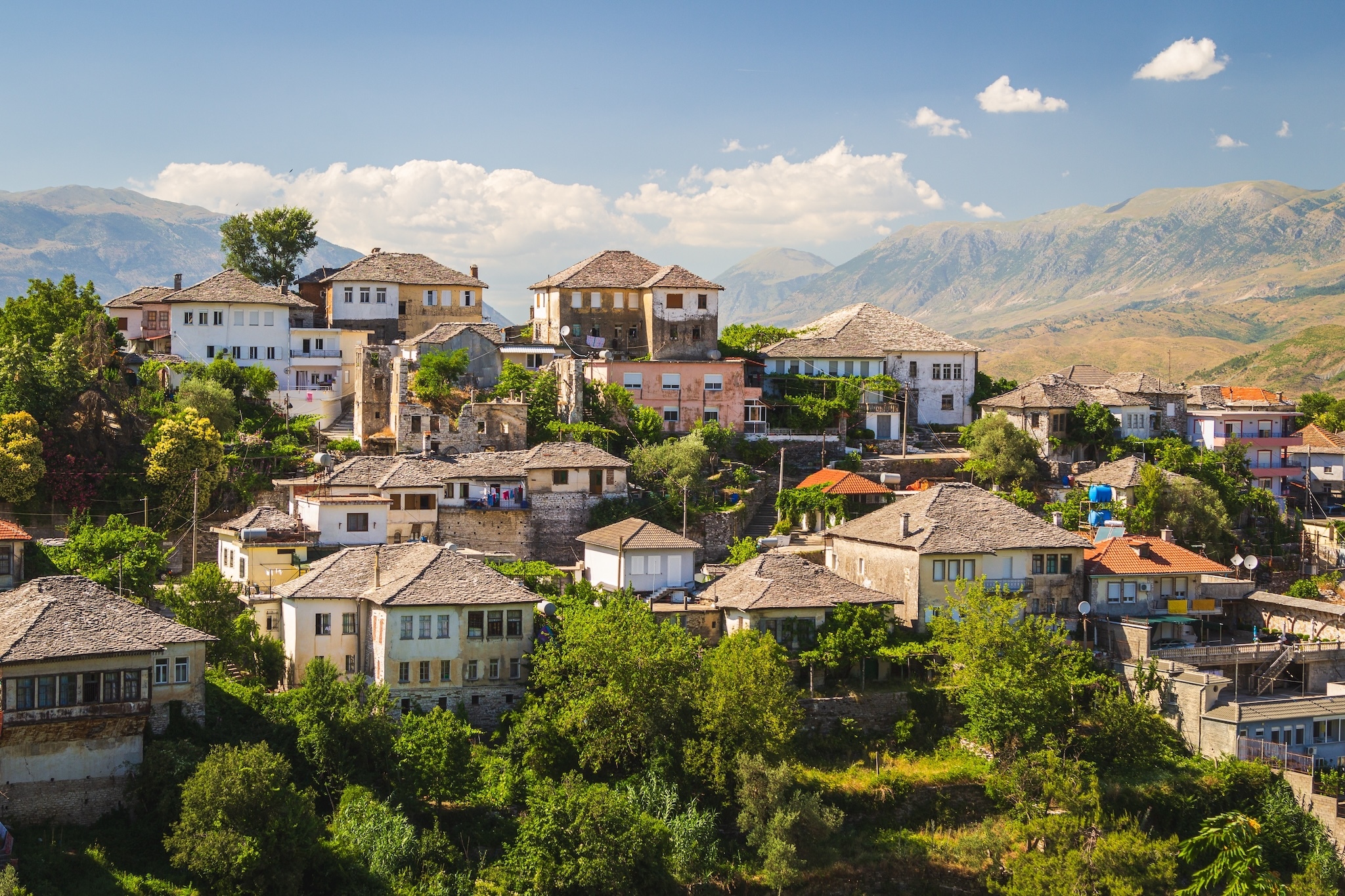
Heading back along the coast, I dumped my bags at Argjiro Castle, a cosy Airbnb in a wooden cabin just outside town, and explored the steep cobbled streets of Gjirokastër. After shopping for Cold War trinkets and other tat in the Pazari i Vjetër, and exploring the richly adorned rooms and secret hiding places of eighteenth-century Skënduli House, I took a deep dive into the spooky network of tunnels beneath the city that were built as a nuclear bunker during Hoxha’s time.

Tepelenë to Përmet: Corkscrew roads and clifftop castles
Packing a picnic of spinach- and leek-filled byrek pastries from local-loved bakery Byrektore Dauti in Gjorokaster on my last day, I followed corkscrew roads from Tepelenë to Përmet, tracing the course of the Vjosa, Europe’s last wild river, which flows freely from Greece’s Pindus Mountains to the Adriatic near Vlorë. With its narrow roads, hemmed in by steep cliffs on one side and sheer drops on the other, this was the most challenging drive of my trip – but it was worth it for the spectacular views from Tepelenë’s clifftop castle, the thrill of navigating the dramatic Këlcyrë Gorge, and the joy of chatting with locals as I soaked in Bënjas bubbling hot thermal springs.
Useful tips for an Albanian road trip
- Local transport in Albania is fairly limited. There are furgons, which are a bit like Turkey’s dolmuşes and buses that don’t follow a schedule – they just leave when they’re full. There is an excellent long-distance bus network, however, and you can even book tickets online.
- With deals for a Fiat Panda at around €13 per day, renting a car is cheap. If you plan to get off the beaten track, however, you can expect gnarly roads, so it’s worth paying around €10 extra per day for an SUV.
- Staying in cosy family-run guesthouses called butjinas is a great way to meet people and get an inside take on local life
- Headlights must be on 24/7, and there’s zero tolerance for drinking and driving.
- GPS is spotty in out-of-the-way places, so download maps for offline use.
- Away from the tourist trail, they don’t always accept credit cards, so carry wads of Albanian lek if you plan to explore.
Read ’s expert guide on the best places to visit in Albania.
Stay in the loop: sign up to our free Travel newsletter for all the latest travel news and best stuff happening across the world.