



![27th Jun: Second Act (2018), 1hr 43m [PG-13] – Streaming Again (5.9/10)](https://occ-0-1381-999.1.nflxso.net/dnm/api/v6/0Qzqdxw-HG1AiOKLWWPsFOUDA2E/AAAABdnWF39ZJNwfDltc6iF91N6IKAKglYG2-uOQoVWO7WWWCWKVT4kmRvwcG3E8HKLJMwQHj6SWqRYPNVbY5V-IsnZJLS9y7CrvG5qG.jpg?r=9c1 "27th Jun: Second Act (2018), 1hr 43m [PG-13] – Streaming Again (5.9/10)")



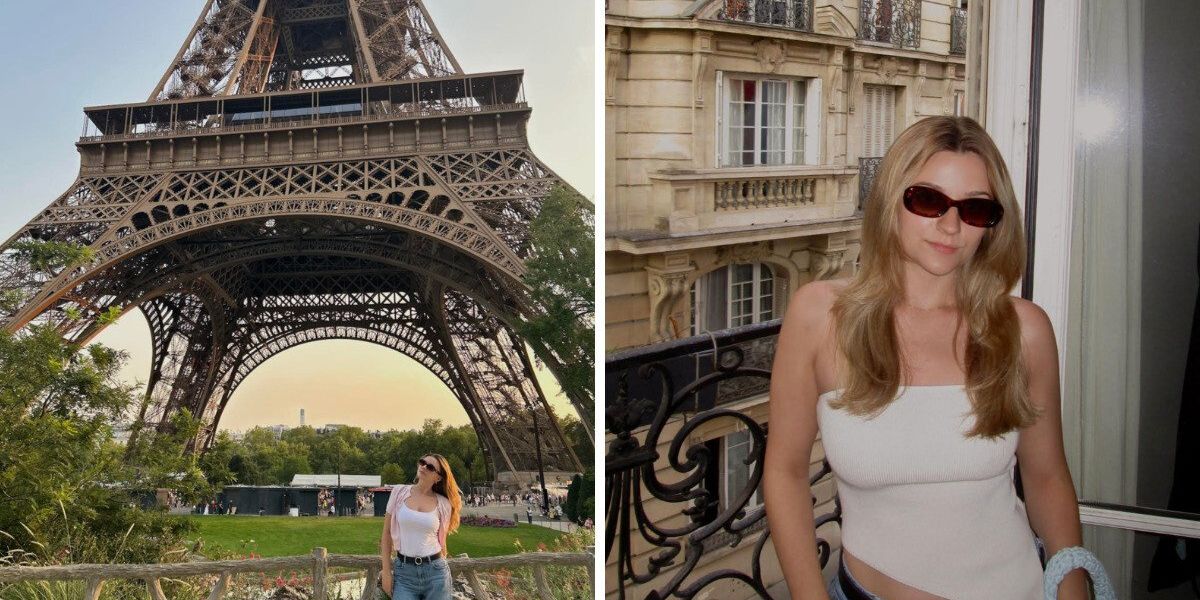
If you’re a Quebecer who’s ever tried to use your French in France, you already know how it goes.
I braced myself at the counter of a Parisian pâtisserie, ready to order a pain au chocolat — or is it a chocolatine here?
I hesitated, weighing the words in my head. Choosing the wrong one could instantly cast me as an outsider. I felt like I had to get the performance right before I’d even said a word.
Back home in Montreal — one of the most celebrated French-speaking cities in the world — that’s just what we call it: a chocolatine. But before I left, my father had issued a warning: “Don’t say chocolatine in Paris.” In his telling, the word was a linguistic tripwire.
I thought I couldn’t go wrong with either word. That was my first mistake.
My Quebec accent consistently gave me away as non-local.Alycia Poirier | MTL Blog
“Do you mean pain au chocolat, miss?” the baker asked in plain English, smiling, as if my French were somehow invalid.
I had spoken in fluent French, careful with my vowels and rhythm, yet my Quebec accent — which baffles so many French people — and my use of the “wrong” word marked me as an interloper, someone borrowing the language.
My French wasn’t enough
I went to France assuming our shared language would make things easier. Instead, I kept running into this subtle tension I hadn’t expected.
I found myself performing all the time, trying to sound more polished and overthinking every word.
It was a weird kind of culture shock I hadn’t anticipated in a language I’d spoken my entire life. I edited my idioms, my slang and every other little giveaway. I believed that if I assimilated into their accent and temperament, I would be taken seriously — what a contradictory notion for a tourist!
It’s not that French people have never encountered a Quebecer before — Quebec is not some obscure corner of the francophone world. But there is often a sense that they see our accent and culture as lesser than theirs. Charming, perhaps, but provincial.
They don’t have to defend the language the way we do. In Quebec, we’re always trying to protect our French from the English majority, and maybe still looking across the Atlantic for validation, too.
We’ve forged our own culture, as different from France as Americans are from the English. But that original inheritance still carries weight.


Then came the second test
The second test came on a late August evening in Montmartre.
I was at an outdoor café on the Place du Tertre, with the warm air settling around me. It was that particular kind of Parisian evening when the light turned golden, and the city seemed suspended between day and night.
I had just come from the Moulin Rouge, my body still buzzing with champagne and the memory of feathers and incredible acrobatics. Around me, café tables were full — couples leaning close, friends gesturing animatedly.
To my right, a group of university students laughed loudly in the way you only can in your own city. One of them, a girl with dark hair pulled into a messy bun, looked over at my friends and me.
“Do any of you have a light?” she asked in English, assuming we were tourists.
That irked me. I wanted to prove her wrong, to let them know I had understood exactly what they had been talking about before, that I belonged here too, in my own way.
“Oui, bien sûr, on a du feu,” I replied. (Of course we have a light.)
I handed her the lighter confidently. I was finally one of them. Except I had forgotten my protocol.
My Quebec accent was firing on all syllables — the broad vowels, the hard Rs, the casual on a where a Parisian might say nous avons — betraying the effortlessness I was trying so hard to maintain.
The girl’s face lit up. “Oh! You are from Quebec. How cute.”
English again. Of course.

That’s when it clicked
It was after this encounter that I understood the truth: no matter what I did, I would always fall short. Not hostile, not unwelcome — just not quite right.
We’re their awkward cousin from across the ocean, the ones they’re vaguely embarrassed to claim at family gatherings.
There’s an irony in it, though: Quebec French has held onto older pronunciations and turns of phrase that sound vastly different from modern French in France. We preserved a linguistic time capsule while continental French evolved. It’s as if they find us inferior because they’ve modernized while we’ve held fast to what they taught us centuries ago.
In a way, we’re still carrying that history in every vowel.
A Nice change of pace
A week later, I took the train south.
The landscape outside the train window transformed. Parisian grey gave way to staggering green hills, then Alpine peaks in the distance. The light became brighter and, by the time we reached Nice, even the air felt different — warm and salt-laced, carrying the scent of the Mediterranean.
On the Promenade des Anglais, things felt different.
A market vendor didn’t flinch at my accent or when I asked for a chocolatine. A waiter in Vieux-Nice grinned and asked about Montreal winters, then mentioned his cousin in Trois-Rivières.
There was a warmth there, and not just because of the weather. It was a joie de vivre that actually reminded me of home — the same kind of warmth you’d find right here in the Old Port.
I realized then that maybe it was just Paris where I felt that shame, that I needed to perform. The south just felt easier, like I didn’t have to get everything exactly right.
Maybe it was the relaxed environment. Or maybe the south shared our sense of being provincial in Paris’ eyes.

What I’ve learned
On my last day in Nice, I sat at a café overlooking the Baie des Anges. The water was impossibly blue, with sailboats floating in the distance. Behind me, the old town was covered in warm terracotta.
I ordered in MY French, in all its Quebec particularities, and the server brought exactly what I asked for.
A few hours later, I boarded a train back to Paris. But I returned with a new perspective.
Those weeks in France gave me a new understanding of how French people saw me, and of what my ancestors might’ve been like. I imagine them crossing the Atlantic with their language, carrying it like precious cargo, not knowing it would calcify in the cold.
But what the trip also taught me was to be proud of my heritage. It made me realize I’d been treating my own Quebec French like a lesser version of the “real thing,” and by the end of the trip, I stopped apologizing for it.
I know where I come from and what I stand for. I know the culture that raised me — the one that says chocolatine, speaks joual, and pronounces every syllable with defiant stubbornness.
The views expressed in this Opinion article are the author’s own and do not necessarily reflect the views of Narcity Media.
READ NEXT: I went to Montreal without speaking any French — Here are 5 things no one tells you

![27th Jun: Cleaner (2007), 1hr 28m [R] – Streaming Again (6.05/10)](https://occ-0-953-999.1.nflxso.net/dnm/api/v6/0Qzqdxw-HG1AiOKLWWPsFOUDA2E/AAAABXsYlk8onjXKZE5dDuUtPLsqQ6jZeaz8-kTsszR5J8Xg1EPEMUmQ1Isv4oyVqLuOvyU01F-sD-5tts8sXl5JpnE8nUpv4PgfisBS.jpg?r=c1d "27th Jun: Cleaner (2007), 1hr 28m [R] – Streaming Again (6.05/10)")