


A Frontmezzjunkies Interview: Josephine Phoenix about her new role in Pied à Terre
Conducted by Michael Raver
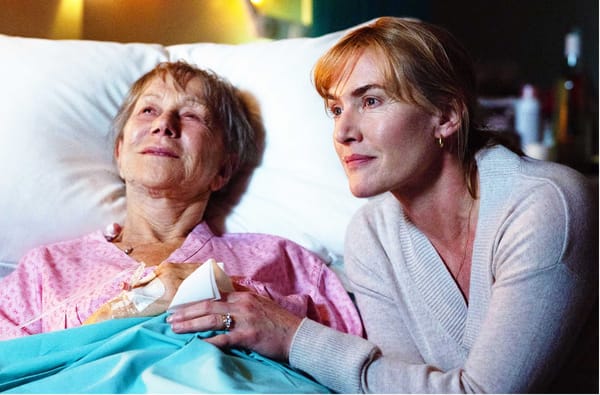
Josephine Phoenix has the sort of composure that suggests she has already imagined three possible outcomes to any given moment and packed a great pair of shoes for all of them. When she talks about stepping into Pied à Terre, she does so with the bright, slightly mischievous calm of someone who understands that onstage disasters are infinitely preferable to the real kind. In this new Off-Broadway play, she takes on Julia Davis, a successful journalist whose life, from a tasteful distance, appears arranged with the careful symmetry of a Manhattan bookshelf. Of course, as we all know, the books that look best are usually hiding something.
In Pied à Terre, secrets do not so much explode as simmer. Julia is a woman confronting grief, marriage, loyalty, and the unsettling realization that the story she has been telling herself might require substantial revisions. (Journalists, it turns out, are not immune to unreliable narration…they’re just better at punctuation.) Phoenix approaches Julia not as a cautionary tale, but as a woman mid-reckoning: intelligent, flawed, occasionally blindsided by her own heart. It’s the sort of role that demands both emotional excavation and the stamina to do it eight times a week without frightening the neighbors.
And yet, speaking with Phoenix, there’s no theatrical hand-wringing, no dramatic sighs into herbal tea. Instead, there’s curiosity. She talks about Julia the way one might discuss a complicated relative at Thanksgiving: with affection, mild disbelief, and a firm commitment to seeing it through. In a play that promises intimacy and moral gray areas rather than tidy answers, Phoenix seems ready to live in the discomfort. After all, what is theater if not the socially acceptable way to examine our worst impulses under flattering lighting?
Front Mezz: How did you first respond when you read the script for Pied à Terre, and what about Julia’s journey resonated with you personally?
Josephine Phoenix: At first, when I read it, it felt like an almost cliché, middle-aged infidelity story where a successful career-driven woman is faced with her husband’s potential infidelity to a much younger woman. All of this being uncovered as my character Julia discovers this secret apartment. About twenty minutes into my reading the script, I knew we were in for a different ride as certain factors weren’t adding up between the characters. Each page proposed more questions than answers—the kind of story that keeps you wondering until the last minute! And so I said, ‘Oh yeah! fun!’ Julia’s journey is one of pain, strength, and redemption. She was dealt some difficult cards, but she found a way through.
FM: Julia is a successful journalist confronting secrets about her marriage — how are you approaching the emotional layers of her relationships, particularly with Jack and Katie?
JP: Jack and Katie’s relationship is revealed through Katie telling Julia stories of how they met and their dynamic. Julia, being an investigator of sorts, I rely on being goal-oriented in the discourse between Julia and Katie. The dialogue asks for more questions, to listen more attentively, and to try not to emotionally interrupt Katie’s stories with Julia’s own reaction. We as people, at times, can become blinded when emotions are running high, but there is calm in the chaos if we first try to collect as much data as possible to understand all parties and determine what is the best outcome here. Julia has taught me to stop before speaking.
FM: This story explores complex themes like grief, loss, and survivor’s guilt — how do you prepare mentally and emotionally to embody that depth onstage?
JP: When you’re in the groove of letting the lines land, and have the good fortune of telling these stories with a good partner on stage, the moments come to you. There are these scenes between Katie and me that are full of kinesthetic energy, and naturally open the emotional maze that these two women face. It’s about being in the moment, locking eyes, and trusting. Of course, reading as much as possible on people who have survived their particular trauma and watching interviews and such, but that will only mentally prepare you; emotionally, it’s just about presence and honesty.
FM: What have you discovered about Julia’s inner world that audiences might not immediately see in her interactions or dialogue?
JP: Julia is a woman who has taken major risks again and again in the name of love and hope. She, once more, was dealt a heavy hand, but she never considered herself a victim. On one hand, she compartmentalizes certain factors in her life, which makes her seem cold, but on the other, she feels that her specific tie to Jack is something special and worth showing up for. They say the last thing we lose in life is hope, and I see that in Julia without a doubt.
FM: How has working with director Peter J. Loewy and this particular ensemble shaped your portrayal of Julia during rehearsals?
JP: Uniquely enough, Peter directed this show a few years back in Boca Raton, Florida. With that, he is well-versed in how this show flows as a whole. He is hysterical and succinct to the point of what is needed. It is a relief when dealing with serious subject matter to be steered by someone who knows how to find the joy and fun in small moments and reminds us that the answer to most of any actor’s question is to simply listen to one another. Peter has shaped my Julia in a way to trust her presence, less is more, and let’s get to the meat of it all…even if I am vegan.


John Anastasi’s Pied à Terre returns to New York City in the Anne L. Bernstein Theater at The Theater Center Off-Broadway (210 West 50th Street, 4th Floor), now in previews, with the show’s official opening set for Wednesday, March 4, 2026, at 2PM. Performances will be every Sunday at 5PM and Wednesday at 2PM.
For tickets, visit www.piedaterreplay.com