






![26th Jun: Chris & Martina: The Final Set (2026), 1hr 37m [TV-MA] (6/10)](https://occ-0-1759-132.1.nflxso.net/dnm/api/v6/0Qzqdxw-HG1AiOKLWWPsFOUDA2E/AAAABQDhO3_Wq9-pFIG5lvOhW3dJPksJL1M8KIbYlJM7TyGNW9GshftuKK25ST3YoY1Yhjav4YnvZoEqwSdlVtievv8dr0K7pBhU7BmwbxV_eH0xhy0kMG56UxwLIv93CiPpvWJbjzrK5VewoPeeRohSd3va_f7Zx_4RFzh7x4lbO42qew.jpg?r=3f5 "26th Jun: Chris & Martina: The Final Set (2026), 1hr 37m [TV-MA] (6/10)")




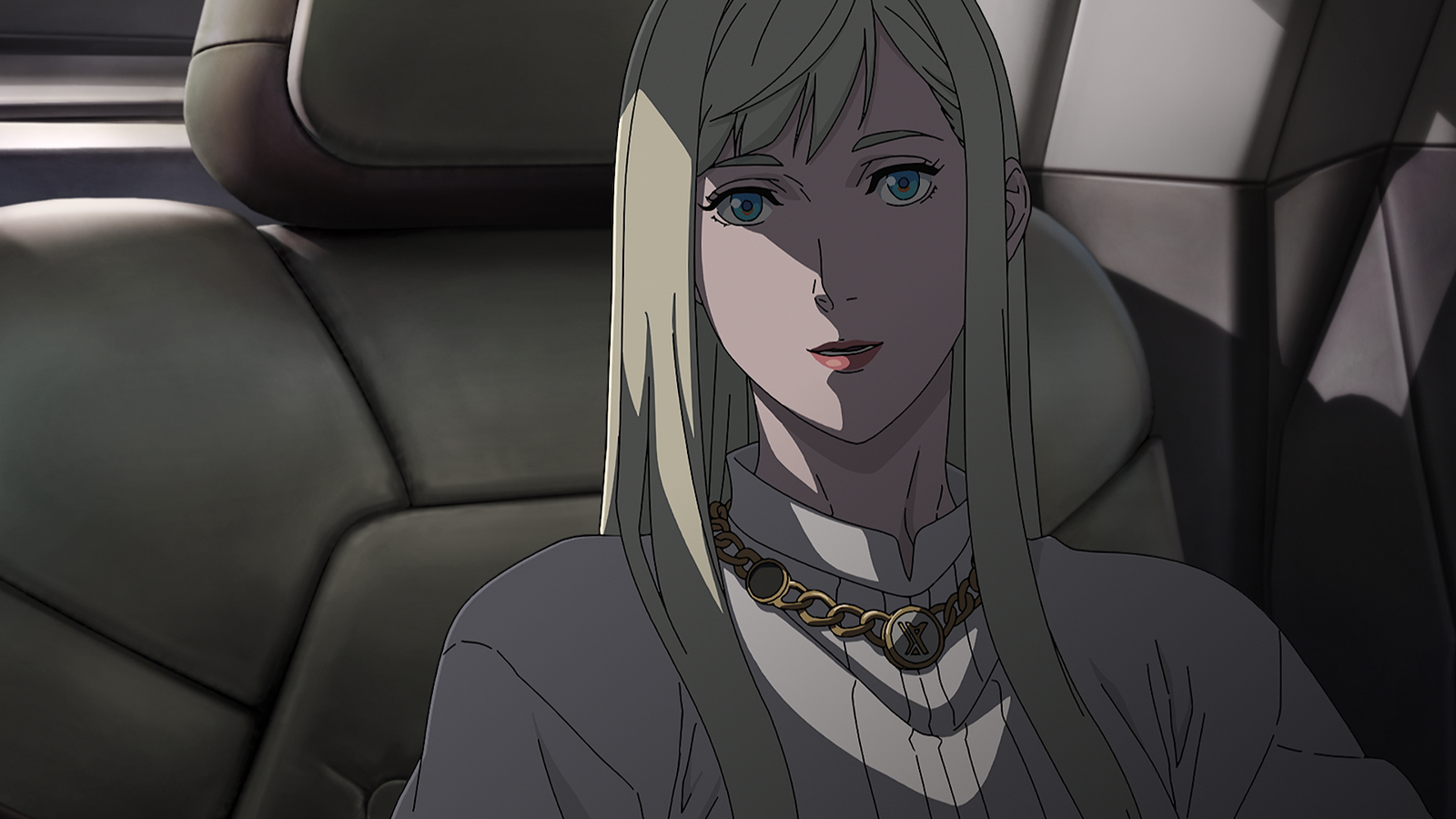
Mobile Suit Gundam Hathaway: The Sorcery of Nymph Circe is only days away from release, offering a first glimpse into Universal Century (UC) 0105 and Hathaway Noa’s hardened conviction as Mafty Navue Erin, the leader of the anti-Federation insurgents. To mark its arrival, Polygon is sharing an exclusive clip featuring the enigmatic Gigi Andalucia and the Earth Federation officer Kenneth Sleg during one of the film’s most harrowing sequences.
The scene follows the pair aboard a civilian passenger transport en route to Darwin Airport from Davao. Kenneth is on assignment overseeing escalating anti-Mafty military operations across Australia, coordinating the movement of Federation officials through a region increasingly destabilized by insurgent activity. Already wary of potential attacks, Kenneth’s concerns sharpen when Gigi suddenly becomes visibly distressed during the aircraft’s final approach.
“I don’t want to land here,” she says, clutching her chest as Kenneth looks on in confusion. He doesn’t hesitate, swiftly initiating emergency procedures as Oenbelli resistance forces, referred to as “Mafty’s 1st Army,” begin striking the airport’s runway with mortar fire. Their transport, the last aircraft in a three‑plane convoy, narrowly avoids the barrage, pulling away just as the airfield erupts in sustained hailfire.
The sequence draws from Yoshiyuki Tomino’s Mobile Suit Gundam: Hathaway’s Flash, the novel series the Hathaway trilogy adapts. However, the adaptation reconfigures certain details to fit the new, more modern narrative. In the original text, Kenneth is already stationed at Darwin airport, preparing to transport Federation cabinet officials to Adelaide when the insurgent attack begins.
Directed by Shūkō Murase and produced by Sunrise, the scene is tightly constructed and sharply executed, distilling key Hathaway ideas into a compact escalation. Chief among them is the collapse of procedural military order under the weight of sudden, uncontrollable violence, a common theme presented throughout the franchise.
Gundam has long emphasized politics over spectacle, but here the two are inseparable. The Darwin sequence functions both as a kinetic action beat and as a demonstration of how quickly institutional control dissolves when conflict erupts without warning. What begins as a routine transport mission — civilians in motion, military presence asserting order — fractures the moment Gigi’s intuition disrupts that fragile equilibrium.
The character dynamic deepens the tension further. Kenneth represents procedural certainty: a military officer guided by logistics, intelligence, and containment strategy. Gigi, by contrast, operates outside institutional logic, responding to an overwhelming sense of perception that precedes verification. That tension between structured authority and unexplainable intuition runs just beneath the surface, reinforcing the broader tragedy at the heart of Mobile Suit Gundam Hathaway.


Despite their differences, the two are bound together like glue, serving as an uneasy pairing that turns contradiction into momentum rather than resolution. In motion, Gigi and Kenneth function less like opposites and more like interlocking systems of perception: one grounded in procedure and containment, the other operating on instinct that precedes verification. Kenneth interprets the world through structure and command, while Gigi registers its instability before it can be formally understood. The chaos happening outside the aircraft only clarifies the unstated tension between them.
If anything, this sequence quietly underscores how unstable that balance may become as the story unfolds into the third film. Kenneth’s proximity to both institutional authority and the unfolding Mafty situation places him in an increasingly precarious position, while Gigi’s role continues to suggest pressures that sit outside the Federation’s ability to fully quantify or control. The Darwin escape, then, feels less like an isolated incident and more like a continuation of a pattern already in motion — one where clarity and control are always arriving a moment too late.
