









Montreal Mayor Soraya Martinez Ferrada on Saturday denounced alleged racist and discriminatory behaviour by a police unit toward residents, pledging to expedite the rollout of body cameras as an investigation into 16 officers revs up.
At a city hall news conference, Ferrada called the allegations “extremely disturbing” and said trust between police and citizens has been shaken amid accusations highlighting the persistence of systemic racism.
“What we saw is totally unacceptable,” she told reporters.
“The worry, anger and questions this situation raises are perfectly normal,” she said, calling for “calm and responsibility.”
“Montrealers deserve to know the whole truth about what happened. That is precisely what I want this investigation to do.”
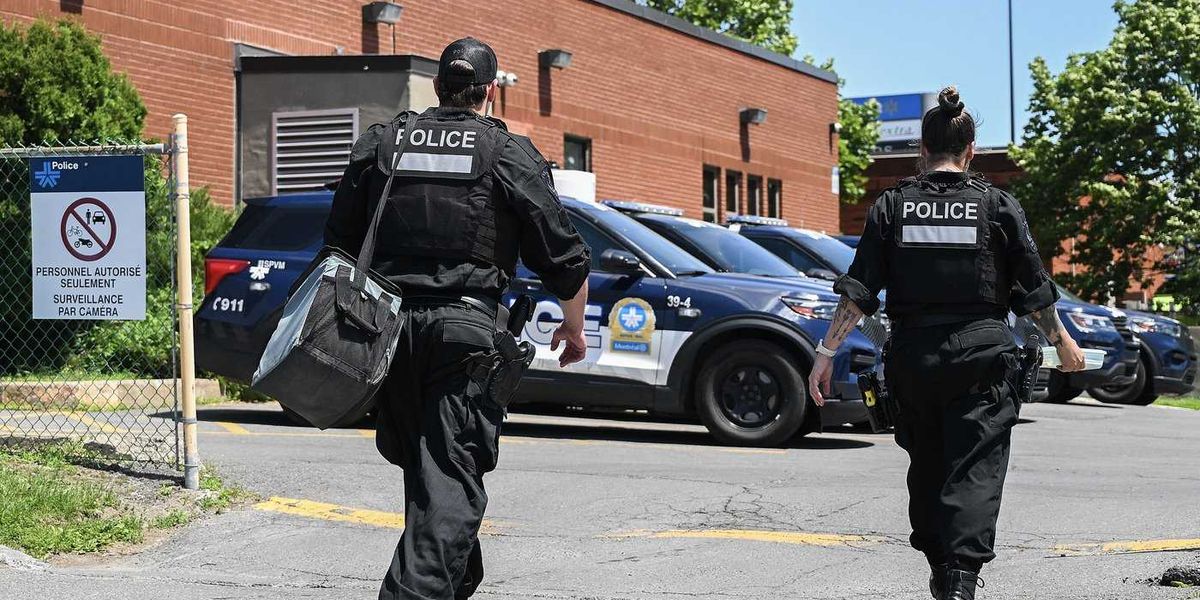
On Friday evening, senior Montreal police officials moved to disband a night patrol unit in the city’s Montréal-Nord borough, suspending two police officers and reassigning 14 others after instances of alleged racial profiling and prejudice.
The two suspended officers are under investigation by the prosecutor’s office regarding possible violations of the Criminal Code.
Police Chief Fady Dagher said Friday that 14 other officers were reassigned to tasks that do not require contact with citizens involved in the investigation.
The ongoing probe into police at Station 39 began in March, following information obtained by fellow officers.
Among other allegations, several media outlets have reported that officers allegedly cut the hair of racialized citizens to turn it into “trophies.” Dagher indicated Friday that those reports made up part of the investigation.
The officers involved reportedly have three to four years’ experience. Two women are among them, and the rest are men.
Ferrada said she and Quebec Public Security Minister Ian Lafrenière have agreed to ramp up deployment of body cameras at Montreal’s police force.
“This is an important tool that can effectively strengthen transparency, better document interventions and give both citizens and police officers a sense of security,” Ferrada said.
The mayor’s January budget includes $40 million to buy and deploy body-worn cameras for officers between 2026 and 2034. But no concrete timeline had been laid out as to when police would begin to don the devices, with Ferrada indicating at the time that provincial involvement was necessary.
On Saturday, she suggested a review of hiring protocols may be called for, before going on to invoke broader social critiques.
“Profiling, discrimination, racism unfortunately still exists in many institutions, not only the SPVM,” she said Saturday, pointing to personal experience.
“I’m a woman of colour. I’m in a relationship with a Black man. I can tell you all about profiling; we’ve experienced it first-hand.”
The notion of discrimination by law enforcement came as no surprise to some in Montréal-Nord, where more than half of residents belong to visible minority groups, according to the non-profit Centraide of Greater Montreal.
“I grew up on the streets, I grew up in Montréal-Nord. So I’ve seen worse than that,” said resident Ricky Peter. “It doesn’t surprise me.
“But to go and cut someone else’s hair, a regular citizen. Why?”
Peter echoed the mayor’s observation that prejudice is not the sole purview of any one institution or segment of society.
“Racial discrimination happens all over the world,” he said.
The mayor said she took some comfort in the fact it was other officers who reported the alleged wrongdoing.
“That is for me a sign of change in terms of the organization itself,” she said.
“Let’s not put everybody in the same boat. There’s good police officers.”
Quebec Premier Christine Fréchette said Friday the reports were “extremely concerning” and called for a full investigation.
“The alleged actions, if confirmed, are incompatible with the values of respect and integrity that must guide the conduct of all our police forces,” she said in a late-night post on X, formerly known as Twitter.
The Montreal police union said any form of racism on the force is intolerable.
“What is alleged is totally unacceptable and shocking,” said Yves Francoeur, president of the Fraternité des policiers et policières de Montréal.
“The fraternity also notes that the presumption of innocence applies to all its members and that virtually all of Montreal’s 4,600 police officers act with full respect and in accordance with standards,” the union added.
The investigation is not the first to involve officers at Station 39.
In 2008, teenager Fredy Villanueva was shot to death by a police officer. The 18-year-old was unarmed when he was struck in a north-end park on Aug. 9 of that year.
The next night, a march in Montréal-Nord turned violent, with rioters setting fire to vehicles and looters vandalizing businesses while creating headlines across the country.
Quebec’s public prosecution office found a Montreal police officer used justified force, with no criminal charges filed.
The province ordered an independent public inquiry into the shooting. The probe was plagued by delays, with the killing a years-long open wound in the city.
In 2013, Quebec Court Judge André Perreault, who headed the inquest, found the shooting was legally justified on self-defence grounds but unnecessary.
This report by The Canadian Press was first published June 13, 2026.
— With files from Samira Ait Kaci Ali
By Christopher Reynolds | Copyright 2026, The Canadian Press. All rights reserved.

