






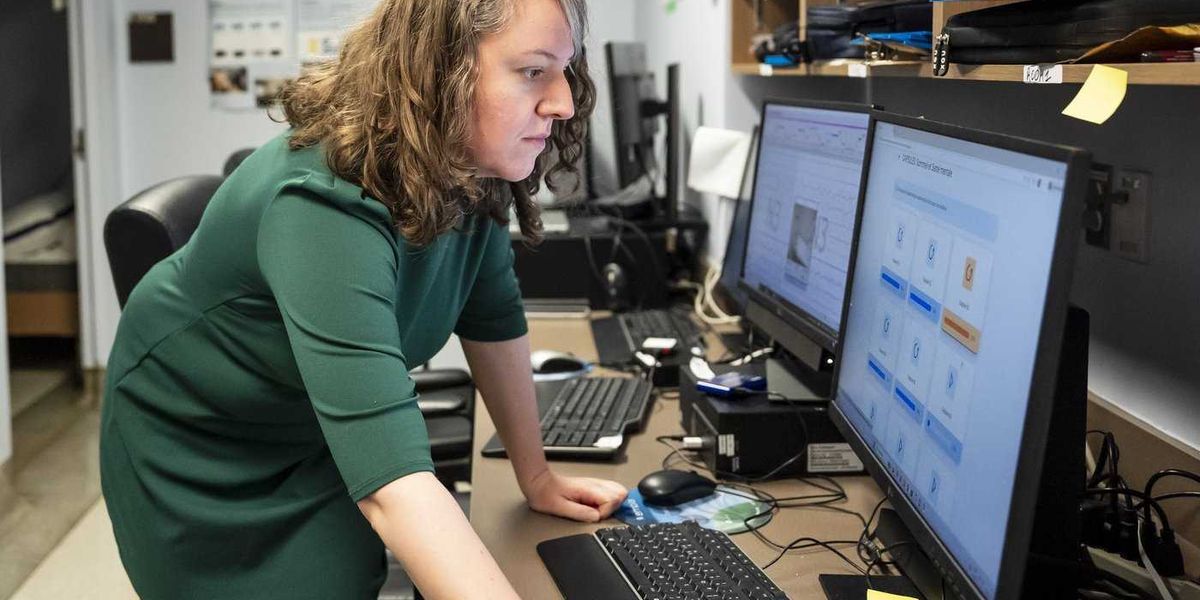
For many older adults, a restless night can be an unwelcome part of aging, but new research suggests that help may be just a few clicks away.
Researchers at a Montreal-based institute of geriatrics found that participants who completed an online program designed to treat insomnia and anxiety slept better and reported fewer symptoms of insomnia compared with when they started the treatment.
The study, published in May in the peer-reviewed journal “Age and Ageing,” followed 80 adults aged 65 and older with insomnia symptoms. Participants completed the therapy through an online platform called e-SPACE Aging Well.
Researchers found that the treatment program improved participants’ sleep efficiency — the amount of time spent asleep while in bed — by 11.46 per cent. Five participants met the study’s criteria for remission and no longer met the threshold for insomnia, say the researchers with Centre de recherche de l’Institut universitaire de gériatrie de Montréal.
Half of the participants saw clinically significant reductions in insomnia symptoms, or a reduction of at least seven points on the Insomnia Severity Index, a commonly used questionnaire that measures the severity of sleep problems on a scale of 0 to 28, with higher scores indicating more severe insomnia.
Dr. Thien Thanh Dang-Vu, a neurologist specializing in sleep medicine and clinical researcher at the institute of geriatrics, said treating insomnia is important because poor sleep has been linked to a higher risk of depression, anxiety, heart disease, diabetes, and cognitive decline in older adults.
He added that seniors with insomnia often report low energy and difficulty concentrating, which can lead to a more sedentary lifestyle and social isolation. As a result, sleep plays an important role in maintaining quality of life and independence among older adults.
Dang-Vu said the online platform is not intended to replace doctors or psychologists. Instead, it aims to make evidence-based treatment available to more people, he added.
The two-month-long program is based on cognitive behavioural therapy, or CBT, widely considered the first-line treatment for chronic insomnia. According to Health Canada, CBT is a form of psychotherapy that helps people identify and change thoughts and behaviours.
Like traditional CBT, the online version developed by researchers at the institute combines education about sleep with practical strategies aimed at changing behaviours that can worsen sleep problems. One of those strategies may seem surprising: recommending that participants spend less time in bed.
“That’s what works best,” said Dang-Vu.
People with insomnia often remain in bed for long periods unable to sleep, which can reinforce frustration and make the problem worse, he explained. “This contributes to perpetuating insomnia,” Dang-Vu said.
The program uses questionnaires to tailor recommendations to each participant, including suggested sleep schedules. Unlike in-person therapy, participants can complete the program at their own pace.
“We’ve received fairly positive feedback from participants about this,” said Mathilde Reyt, the study’s lead author. Participants appreciated being able to work through the material on their own schedule and revisit information when needed, she said.
The team is now studying whether the program could also improve memory and cognitive function in older adults.
Researchers hope to eventually make the platform widely available, though that will depend on securing future funding.
“If we receive support … we will be very happy to make it available free of charge to all seniors in Quebec or Canada,” said Dang-Vu.
This report by The Canadian Press was first published June 8, 2026.
—
The Canadian Press’s health coverage is supported by a partnership with the Canadian Medical Association. The Canadian Press is solely responsible for this journalistic content.
By Katrine Desautels | Copyright 2026, The Canadian Press. All rights reserved.

![28th Jul: Masha and the Bear (2025), 3 Seasons [TV-Y] – New Episodes (6.6/10)](https://occ-0-171-92.1.nflxso.net/dnm/api/v6/0Qzqdxw-HG1AiOKLWWPsFOUDA2E/AAAABWVh724ToqMsafYzdNai1xe7oZNva-wjNxx7PIP7Ci5yZPwW4FkoA8G2L1H_KSs1PpeuobhFeFRLn-pn_8mqmrZGH_Wc3vLN0evLT58ffSLM_Q-pBNY6-Wv_Dl_fyp3HtuU8x22G-Vszeux56dPaR33wRPxYtM21KYEpK3Hc.jpg?r=de4 "28th Jul: Masha and the Bear (2025), 3 Seasons [TV-Y] – New Episodes (6.6/10)")