![19th Mar: Past Is Past (2025), 58m [TV-MA] (6/10)](https://occ-0-7328-999.1.nflxso.net/dnm/api/v6/Qs00mKCpRvrkl3HZAN5KwEL1kpE/AAAABVD7v2nzsgKErK9N4M5nCRhhKl-mTiJf-nw1_LV1AkKsV_9Xni7K56MyNlUVoWFok9tU2fI5-1FFd2F9_1fkT7rvKz0GwDbl5J7jIzWgo1IwSMzLABUAqPOUZjF4q0HCJ_00Wj6SYop08oi5uu3EqKj87et87voMfhKRS7inykw3wg.jpg?r=4cb "19th Mar: Past Is Past (2025), 58m [TV-MA] (6/10)")



In the world of movie directing, a single one-and-done achievement towers above all others. Surprisingly, perhaps, it’s not the work of a young hotshot who burned out too soon, or whose talent went unrecognized. It’s a film made by a revered, world-famous, Oscar-winning character actor who discovered in his mid-50s that he had a preternatural talent for making movies, but sadly, never got the chance to make another one before the end of his life.
The movie is 1955’s The Night of the Hunter, an extraordinary collision of horror, Southern Gothic story, suspense thriller, and dreamlike fable. The actor who directed it is Charles Laughton, a stoop-shouldered, round-faced English performer, who hit a peak of fame in Hollywood in the 1930s with roles like Henry VIII in The Private Life of Henry VIII, Captain Bligh in Mutiny on the Bounty, and Quasimodo in The Hunchback of Notre Dame.
By the ’50s, Laughton was taking smaller roles and concentrating on directing stage plays when the opportunity to make a movie fell into his lap. But unlike his peer Laurence Olivier, he didn’t fall back on staging an adaptation of a Shakespeare classic. Instead, he adapted a brand-new semi-pulp novel into a visionary, phantasmagoric movie steeped in silent-cinema tradition.
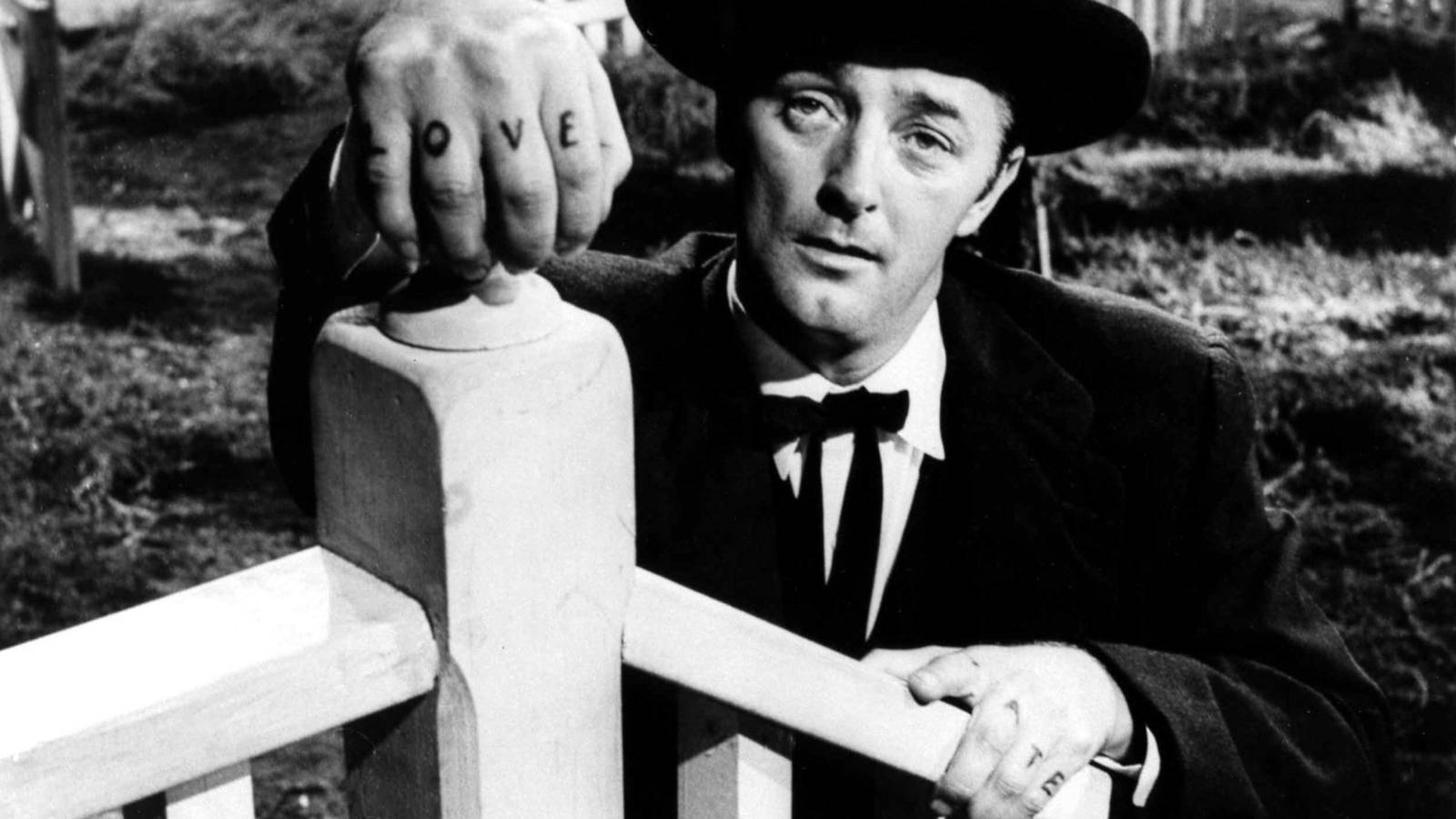
The Night of the Hunter concerns an evil preacher (played by hard-boiled noir star Robert Mitchum) and his pursuit of two children who know the location of a stashed fortune. The setting is the Ohio River in West Virginia during the Great Depression of the 1930s — a superstitious, impoverished, half-wild frontier between the past and the future. The preacher, Harry Powell, is a thief, con man, and serial killer who, early in the movie, briefly shares a cell with Ben Harper, who killed two men in the course of a bank robbery that netted him $10,000. Ben is hanged for the crime.
After his release, Harry tracks Ben’s family down, and without revealing his connection to Ben, woos and marries his suggestible, nervy widow Willa (Shelley Winters), hoping she will lead him to the cash. But only Ben’s children, John and Pearl, know where the money is hidden. Harry intuits the kids hold the key to the fortune and begins wheedling and tormenting them for it, while even darker impulses drive him to kill Willa.
At that point, the children escape, drifting downriver in a skiff, and The Night of the Hunter transforms from a strange, suspenseful crime drama into an eerie, hallucinatory horror story. Laughton, working with cinematographer Stanley Cortez and production designer Hilyard Brown, creates unforgettable image after unforgettable image, all shot in high-contrast black and white.
The sleeping children drift along starlit waterways, watched over by field animals who loom large in the frame. Willa’s corpse sits upright in a submerged Model T Ford at the bottom of the river, her hair spiralling upward. A silhouetted Harry picks his way across the horizon on horseback in an extraordinary (faked) long shot, intoning an ominous hymn: “Leaning, leaning, leaning on the everlasting arms.” The movie leaves the adult world and submerges itself in the children’s perspective, entering a lullaby realm of magic, mystery, and peril.


Eventually, John and Pearl wind up in the care of Miz Rachel Cooper, a tough widow who looks after a household of other orphans and strays. The stage is set for a classic battle between good and evil. As Miz Rachel, Laughton cast the silent star Lillian Gish. Small and slight, but with her luminous command of the frame undimmed since her 1920s heyday, Gish is a fixed moral point, watching over the world with a shotgun in her rocking chair.
Against her, Mitchum’s Harry is sinister, cruel, and darkly comic. He lulls most people with his preacherly baritone and monologue about the war between love and hate — the two words famously tattooed on his knuckles. (This iconic scene was later referenced by Spike Lee to equally memorable effect in Do the Right Thing.) But John and Miz Rachel aren’t fooled. When frustrated or confronted, Harry becomes animalistic, grasping like a zombie, yelping and hollering like a cornered fox.
Laughton was obsessed with recapturing the elemental visual power of silent movies. Preparing for The Night of the Hunter, he studied the work of pioneering filmmaker D.W. Griffith (director of the racist epic The Birth of a Nation), for whom Gish frequently starred. But the movie he made has more in common with German Expressionist classics like Fritz Lang’s M or F.W. Murnau’s Nosferatu. It’s dominated by geometrical slashes of deep shadow and pools of holy light, and it relocates its grubby crime story into an almost supernatural dimension that feels like an ancient fairy tale.
The genius and tragedy of The Night of the Hunter is that it really is a total one-off. It’s not just that it’s a great movie. Laughton expressed a cinematic vision that was unique to him and unrepeatable by anyone else: terrifying, absurd, earthy, spiritual, creepy, and hypnotically strange. Sadly, it flopped in theaters, critics at the time dismissed it, and Laughton’s attempts to follow it up fizzled before his untimely death seven years later. It didn’t enter the cult and critical canons until it was rediscovered decades later. There was never anything else like it, and there never will be.