



![24th Mar: Jeff Ross: Take A Banana For The Ride (2026), 1hr 30m [TV-MA] (6/10)](https://occ-0-937-2705.1.nflxso.net/dnm/api/v6/Qs00mKCpRvrkl3HZAN5KwEL1kpE/AAAABb-svmxzfcWO2wtzkIxYZPsX2sA8CM5nsUFN2oWESicEAeogvwBawTrlyQ-9Gh_fYOs79LYoM-NCroeAHxMtJt1LxviO1LX-_-NPHyuSCekUELHv9_ksf2J0nd3bm1fBmOJiElgIks8jZdfDufOxqZRke8Y79k5YaCJxc-EkFIwNvQ.jpg?r=47d "24th Mar: Jeff Ross: Take A Banana For The Ride (2026), 1hr 30m [TV-MA] (6/10)")



On top of writing about video games for The New York Times and establishing the New York Videogame Critics Circle, Harold Goldberg also finds time to write books. His new one, The Skinny, isn’t overtly a “video game book” but when cruising through Vice City and battling Soulslike bosses is part of the very fiber of your being, how could the influence not leak into a manuscript? Goldberg happily admits The Skinny is steeped in interactive influences.
On the occasion of the book’s release, we’re excited to share an excerpt of The Skinny along with his own two cents on how it emerged. Here’s Goldberg, friend of Polygon, sounding off. —Matt Patches
It was the right time to write a novel. I had always been mesmerized by horror and mystery, ever since I was a child. After writing All Your Base Are Belong to Us, my non-fiction history of games, I was continually inspired by the industry’s best, darkest narratives. I was also thinking about “My Life Among the Serial Killers,” the book Dr. Helen Morrison and I wrote, which became a worldwide bestseller. And I began to study horror and mystery seriously after immersing myself in games like Alan Wake and L.A. Noire.
The Skinny, my first novel, available now, is packed with those influences, particularly in tone. My story takes place in a gritty, 1990’s-era New York City in which Stan Kaminski, a down-on-his-luck Polish immigrant, discovers a way to make fast money. All he has to do is find a young woman. Things swiftly go downhill from there. The Skinny, as you’ll see below, begins on a grim afternoon in Manhattan’s East Village.
“Do you know how dreams sometimes come true? I’m not talking about the joyful dreams where you wish upon a star like an innocent child. I’m not talking about the smaller dreams of if-only – if only I had an acre by a stream or that mysterious lover or that fancy meal. I mean the scary dreams, the awful visions your mind forces you to forget before you wake up. You dream about vile humans beyond the bigoted and the spiteful ones you pass as you walk the dirty streets, and worse, you dream about torture and murder. When your eyes open, squinting from the morning sun, you don’t remember exactly who or why or what. For moments, you don’t remember your bad English, just your Polish, and that unsettles. Then you are haunted all day long, trying to recall what made the hair on your forearm prickle and stand on end before you even got up for a morning pee.
This was one of those times, except this time was worse. This time, the bad dream was real, full of obsession and violence. And the bad dream never went away. Hope, even for a stranger’s passing touch, seemed foolish. But I was like that, an immigrant fool too often. The unfortunate residual is that I became addicted to this failing in my nature, this terrible fault, the bad dream.
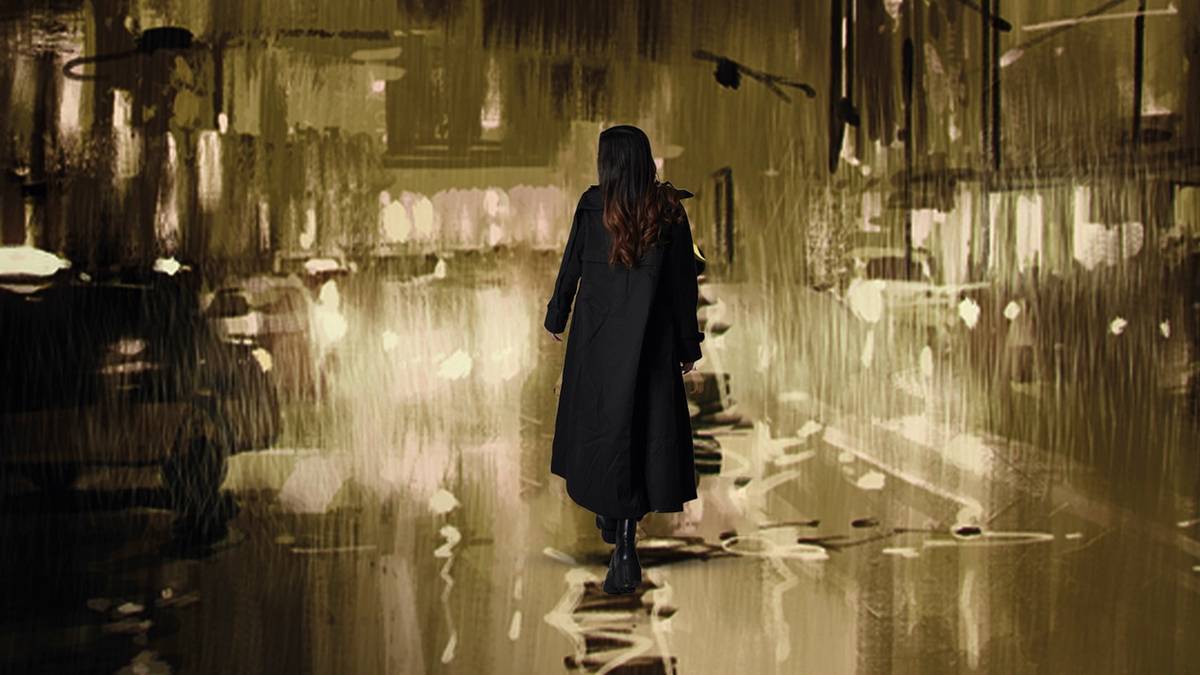
It all began on one of those deeply ashen days in New York City, dark made even blacker by the fat, laughing clouds and the pelting rain. As the rain came harder, I pulled up my collar and busted open a cheap umbrella. I was making my way towards St. Marks Place from Avenue B, looking up to view the ugly, new apartment building that was 14 stories high. The good old brick building full of Poles and Puerto Ricans was knocked down and now the rich people had their cheesy Jacuzzis and their three-bedroom places. It was no surprise. That is how it is in all of Manhattan.
Even though the neighborhood has been moving that way for two decades, it’s now a playground for those who live to become wealthy. The world changes, and now, New York City is for the rich. It is no good. So when I looked up, I did not linger on the woman in fur preening in the picture window. On a 10th floor window ledge, the peregrine falcons made their nest. Even in the storm, a small group of people gathered below, craning their necks to see. Five adults were dressed in dreary gray-green ponchos and two children ran around, both protected by shiny yellow raincoats and rain hats.
Though I could not see their faces as they looked up, they were about the same height, both mid-thigh high. There was no sign at all of the falcons, and the people, especially the children, were antsy for an appearance. Yet as I reached the corner, I saw a falcon swoop down and attack. She was attacking one of the children. She pecked away near the poor thing’s head, over and over again.
Then, I saw the blood trickling, deep red mixing with the banana yellow plastic. The falcon would not stop. Who knows why? Maybe she was protecting the young in her nest. Maybe she was just a troubled bird. The panicked adults flailed. But it looked like the predator was aiming for the child’s eyes with its claws, like the bird had vile emotions. The adults went whacking at the falcon with unwieldy open umbrellas until it flew off into the park across the street. Both children were crying, piercing the rhythm of raindrops in the dark afternoon.
On the corner in the rain, the situation looked so bad, like the falcon had the spirit of a mythical eagle, and she was seeking vengeance. The kid was not so injured, at least on the surface. But who knows what kind of effect the sight of talons so near the eyes would have on him later in life? It all rattled me right then, the falcons, the kid, the violent world, and I needed to go to Bertha’s on Avenue A to have a drink. At the pock-marked bar, I huddled over a pilsner in a sticky glass like I was living a nightmare that I could not shake.”