![26th Mar: The Battleship Island (2017), 2hr 12m [TV-MA] – Streaming Again (6.55/10)](https://occ-0-1081-999.1.nflxso.net/dnm/api/v6/Qs00mKCpRvrkl3HZAN5KwEL1kpE/AAAABc34g2xLpz3Qtdf5GrB5xE2Qe0OGNhnEYD4DJDJ00xNsz3L6i-0uhilI92cVIh5TKzgY1TazafZb4zI24P6jWrUsHASkyzgtklR7.jpg?r=aaa "26th Mar: The Battleship Island (2017), 2hr 12m [TV-MA] – Streaming Again (6.55/10)")



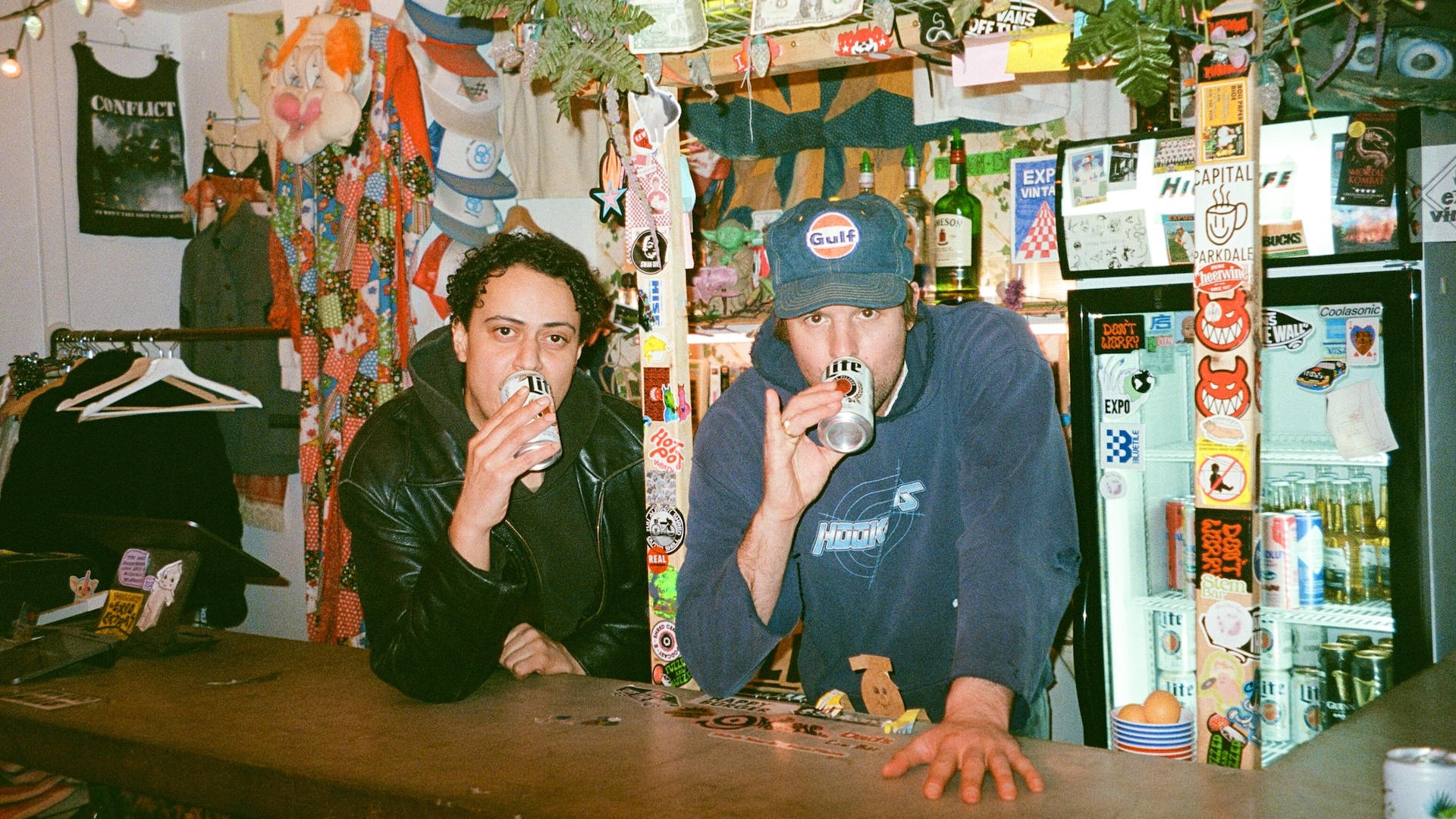
Up until last year, there was a red brick warehouse on Dundas West called Expo Vintage that wore many hats: by-the-pound vintage outlet, concert venue, karaoke spot, house party. But, like all good things in Toronto, it had to come to an end: in 2025, the vintage warehouse was forced to close due to what owner Nick Marian has referred to as an “outdated Toronto bylaw.” The space, bizarrely, was not zoned for retail, and despite Marian’s attempts to apply for a secondhand shop licence (required for stores selling used items), the city turned it down. Rezoning in the city can cost tens of thousands of dollars, and so Marian had to shut the warehouse down. But, also like all good things in Toronto, Expo Vintage has managed to live on, just down the street in its other, much smaller storefront. And Marian is hoping to play a role in fixing what he considers to be a very Toronto problem.
“There’s no unified voice,” Marian laments. The fractured nature of the city and the way people live here occupies most of our discussion, more than the intricacies of running a small business in 2026 or the reinvention of Expo Outlet. The 1948 Dundas St. W. location is in the process of being transformed into a pizzeria, complete with wood-fired ovens and a large outdoor patio.
Marian, 39, came up during what he calls the Vice era, where hyperlocal reporting yielded great visibility into what was happening in the city and thus provided clear opportunities for like-minded individuals to meet. Publications like Vice were responsible for throwing parties themselves.
“You would get a lot of that put back into the community,” Marian says. “You’re not seeing it as much right now, but I do think it’ll come back.”
He offers Vans as an example; they built the wooden halfpipe at the Expo Warehouse. This partnership made sense for both Expo and Vans, each party harnessing a scrappy, DIY authenticity that is hard to come by these days. At a time when it feels like branding and advertising often take precedence over the product itself, Marian recognizes that such a line is typically difficult to tow.
“When you intentionally try to create this environment it can come off insincere,” Marian says.
There’s a version of our conversation — maybe in a world where Marian is more cynical — where nostalgia overpowers, but Marian, firmly entrenched in his community and actively using his position as a small business owner to bring people together, has earned the right to be wistful about the past without sounding jaded.
Marian opened Expo at 1450 Dundas St. W. in 2019 after working for years as a buyer at vintage purveyors Black Market and Public Butter. The store is genderless. The clothes aren’t even sorted by size; much is left to the hands of the buyer, choosing to wear what works best for them. Over the years, Marian’s priority has been to maintain affordability, even at the expense of cutting his own pay.
“I know $100 seems like a lot now, but the goal’s always been you can come in here and get a full outfit for $100. We have more expensive things, but you can get baseline things — pants, shirt, jacket — for $100.” Having been in the vintage clothing industry for over a decade, Marian has seen a shift in shoppers’ awareness, driving significant demand to sustainable alternatives.
“Everyone’s selling vintage,” he says. “It’s a very saturated market now, which is good in some ways because more people are turned onto it, but my thing is, every resource now feels like you’ve depleted it to the point where [you’re] like, ‘Okay, well, now what? There’s no more Levi’s left.’”
Sometimes, Expo doubles as a watering hole on evenings Marian has dubbed “Fashion Bar.” There’s no consistency as to when Fashion Bar will happen — you have to keep track on Expo’s Instagram story — but a couple times a month, you can find Marian behind the bar slinging cheap drinks while music plays loud enough to set the tone but not have to scream. (Marian has a good relationship with the upstairs neighbours, who just welcomed a baby.) In the early days post-peak COVID, Expo was open every Friday and Saturday night until 11 p.m., but Dundas West was still dormant. Over time, Fashion Bar evolved into its current form, preserving the ethos foundational to Expo Outlet’s shows and karaoke nights.

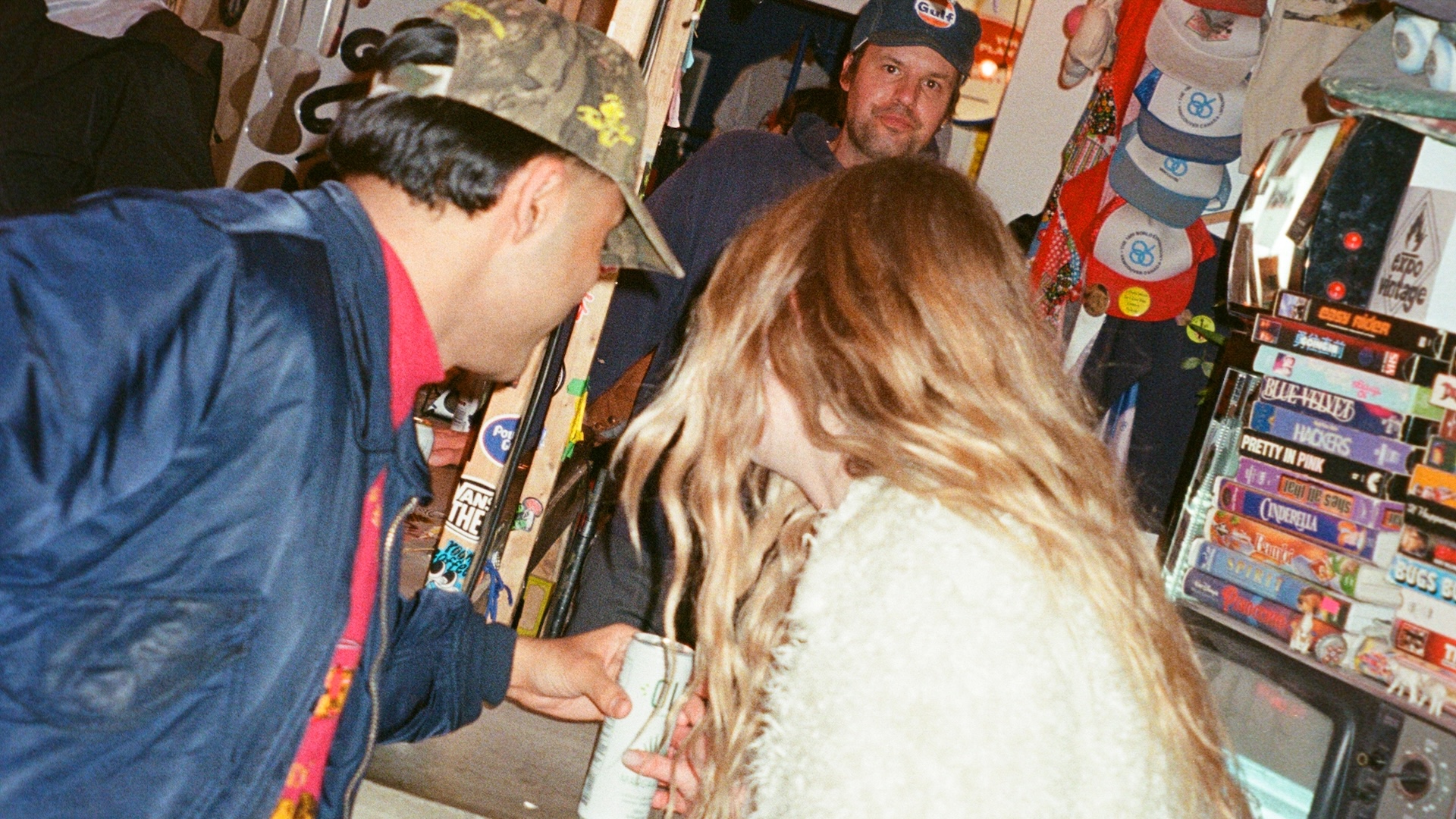
“If people aren’t having fun, what’s important in doing it?” he says.
Hours after our interview, the sun long having set and the wind slapping me in the face as I stepped off the streetcar, I returned to Expo with a friend by my side to experience Fashion Bar for myself. It reminded me of a house party — not only because there was a fold out table set up at the back of the room for beer pong, or because of the moderately bright overhead lighting, or because I witnessed a grown man be iced upon entry, but because people were actually talking to one another; different people than the ones they came with, even! This is a sticking point for Marian, who consciously makes an effort to talk to someone new every day and considers himself the opposite of a homebody.
“I love my house, but I go out every day,” Marian says. “If I’m staying at home, I’m either hungover or I’m ill.”
Josh McIntyre, Marian’s good friend and Cold Pod co-host, confirms this. “This is absolutely true. He’s never home,” McIntyre says over DM, before adding the caveat that Marian will occasionally host dinner parties.
In the aftermath of the pandemic, conversation has become a lost art; the natural fallout is that there are thousands of young people in Toronto in desperate need for genuine connection. Marian notes that for a lot of people who don’t live downtown, the west end has become a destination spot for people on a mission: they arrive by Uber, they eat at a trendy restaurant, then Uber home. There’s little exploration.
“We need to go out and we need to leave the house and we need to talk to people,” Marian says. It’s a simple set of instructions, but Marian notes that we are being dissuaded from adhering to them. “It just all went away, like the peripherals. Growing up here, there were always characters. There were always people you’d see at parties or different bars, and you would say hi to them. It’s a weird formula that we can’t really seem to get back,” Marian says.
He leaves me with a prophecy for the future: “I’m very hopeful for this summer. I think we’re going to see the return of an old feeling here. I have a good feeling.”