




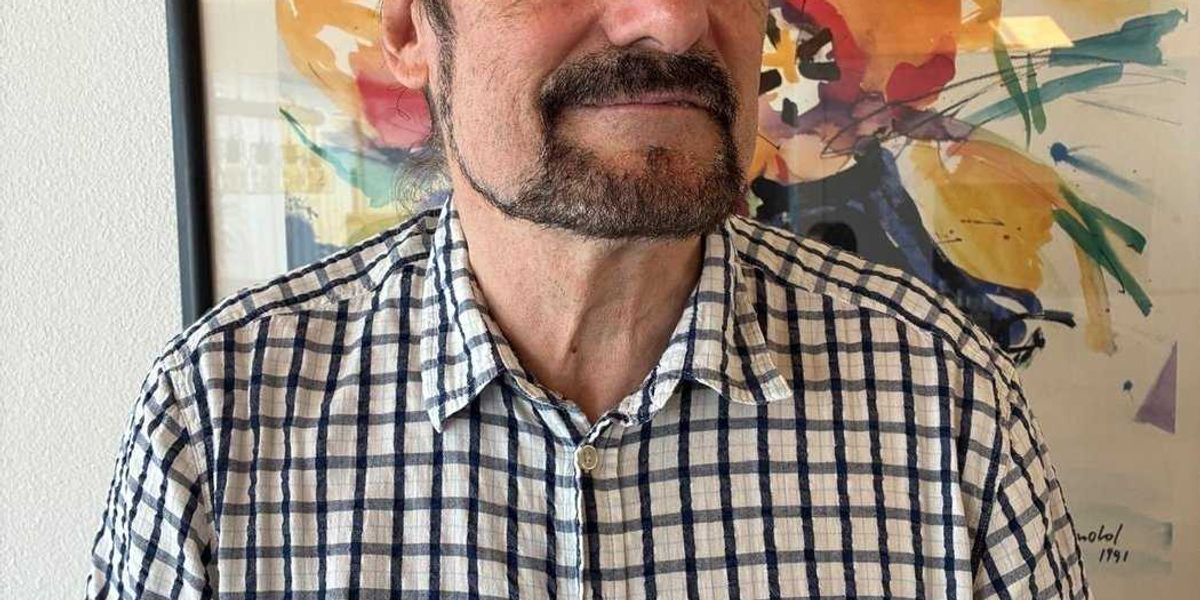






Gillian Sandstrom.University of Sussex/Supplied
Gillian Sandstrom’s conversations with strangers have yielded dinners, tennis tickets and piano duets, among other surprises.
In her new book Once Upon a Stranger: The Science of How “Small” Talk Can Add Up to a Big Life, the Canadian author catalogues how these small, ordinary moments slowly changed how she sees people.
Today, Dr. Sandstrom researches the psychology of kindness at the University of Sussex, with a particular interest in strangers and their effect on our wellbeing. When she strikes up a conversation with a gardener about her gladioli, the stranger shares her vegetable harvest. At Wimbledon, in a women’s washroom, she chats with a tennis fan who’s leaving the tournament early and hands over her prized centre-court tickets. While on holiday in Wales with her husband, she talks to a dogwalker who turns out to be a wig maker for film and theatre. The man invites them over for a drink, which ends at his piano.
Talking to strangers can deepen trust, open minds and ease isolation, Dr. Sandstrom writes. Whether we’re giving directions, compliments or support, the exchanges cut through pre-conceived biases and build human connection.
Still, many people remain leery around those they don’t know. Dr. Sandstrom works to help readers understand these fears and push past them. The book is rich with research on every aspect of these interactions, from small talk and awkward silences to rejection and “elevation” (the warm feeling we get when we watch people being good to each other).
As part of her research, Dr. Sandstrom has created workshops on talking to strangers and collaborated on The Kindness Test, a public-science project that involved more than 60,000 people worldwide. Sixty per cent reported that someone was kind to them in the past day; 10 per cent said it was a stranger.
“Kindness is the norm,” writes Dr. Sandstrom. She spoke with The Globe from Brighton.
You grew up watching (and cringing) as your dad constantly talked to strangers. What did you learn from his friendly habit?
When I was younger, I couldn’t understand why he did it so often. He’s one of those people who thinks everybody’s great. That positive view of others is what I grew up with.
Tell me about the first time you followed his lead and deliberately chatted up a stranger.
On the subway in Toronto, I saw this woman who had an absolutely gorgeous cupcake in this little plastic see-through container. I wanted to know where she got it so I started talking to her. I thought she’d tell me and that would be it. But we kept talking. By the end of the conversation, I learn from her that people can ride ostriches! That’s what conversations do: You bounce around and don’t know what you’re going to get. That’s the beauty of it. It’s also why we get so nervous about it.
What did that random interaction open up for you?
I walked away thinking that was the funnest time I’ve ever had on the subway. I thought, what else have I been missing? It opened up the idea that maybe there was more value in this than I’d realized – that social connection is more important than we give it time for.
People are ever more focused inward, zoomed in on their health, careers, kids’ prospects. We’re spending less time with our friends and neighbours. How do you make the case that strangers are worth the bandwidth?
With our social networks, we only have time and energy for a certain number of close relationships, which require investment and emotional commitment. But talking to strangers can happen in the little moments in between. Often these are wasted moments we can reclaim and make more meaningful.
Say you work downtown. You go for lunch and you’re waiting in a long line. You could pull out your phone and doomscroll, or stress about your to-do list. Or you could talk to the person next to you.
My optimistic thought here is that having a human moment with someone is a good use of time. Research co-authored by Cassie Mogilner Holmes actually shows that when you give away time, you tend to feel like you have more of it. It’s paradoxical.
We got more socially stiff in the pandemic. And we’re still avoiding face-to-face contact – bailing from plans, texting friends instead of meeting in person, working from home instead of at the office. What has this avoidance done to our capacity for engaging with strangers?
In the pandemic, we were cut off instantly from having social interactions, and for a long period of time. Research suggests that social skills are something you have to work at and do regularly. And so we have to work our way back up.
And yet we’ve designed out so many opportunities we used to have that forced us to socialize. We have to choose to do this now. People need to feel there’s benefit to it, and I’m not sure we’re aware of how important it can be.
I play this game when I’m going down those big escalators on the tube in London. I’ll look at people going in the other direction. I try to catch someone’s eye, smile, and get them to smile back. There’s no risk here – we’re not going to talk. But it’s still really hard. Everybody’s on a device or avoiding eye contact.
What’s the worst this experiment ever went for you?
I was on a train and started talking with this man. He started complaining and moaning about his work; he went on and on. I struggle ending conversations, I don’t want to be rude, so I just let him go on. That’s probably the worst thing that’s ever happened – being bored for a while. But maybe I did that guy a favour. Maybe he needed to talk and it helped him in some way.
Some of the most moving parts of your book centre on people offering a stranger emotional support. Asking, “Are you okay?” instead of walking by. Why is this so reassuring to witness?
I never feel better about humanity than when I see people offering support to each other. A stranger saying, “I see that you’re struggling,” and showing kindness – it doesn’t even matter if what they’ve said is effective. It’s the good intent. It’s showing they see you and acknowledge you as a fellow human. I think the message from the book is, let’s be a bit more human with each other.
This interview has been edited and condensed.
