




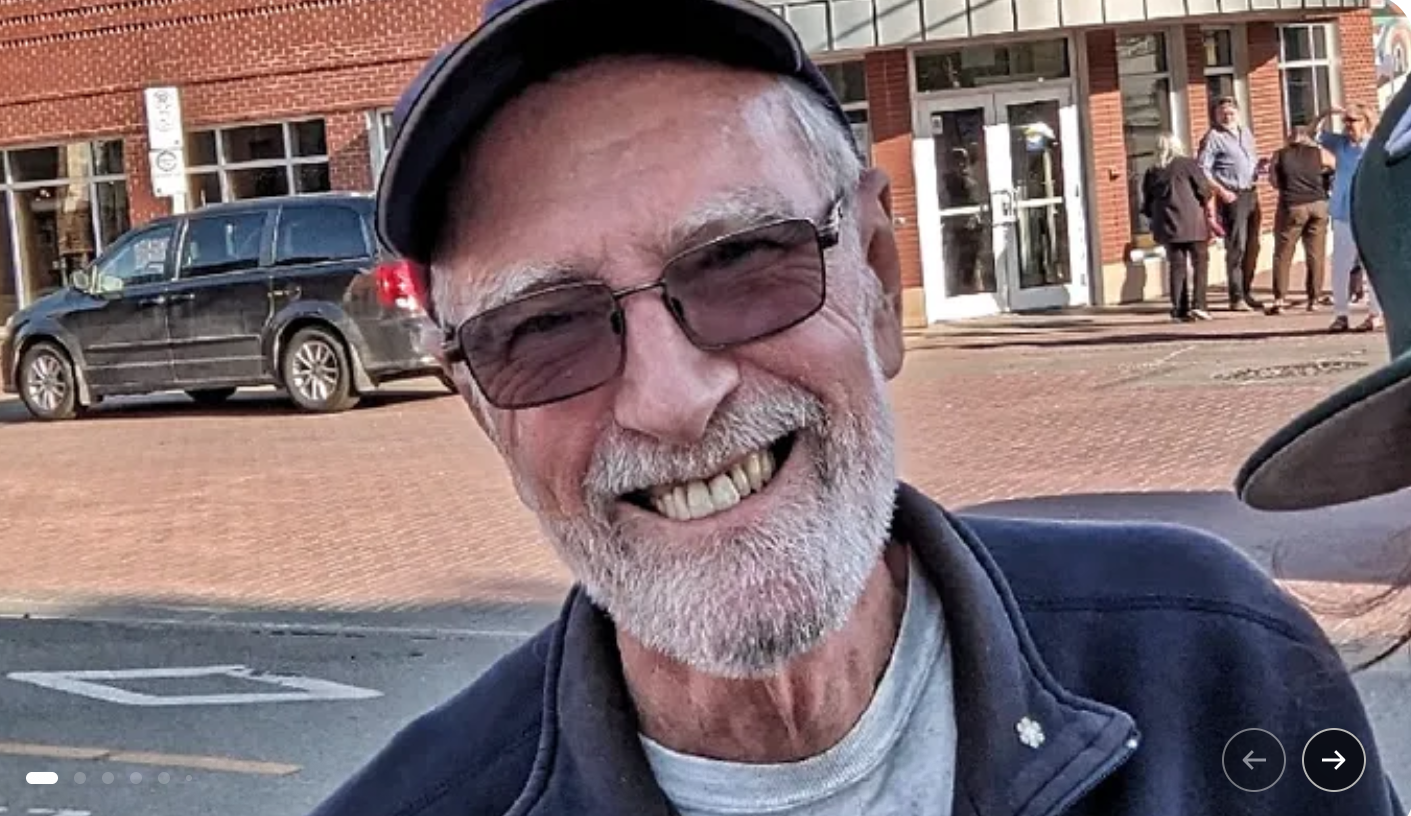
Edmonton Fringe founding father Brian Paisley.
By Liz Nicholls, .ca
The saddest of theatre news this weekend. Brian Paisley, the founder of the Edmonton Fringe (the prototype for fringes everywhere on the continent) has passed away in Mexico where he’s lived for many years, following a pneumonia-related illness.
And we have lost the wry, puckish visionary who had a bright idea, in 1982, that would change the face of theatre here, across the country and the continent. It put this hinterland city on the map, and kept our playwrights and actors and directors here and creating things in the theatre off-season. Forty-five years ago, no one really knew what a Fringe was on this side of the pond. And Brian — it would have been unthinkably formal to call him Mr. Paisley — thought of “A Fringe Theatre Event” as a probable one-off.
Armed with a modest left-over grant, Brian’s summertime inspiration of 45 summers ago, too simple and too crazy to resist, was to invite artists to a dusty warehouse district called Old Strathcona to do a show, their heart’s desire, whatever they wanted to do, no matter how uncommercial, off-centre, idiosyncratic or just plain nuts — and see who showed up. It was unpredictable; it was a low-risk gamble. That was the fun of it. And artists and audiences couldn’t get enough of it.
Partly it was sustained by the way the casual, improvising spirit of the Fringe reflected the breezy, offhand charm of its founder. Brian was a master of inverse marketing: “We have shows for people of every taste, and shows for people with no taste at all,” as he was fond of saying. He was an indefatigable supporter of artists, a congenial comrade to audiences with a high tolerance for chaos and almost none for bureaucracy. In the 10 years Brian ran the Fringe, before he left to take up writing and directing for film and TV, it grew so fast it constantly outpaced its infrastructure and resources and left its organizers scrambling madly to keep up.
I still remember Brian’s office in the dank basement of the old Princess Theatre, with an incomprehensible scheduling board covered with stickie notes. A constant stream of people would stumble downstairs in the dark and pitch him a succession of loony ideas, and he’d always say “well, make a show, try it out….” The guy was a born experimenter, and a generous enabler of other people’s experiments. And people loved him for it. His mantra: “our artistic mantra is to have no artistic mantra.” It sounds so simple and it’s so, well, profound.
Anyhow, this is by way, on a sad day, of thinking fondly of an artist who started something that transformed the way we thought about theatre, and how it gets made. We owe, all of us, big-time. I sure do, since the Fringe was my first gig as a theatre writer for the Journal, and I had so much to learn about casting aside preconceptions and experiencing theatre, in all its live-ness, in the moment.
Big legacies make for big losses.