








The federal government has rejected calls from some residents in southern Ontario to find other spots to set up planned Arctic over-the-horizon radar installations in order to preserve farmland.
Parliament received a flurry of petitions in recent months criticizing National Defence for buying up plots of quality farmland near Barrie, Ont., for the new radar system, and calling on Ottawa to register the land under an agricultural trust.
The government says the long-range radar, a $6 billion project to modernize Norad surveillance equipment, will make detecting threats in Arctic airspace faster and easier.
The federal government bought 288 hectares of land in Clearview Township, west of Barrie, for an antenna receiver site, upsetting local residents. It also acquired land for a transmitter site in Kawartha Lakes, about 70 km north of Oshawa, Ont.
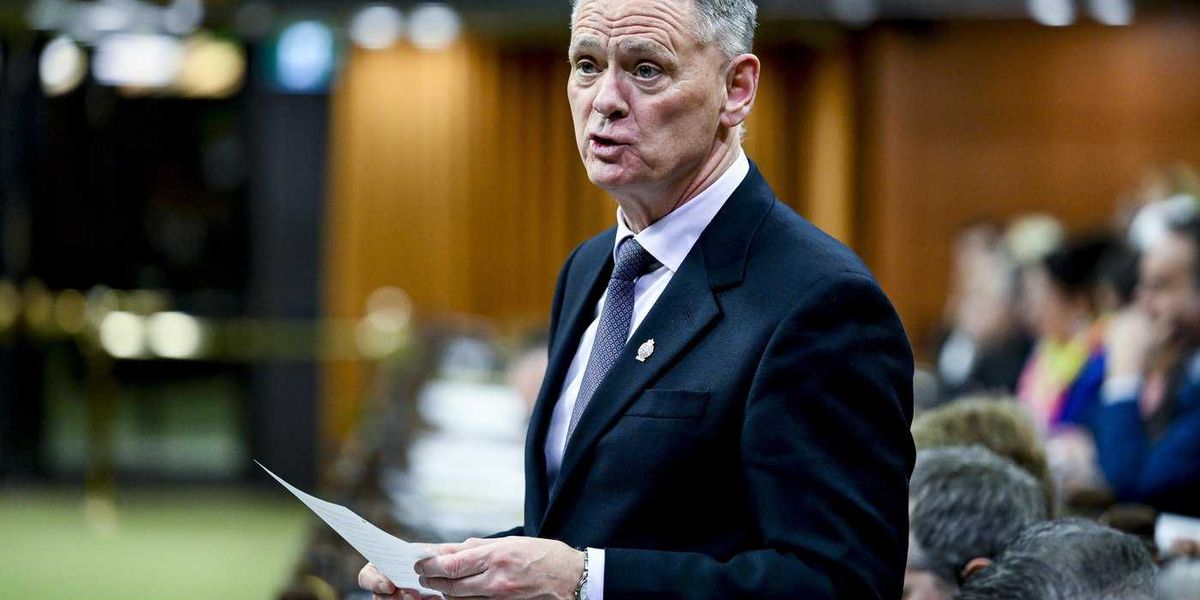
A government response tabled in Parliament on behalf of Defence Minister David McGuinty said the project has “inflexible” location requirements.
Even though it will monitor Arctic airspace, the installations themselves must be built south of the 46th parallel, which means south of the Trans-Canada Highway.
Ottawa said it was unable to find alternative locations after assessing “hundreds” of options against “stringent technical criteria.” It said it looked at military-owned land and consulted with the province of Ontario and private landowners on other options.
“The siting options that arose out of these discussions were deemed to be unsuitable for the program,” the document said.
National Defence ruled out nearby CFB Borden as a prospective site because it’s too busy and the installations would affect training at the base.
But Doug Measures, the mayor of Clearview Township, said he doesn’t believe Ottawa looked very thoroughly for other locations and suspects it’s being built near the Borden base out of convenience.
“There are many locations across Canada they could move this to if they continued to investigate,” Measures said.
“We’re as a municipality not very pleased about this whole thing because there’s very little we can do.”
He said the project is “very, very upsetting” to his community. He said he’s been unable to get a meeting with McGuinty about the project and hasn’t heard from project developers for “many months.”
Measures said the loss of agricultural land would have an enormous negative impact on his community.
“Agriculture is and remains the No. 1 economic activity that happens in Clearview Township,” he said. “Farmland is disappearing. They’re not making any more farmland.”
Measures said many local farmers worry about how the installation will affect drainage, since water will run off through the receiving site into the Minesing Wetlands.
In its response, the government said the department acknowledges the community’s concerns about the loss of agricultural land but maintains it needs this area in particular.
“To implement preliminary (radar) capability by 2029, as part of Canada’s commitment to Norad, we must proceed with establishing a receiver site on the previously acquired property,” it said.
National Defence has also said it has received feedback from locals concerned about how the project could affect the local ecology, such as nesting birds, and whether it would upset local property values.
Documents tabled in Parliament last fall show National Defence spent millions of dollars buying up plots of land in the area for the radar project.
The project is expected to be up and running by 2029 but won’t be fully operational until 2043.
The government’s new Defence Investment Agency is now managing the priority procurement project.
Canada is collaborating with Australia on the development of the technology, which is based on its Jindalee Operational Radar Network. That collaboration includes training Canadian technicians on the equipment in Australia.
This report by The Canadian Press was first published May 11, 2026.
By Kyle Duggan | Copyright 2026, The Canadian Press. All rights reserved.
