




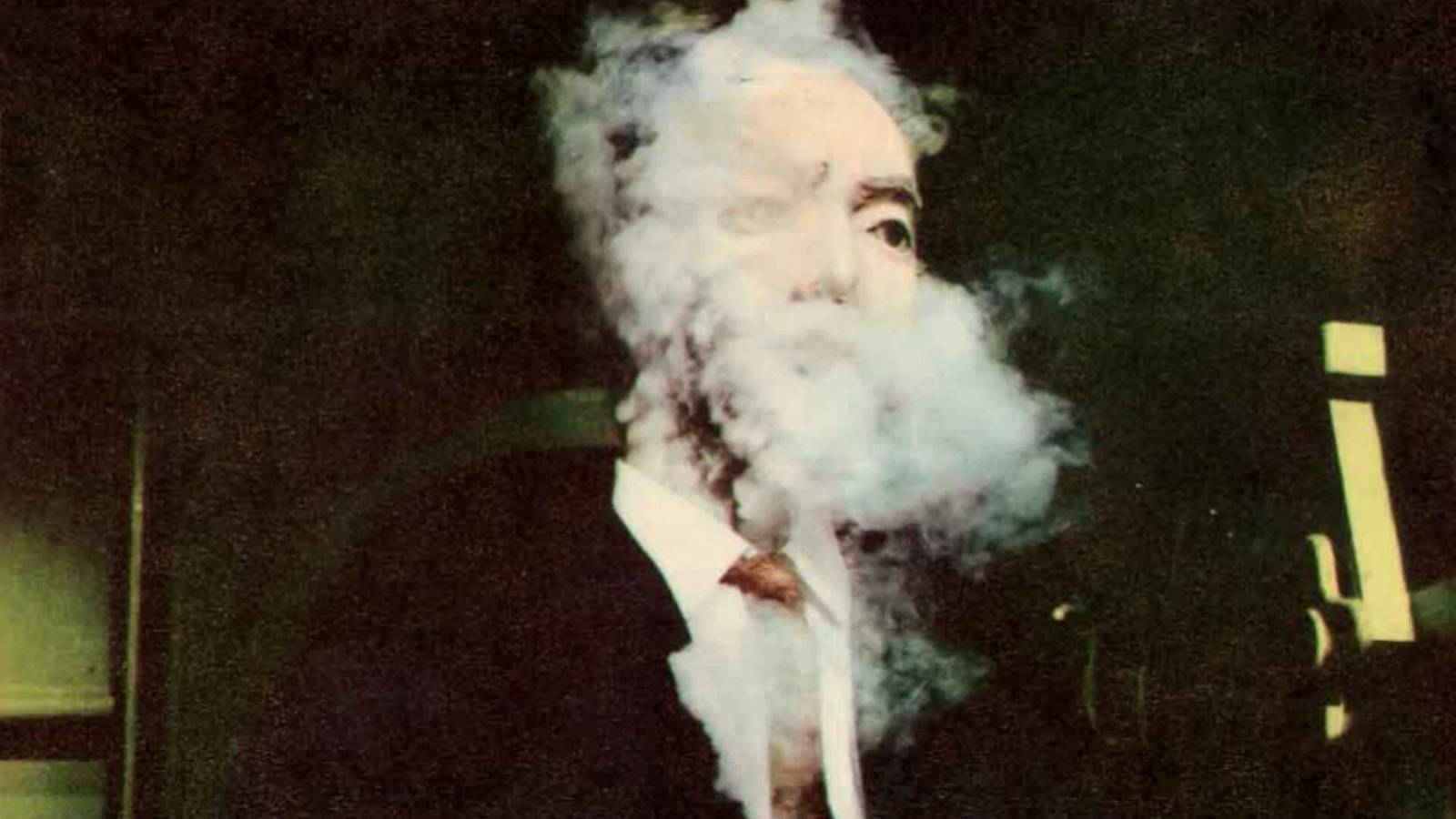
In less than two weeks, one of Netflix’s most interesting new series is set to make its official debut. Called simply Human Vapor, the eight-episode series premiering on July 2 not only brings together South Korean and Japanese production houses, but marks the very first collaboration between Netflix and Toho, the latter renowned for its Godzilla franchise. For many, it looks like an exciting sci-fi crime thriller similar to classics like The Invisible Man (1933) and 4D Man (1959), but it’s technically not an original in concept — even if it’s branded a Netflix Original.
Human Vapor is actually Netflix’s modern spin on Toho’s The Human Vapor from 1960, one of the studio’s weirdest tokusatsu films, which are live-action movies that rely heavily on special effects. Directed by the legendary Ishiro Honda, known as the godfather of disaster cinema and co-creator of the kaiju genre, the early sci-fi noir-thriller recieved critical acclaim despite underperforming at the domestic box office. It was the third entry in Toho’s weird Transforming Human Series of films, which also includes The H-Man and The Secret of the Telegian.
More crime thriller than monster movie, The Human Vapor tracks a man who uses his newfound abilities to transform into mist to commit a string of robberies across Tokyo. It doesn’t quite stand as tall as Godzilla, but the film remains one of Toho’s wildest swings. More than six decades later, Netflix is bringing the concept back from the dead with an entirely new story, a high-profile cast, and a creative team that includes some of the biggest names working in Asian genre television.
If you’re like me and can’t wait to see what’s in store for this fascinating new sci-fi mystery, here’s everything you need to know before diving into the cold world of Netflix’s Human Vapor.
What was the original Human Vapor about?
Released in 1960, The Human Vapor was helmed by the same duo responsible for many of Toho’s most influential science fiction films, director Honda and special-effects director Eiji Tsuburaya. Their 1954 Godzilla film made them instant legends. Rather than focus on what made the studio a household name (giant monsters), Honda and Tsuburaya took the story in a much smaller and far more tragic direction, focusing on a quiet librarian who survives a scientific experiment that gives him the ability to turn his body into vapor.
Hoping to support the career of a dancer he loves, Mizuno begins robbing banks by slipping through walls and evading capture with ease, using the stolen money to fund his lover’s performances. What follows is part crime drama, part doomed romance. Instead of portraying Mizuno as a traditional supervillain, Honda frames him as a lonely and increasingly desperate figure whose extraordinary powers only deepen his isolation. The film has earned a cult following over the years precisely because it feels so different from the monster movies that made Honda and Toho famous at the time.
In fact, The Human Vapor was one of the few tokusatsu films of the era to receive such critical reception. It became a smash hit in the United States and Europe following its international release several years later, leading to plans for a follow-up film that never materialized. Today, The Human Vapor isn’t as widely available as other classic Toho productions, but physical media releases from The Criterion Collection and other distributors have helped keep the film accessible.
If you’re looking to catch the original before Netflix’s new series steals the limelight, check it out on Prime Video before it leaves the platform on July 1.
What is Netflix’s Human Vapor about?


Interestingly, Netflix’s new Human Vapor isn’t a straightforward remake. Instead, the series uses the original film’s central idea of a man who can transform into mist as the foundation for an entirely new story set in modern-day Japan. Even so, elements of the original still feel eerily present.
The series follows a mysterious figure capable of transforming into gas and passing through virtually any barrier, using the abilities for nefarious means. After a series of shocking murders, police, journalists, livestreamers, and politicians all become entangled in a nationwide hunt for the elusive criminal nicknamed “Human Vapor.” The setup ignores the original film’s tragic romance and shifts the story into a more large-scale conspiracy thriller, which could make it even more interesting for fans of sci-fi and mystery.
The production is also an impressive collection of creative minds. The series is written by Yeon Sang-ho, best known for Train to Busan and Hellbound, while Gannibal director Shinzo Katayama oversees the project. The cast includes Shun Oguri, Yu Aoi, Suzu Hirose, Kento Hayashi, Yutaka Takenouchi, and newcomer Uta Uchida in the title role. Visual effects are being handled by Shirogumi, the studio behind the Oscar-winning effects work in Godzilla Minus One, bringing the story of The Human Vapor seemingly full circle.
Combined with Toho’s involvement and Netflix’s growing investment in Japanese live-action productions, Human Vapor has the potential to introduce one of the studio’s strangest cult classics to a much wider audience after the series’ debut on Netflix on July 2.