






Some of the best shonen anime are unforgettable coming-of-age stories. Naruto maps the journey of an outcast child who grows up to become the pride (and protector) of his village. My Hero Academia follows a boy without superpowers who pushes himself to become a Hero after inheriting an ability like no other. Mob Psycho 100 tackles growing pains by allowing its overpowered protagonist to develop deep connections and radical empathy. These stories are popular for good reason: They appeal to universal emotions while offering (and in some cases, subverting) the most electrifying fighting tropes that shonen anime generally champion.
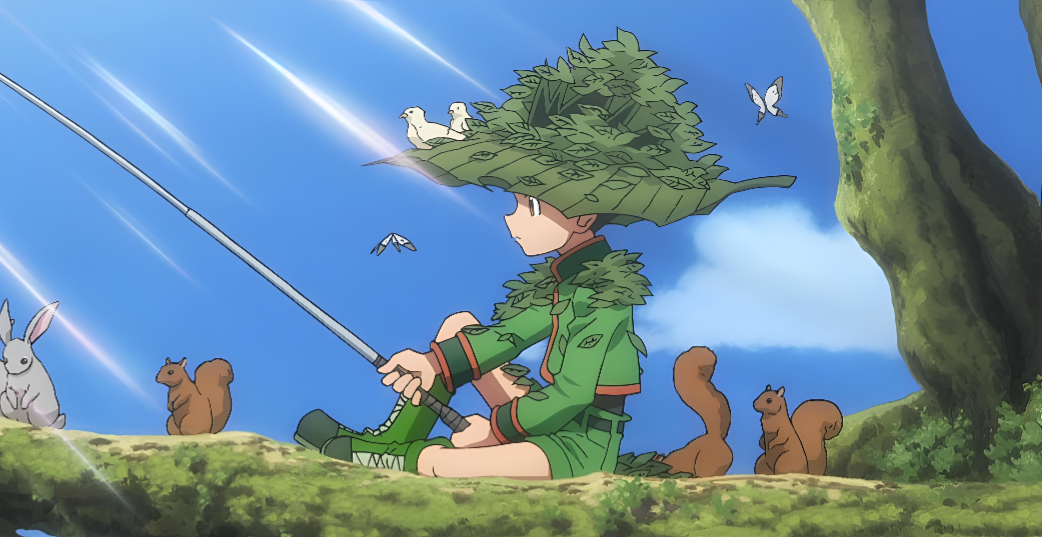
Hunter x Hunter perfectly fits that bill. The beloved anime series portrays the experience of growing up as a complex, multifaceted phenomenon. Instead of being a straightforward hero’s journey about embracing maturity or overcoming obstacles, Yoshihiro Togashi’s manga explores the dark, messy aspects of working through childhood trauma.
Madhouse’s 2011 anime adaptation of the source material does justice to these complex themes over the course of six astonishing seasons. The Hunter x Hunter anime is leaving Netflix on Aug. 1, but it’s not too late to revisit the series.
The titular Hunters in the story are licensed professionals who track down treasures, monsters, and people in ways regular humans cannot. To become a Hunter, one must pass the Hunter Examination, which has a success rate of less than one in a hundred thousand. As if those odds aren’t difficult enough, Hunters also have to adhere to Hunter Bylaws while tackling deep systemic corruption and moral indifference within the Hunter Association.
Hunter x Hunter follows a boy named Gon Freecss, who grows up believing he is an orphan. After learning that his father, Ging, is not only alive but also a renowned Hunter, Gon embarks on a journey to undertake the Hunter Examination, meeting fellow aspirants and allies along the way.
The Hunter Examination arc is meant to push Gon and his friends to do their best, as a certain benchmark for excellence is set as soon as they decide to become Hunters. This segment has a similar storytelling impetus as the decisive Chunin Exams in Naruto, which Hunter x Hunter uses as a foundation to build a world rife with horrific threats and deadly political intrigue.
There is space for comfort through the bonds Gon forges with Killua Zoldyck, Leorio Paradinight, and Kurapika, but we’re immediately made to realize this is a story about lost innocence. Kids like Gon and Killua are forced to grow up and embrace imperfect morality just to survive, creating a simmering tension that is well sustained across future arcs.
While Hunter x Hunter doesn’t necessarily reinvent expectations around shonen, it cleverly upends tropes that are considered par for the course. Shonen protagonists often (sincerely) embody a cheerful demeanor despite experiencing severe psychological trauma (think Monkey D. Luffy from One Piece) or are guaranteed victory after their personal growth is hard-won. Gon is a deconstruction of these ideas; his boundless optimism and selflessness are not always innately positive traits, as they’re rooted in emotional trauma.


This hero often gets caught up in idealized delusions, exhibits selective empathy, and even alienates close friends when his obsessions make him tunnel-visioned. Gon and his friends often lose important fights or miss out on milestones that should’ve been successful, and sometimes, conflicts end in tragic or unconventional ways. This realism is also extended to battles, as raw power or skill alone doesn’t guarantee victory. Any environmental advantage, strategic factor, or random circumstance can lead to character deaths that are impossible to anticipate. After all, it underlines the unspoken rules of an unpredictable world where the absence of fairness is the only constant.
At a cursory glance, Hunter x Hunter might seem like a run-of-the-mill coming-of-age affair, but the story resists convention at every turn. Although Togashi’s manga is far from over, Madhouse’s 2011 anime feels like a sustained story with a natural stopping point, where the journey is more thrilling and eventful than the destination. If you’re partial to well-crafted power systems, complex explorations of adolescence, and expansive stories that aren’t afraid to showcase loss and vulnerability, Hunter x Hunter is well worth your time.
Hunter x Hunter leaves Netflix on Aug. 1. It can also be streamed on Hulu, Prime Video, and Tubi.