




Patch Notes is a weekly newsletter bringing you the best of Polygon, sent on Fridays and published on the site on Sundays. You can subscribe here.
This week, Disney released a live-action remake of Moana, its wonderful animated movie. Moana is barely 10 years old and it bangs. It’s playing constantly in every family household that has a Disney Plus subscription. It does not need reinterpretation, and hasn’t got it: Dwayne Johnson reprises his role as Maui and the digital rendering of the fantastical ocean setting looks exactly the same in the remake as in the original. Critics are unimpressed and baffled by its existence. Loads of people will go see it anyway.
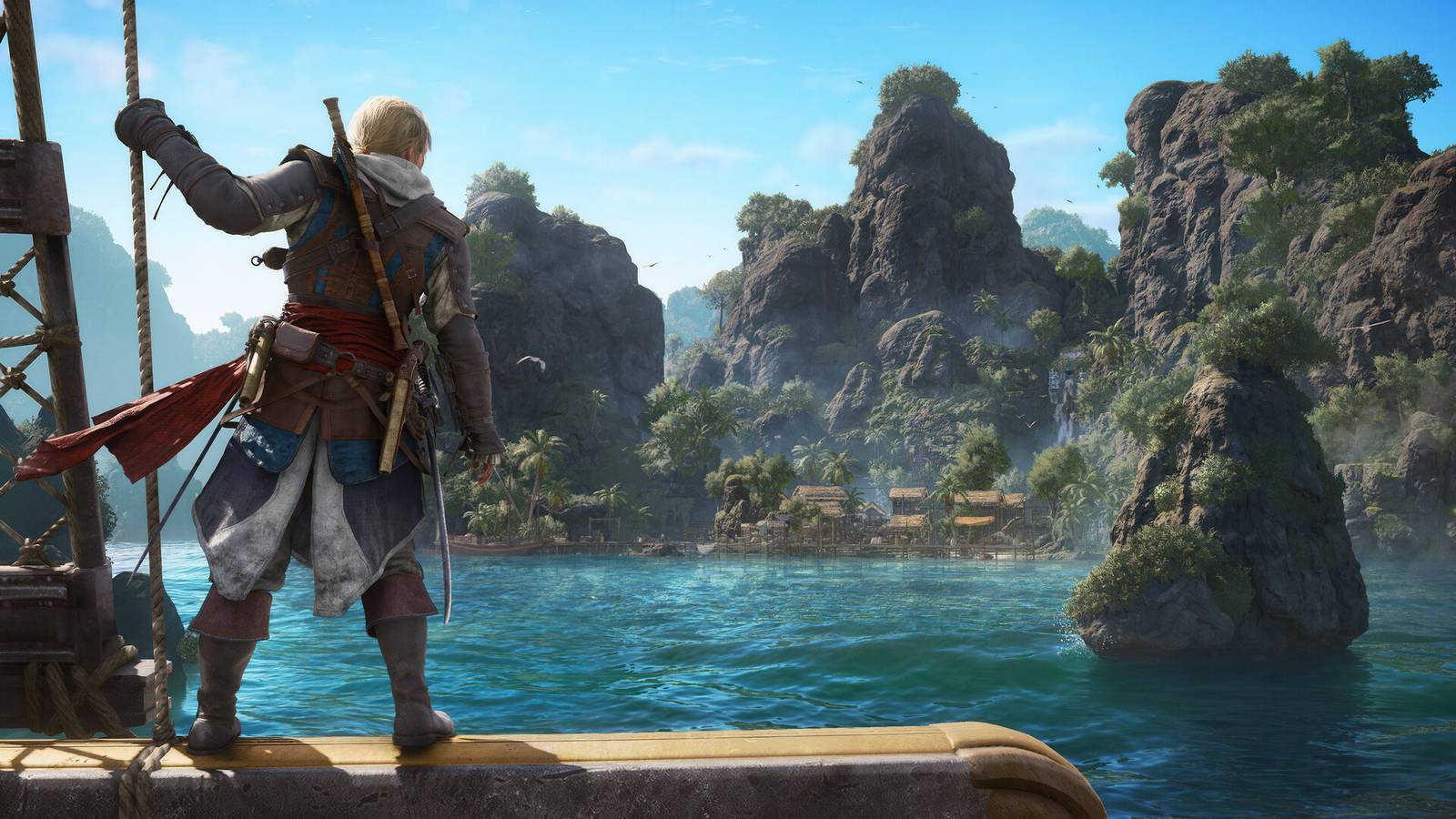
Also this week, Ubisoft released Assassin’s Creed Black Flag Resynced, another seafaring remake. The original Black Flag is a relatively ancient [checks notes] 12 and a half years old and it bangs. But, unlike Moana (2016), nobody’s still playing it. Critics are somewhat divided on the remake’s successes and failures, and some mildly question its need to exist, but mostly, they seem to like it quite a lot. Resynced will probably do just fine.
Disney and Ubisoft’s reasons for remaking these two properties are probably broadly similar. Making brand-new stuff at this scale, for these gigantic mass-market audiences, is exceptionally difficult, expensive, slow, and fraught with risk. Meanwhile, the release schedule begs to be filled, and popular entertainment brands like Moana and Assassin’s Creed need reasons for people to re-engage with them to keep the financial wheels spinning and the merch flowing. Also, for reasons too deep, complex, and maybe frightening to go into here, nostalgia has an ever more powerful grip on the culture. People want to go back while still feeling like they’re going forward and experiencing something new… ish.
These two artforms are not the same, though. The practical and technological barriers to watching a film from a decade ago are zero, and while storytelling fashions may change, there’s nothing about the experience that degrades over time. For games, that’s not quite true. Ten years in gaming is quite a long time in technological and design terms, and many great games age badly, fast. Compatibility issues with current systems arise quickly. (Though the original Black Flag doesn’t suffer from these; it has PlayStation 4 and Xbox One versions that are easily playable on current consoles.)
So — in addition to our perhaps dubious desire to wallow in nostalgia and see even recent memories refashioned and served to us afresh — gamers have legitimate cause to want remakes. Well-executed remakes can keep the great works of the medium relevant and accessible in a way that’s simply not an issue for classic movies, books, or albums.
The Legend of Zelda: Ocarina of Time is a perfect masterpiece and I’m terribly worried about how Nintendo’s upcoming remake might mess with, or simply fail to capture, its magic. But, let’s be honest, like many early 3D games, it’s quite creaky now. Is a new generation of Zelda fans, weaned on Breath of the Wild, really going to have patience with the original’s awkward camera, terrible frame rate, and muddy visuals? Won’t it be great for them to play it in a version that feels fluid and fresh, and is capable of inspiring the same awe that we (well, I; I’m old) felt in 1998?
When remaking a classic — or anything, really — the pitfalls are many. People want different things from them. Some just want compatibility and modern visuals. But, hmm, maybe we could fix those awkward interface elements and the janky camera while we’re at it. And hey, what about that one line of dialogue that everybody hated? And that boring set of sidequests — let’s ditch those. Combat’s been done better in this genre since, so it could use a refresh. Where do you draw the line?


Even an extremely faithful remake can go too far for some players. For example, take another remake of a perfect masterpiece: Bluepoint Games’ 2018 version of Shadow of the Colossus. It looks absolutely glorious, but in lifting the heavy curtain of fog that lay over the original, did Bluepoint reveal its true beauty or destroy its melancholy mystery? Was the fog in the 2005 original an artistic choice or a technical limitation? Does it matter? On the other hand, you’ll have to look hard to find any fans annoyed that Dragon Quest 7 Reimagined ruthlessly cuts back the original’s interminable opening stretch. Sometimes we want what we think we remember, rather than what we actually got.
With Black Flag Resynced, some feel that far too much has been changed, like the almost complete excision of its modern-day framing, which drastically alters the tone if not the substance of the adventure. For others, it’s not enough. If you’re going to make changes, perhaps the answer is to go all the way and completely recontextualize the story in what amounts to a new genre, as in Square Enix’s Final Fantasy 7 remake project. But at that point, doesn’t it become a different game entirely? Perhaps the gold standard for reinvention is Capcom’s bold Resident Evil remake series, which doesn’t update or reupholster the classics so much as ask the question: What would these games look like if we made them now?
The perfect remake formula will be different for every game, and possibly for every player. Perhaps we’d rather have something truly new; perhaps, in our heart of hearts, we wouldn’t. Either way, we’re going to get remakes, so what we should really do is ask ourselves what we want from them.