




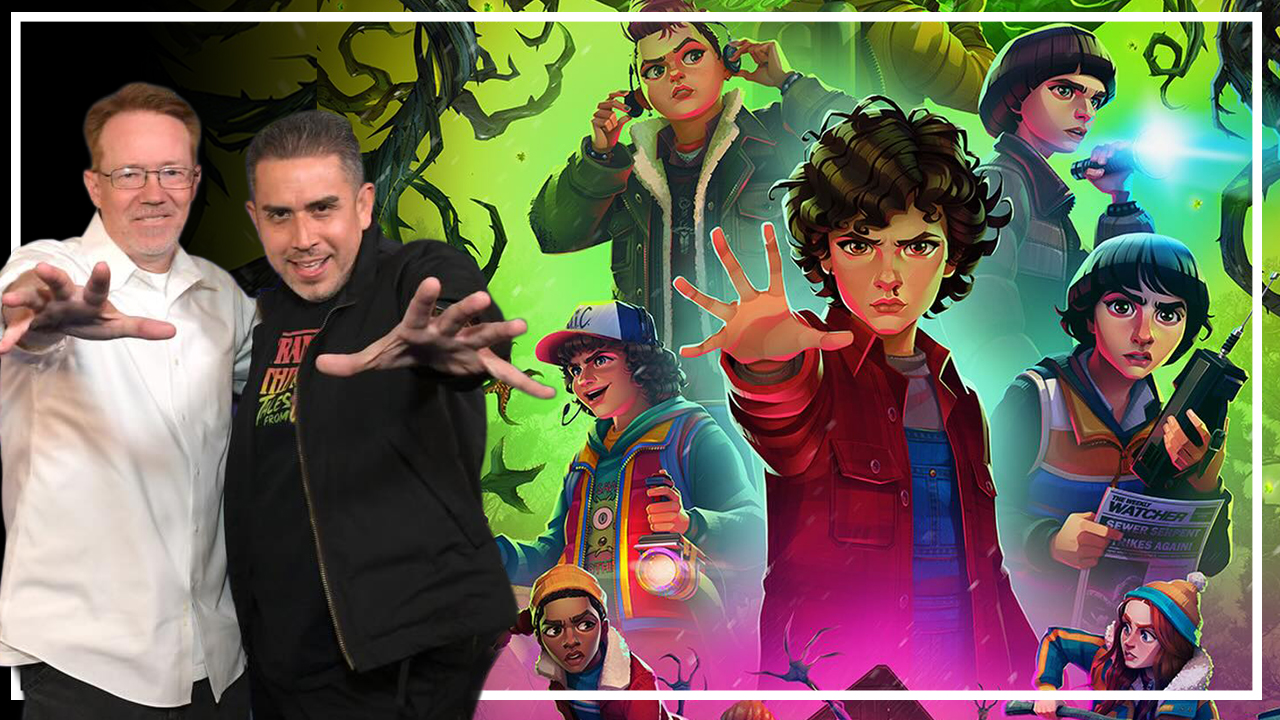
Picture Credits: Flying Bark Studios / Netflix
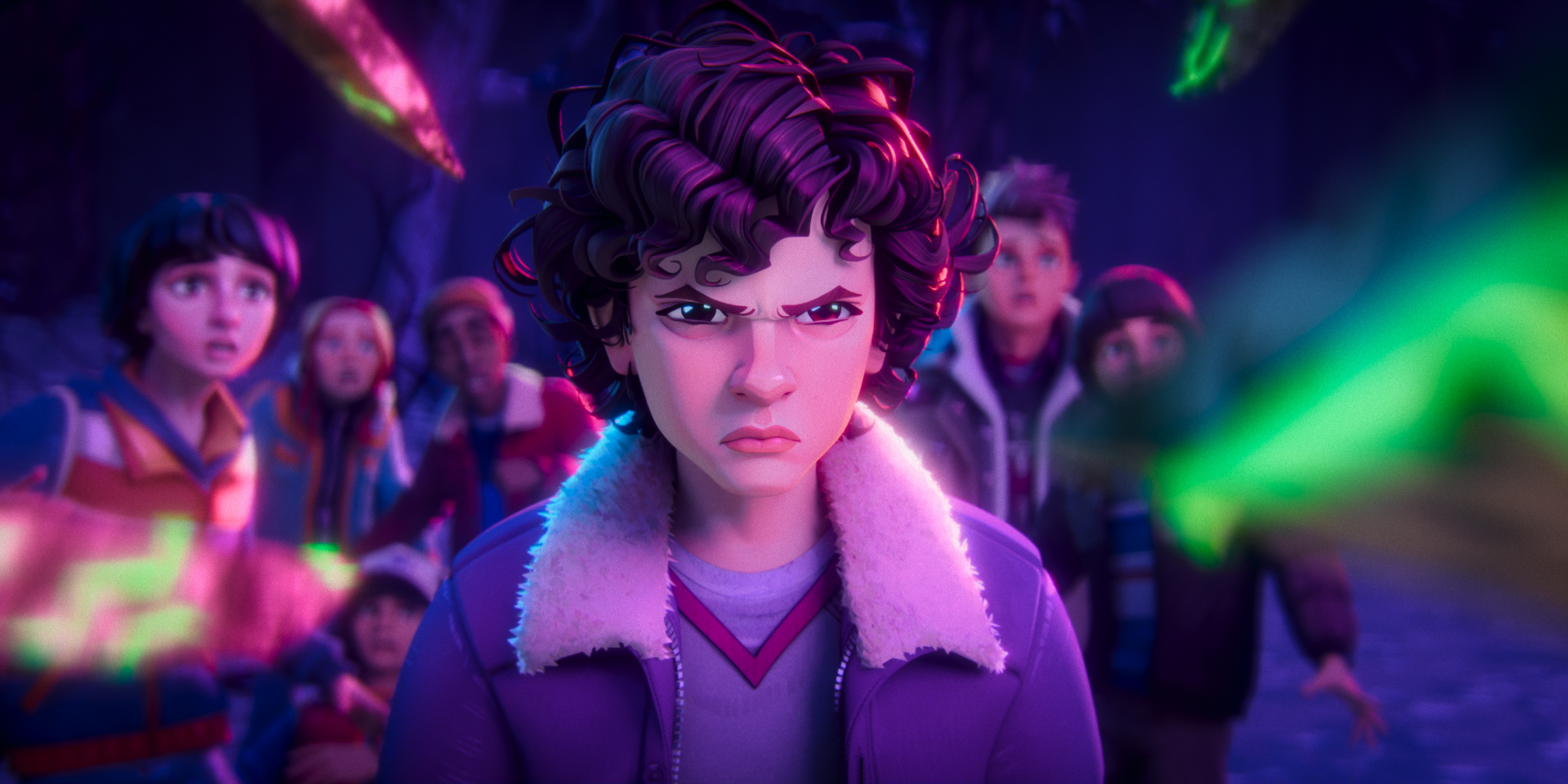
Stranger Things: Tales From ‘85 is an animated journey back to Hawkins, Indiana. It’s set between the events of season two and three, without disrupting the original narrative from the Duffer Brothers. It’s like a lost chapter, similar to a good Star Wars paperback.
The series comes from creator Eric Robbles, who previously worked on The Grim Adventures of Bill and Mandy and created Glitch Techs for Netflix. It was on the latter show that he first worked with Ian Graham, who’s the co-ep and Senior Vice President of Creative at Flying Bark Productions LA. It’s one of the largest studios in Australia behind great animation.
For Graham, like Roberts, good animation is all about storytelling. “Ian is my number one guy, man,” Roberts told What’s On Netflix. “I needed a right hand, and Ian is my right hand in every aspect of this show. Ian was a director on Avatar and Kora, so he’s bringing all his talents to the table in this series.”
What were some of the foundational ideas that Stranger Things: Tales From ‘85 was built on?

Ian Graham: Eric’s talked about keeping the world alive without opening a gate. I mean, that was the foundation for this entire concept. It wasn’t easy. There were a lot of people who came up to bat to try that idea out and couldn’t solve the puzzle. Eric had a brilliant idea on how to solve the puzzle, which I don’t think I can share, but basically he solved the puzzle. Once that had got going, Eric and I were two kids in a candy store. We’re both super involved in everything from the writing to the storyboards, the animatics. Everything related to this show is the lifeblood of what we care about.
When you two joined forces for the show, which artists did you want to enlist from there?
Eric Robles: We were very fortunate, both Ian and I, to have worked on Glitch Techs together, which was my previous show. Not only did we build our relationship there, we figured out our language, our creative language. On top of that, we built an amazing team back then. When it comes to Stranger Things, let’s get the band back together.
We reached out to some of our top talents. We have Sarah Partington, who became our supervising director on season one. She’s just an amazing storyteller, story artist in every aspect. We had Ben Choi, who came back to help us build a foundation on this stuff. Ian, you could speak on some of our team.
Ian Graham: I spent most of my career working as a storyboard artist and a director. You make a lot of relationships over the course of 30 years in animation and working on projects like Avatar: The Last Airbender or The Legend of Korra. They give you a lot of ability to pull in some of that high-end level talent. Eric and I were like, “We’re going to make this a cinematic piece. Let’s make it epic. Let’s make it live up to the standards that the live-action show has given us.” And so that’s exactly what we did. I’m very hands-on in picking these people and getting them in front of Eric. It’s like casting for storytelling. You don’t want three people on a team that are all identical. You want each one to bring a specifically unique voice to the table.
Cr. NETFLIX © 2026
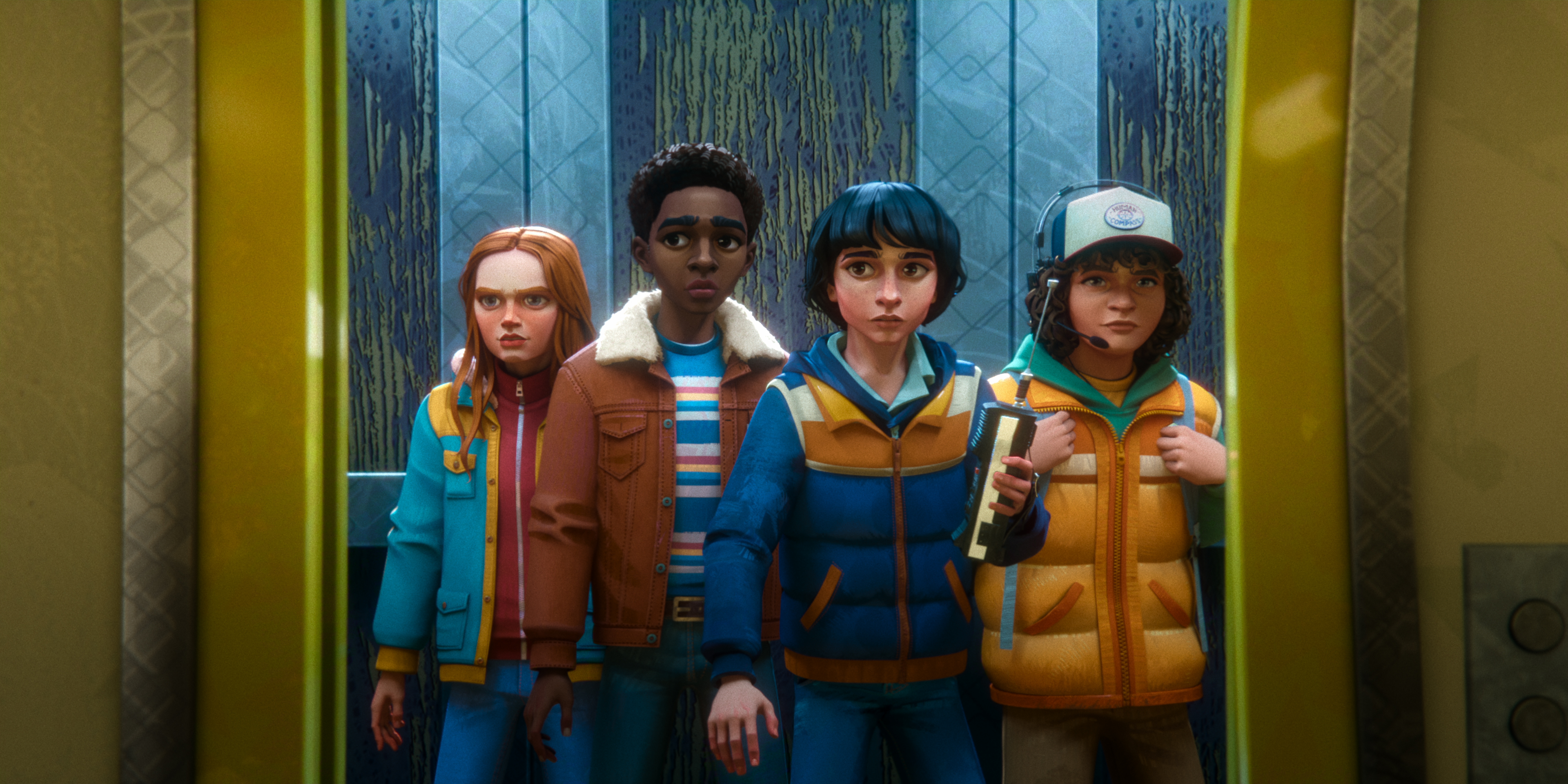
You wanted to achieve that epic, Stranger Things scale, so how did you both want to achieve that in the animation?
Eric Robles: I feel the camera has a voice of its own. Understanding that the camera is invested in that journey of the story and telling that same story at the same time. You can have an amazing script, but if it’s not storyboarded correctly, then it falls flat and you miss the heart, you miss the emotion.
Because we’re animation, we’re able to push the camera in ways that might cost a lot to do or would be very expensive in live action. We’re able to do it in a way that really captures those heavy moments, those big epic moments. At the same time, to be honest with you, it’s even about the subtle moments.
It’s about those moments where the characters are just talking. You’re not just doing headshot to headshot; you’re going wide and you’re understanding that they’re in this lonely space and it’s just them two.
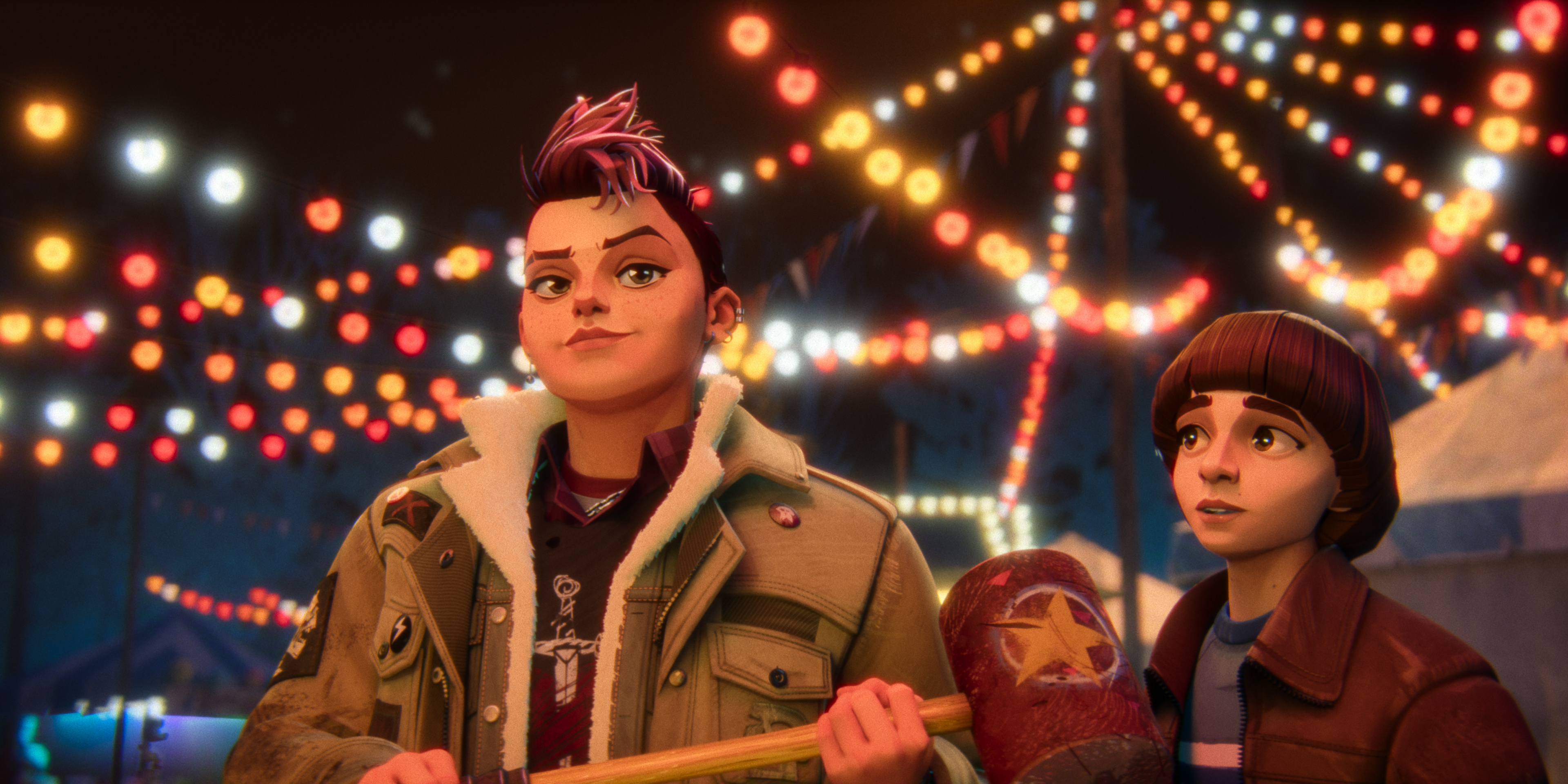
Ian Graham: We had some huge shoes to fill in the context of there’s some seriously sophisticated filmmaking going on in the flagship that we had to tackle and bring into our wheelhouse. At the same time, what inspired the Duffers were Steven Spielberg, George Lucas, Francis Ford Coppola, and Martin Scorsese in their heyday. So we’re referencing Jaws, Raiders, Star Wars, The Empire Strikes Back, and need to bring all that to the table. We had to make sure that we had high-level, sophisticated filmmaking.
Cr. NETFLIX © 2026
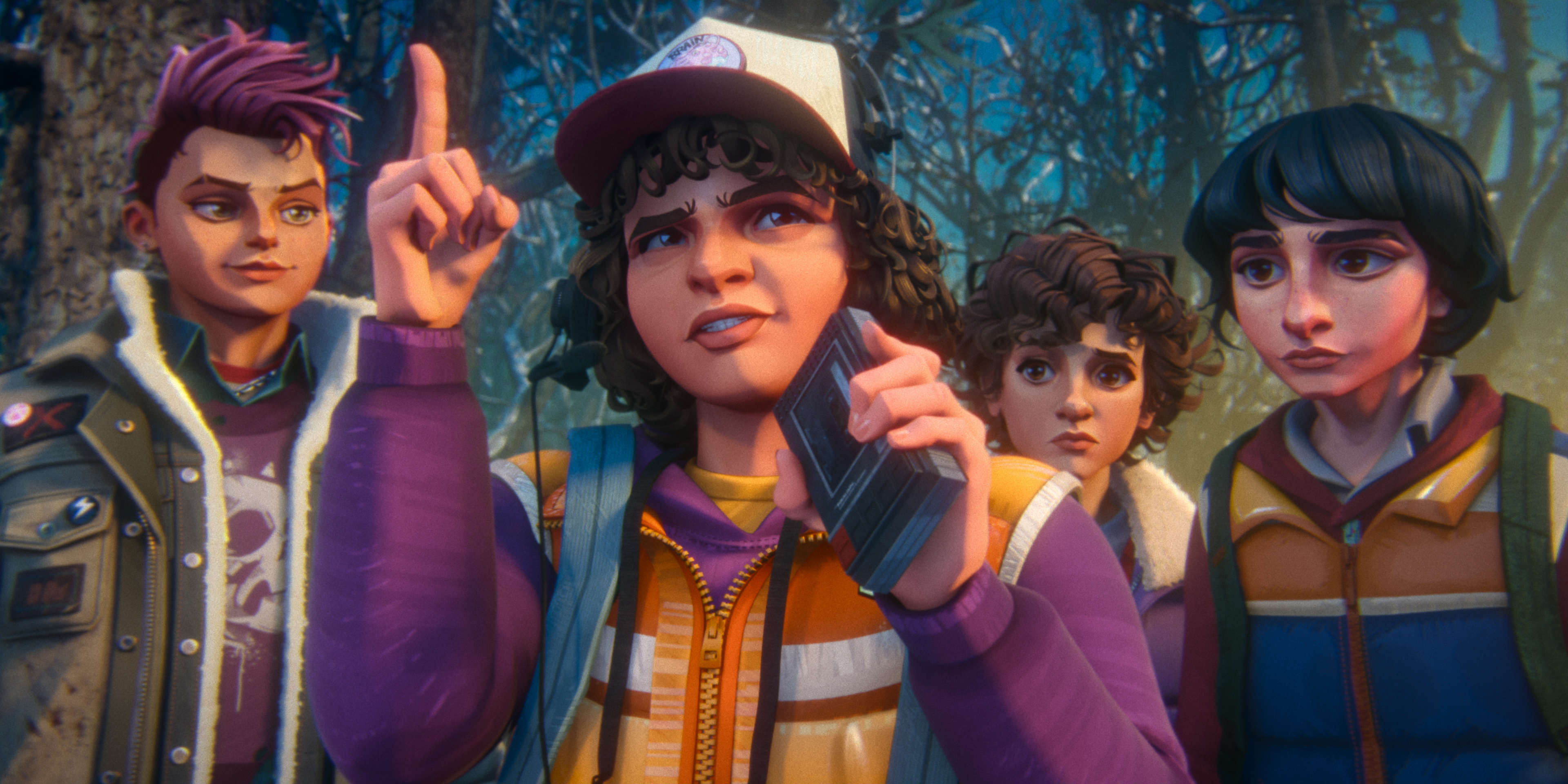
A scene that highlights that scale you’re speaking to is definitely the pumpkin patch action scene, featuring Black Sabbath. How’d you land on that song choice?
Ian Graham: I sit in the animatics with Eric and we toil over this stuff. I literally will spend my weekends listening to different songs because I grew up in the 80s. With Eric and I, music was such a foundation of who we were back then.
You’re watching this horror sequence. As we’re going through it, I’m like, nothing could possibly sell horror more than early-days Black Sabbath. They had this hardcore energy, but there’s also an almost creepy vibe to that music. One of the things I’ve learned over the years that I appreciate immensely is that music is the soul of filmmaking.
Without it, the sequences don’t work or they might feel hollow. With the wrong song, you could take a great sequence and it doesn’t materialize. And so that passion went into that. When we found that song, we were so excited and knew that this was going to play well, and it did. We’re so excited. And we brought that energy to every single sequence in this entire series.
Eric Robles: The title’s also very fitting, “Children of the Grave.”
Cr. NETFLIX © 2026
What was it like jumping into the lore of Stranger Things and new ingredients that you wanted to bring to it?
Eric Robles: We were very fortunate to have the Duffer Brothers really supporting us. We had Paul Dichter, who is obviously a writer on Stranger Things, the flagship series, be a consultant for us during the early days of development, making sure that we were staying on track. And then when it came to start producing the show, we brought in Caitlin Schneiderhan, who became our head writer for the series. We’re staying as true as we can to the flagship.
At the same time, we started just creating our new path for what Stranger Things became. We’re really involved in the writing. Writing just is the heart of it all. Look, working on a show like this isn’t easy because there’s a lot of math to it. There’s a lot of math. All the pieces — the evolution that’s happening within the show, there’s a gate that’s supposed to be technically closed — how is all this happening in Hawkins right now? All that needs to make sense.
We didn’t want to just do something and be like, “Ah, nobody’s going to know. Who cares? It’s just going to be cool monsters.” No, we had to make sure that the math was matching. We owed the Duffer Brothers that respect to make sure that this was working because their names are on it, this is their property.
Ian Graham: We also had to make sure that, like Eric’s saying, all the characters are tracking well. At the end of the day, I think that being in that writer’s room is probably one of the areas where Eric and I are the happiest because it’s just the most fun. It reminds you of being a kid and being creative. There’s no boundaries in that moment, at least for a little bit before the practical stuff kicks in later, but it’s the most fun and it gives us the most joy.
Cr. NETFLIX © 2026
Let’s end with the practical side, probably the most mathematical when it comes to animation. Once the writing was done, what did you both want to accomplish with the style of Stranger Things: Tales From ‘85?
Ian Graham: There’s a question we get asked often that sometimes gets forgotten: why animation? Why animation? Why do this in animation? We needed to make sure that both in the writing and in the visuals, that there was a good distinct reason for that.
Eric discovered and built this amazing style for the show. It’s a unique look that is very important to the foundation of why animation, but also in the storytelling and the filmmaking. We can do things with L that are harder for the flagship, and would probably cost a lot more money even in live action. So it allows us to play with what L can do and get to explore those avenues that animation only can do.
Eric Robles: We’re just excited about the fact that we are animation. There’s a sense of art coming to life. The Kyle Lambert posters, by the way, were our north star. Those early Stranger Things posters, I was like, if we can bring those posters to life in animation form, we’ve got ourselves a pretty cool series, man.
Stranger Things: Tales from ’85 season 1 is now streaming on Netflix.