
![13th Jul: José Totoy's Amazing Discoveries (2024), 34m [TV-Y] (6/10)](https://occ-0-1081-999.1.nflxso.net/dnm/api/v6/0Qzqdxw-HG1AiOKLWWPsFOUDA2E/AAAABft1i2LbLBChg5InLUpEEsVRVWQMwTr0csYDpfjfukqRAJ4m8p6M6t1WJuhfxAmpMPCap5K-DiAFRnIXIZ-0SZXXP7itE1mBrjJZn50pA-sKjbo3qgZJgDOSEdTB7Fzlf8wutnH43BKEgA1cs0gNpbq10eKT15kgQa-f3H4M53tyBQ.jpg?r=336 "13th Jul: José Totoy's Amazing Discoveries (2024), 34m [TV-Y] (6/10)")






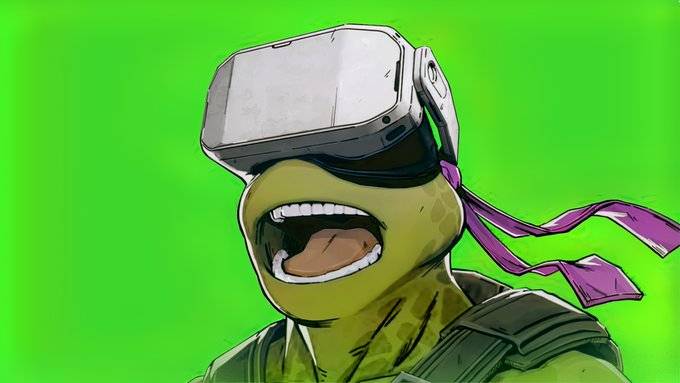
I always picked Donatello. Back when I was a little kid, playing Ninja Turtles with my brother or with my friends, I’d always be the one to find the nearest broomstick and unscrew the broom part, which would instantly transform me into the purple bandana-wearing hero in a half shell. Then my compatriots and I would go on missions to find the Shredder’s hideout and rescue April (played by a female friend who probably wanted to be a Turtle, but agreed to be April instead). We’d save April, defeat the Shredder, and celebrate with some pizza. It was awesome.
As an adult, I’ve continued to collect Ninja Turtles action figures, read Ninja Turtle comic books, and play Ninja Turtle video games. But that specific feeling of being a Ninja Turtle, that feeling of total immersion into playtime, is something that I thought was reserved to childhood. Then I played Teenage Mutant Ninja Turtles: Empire City and for the first time in decades, I managed to feel that again.
Developed by Cortopia Studios, Teenage Mutant Ninja Turtles: Empire City is the very first VR Ninja Turtles game — and it does not disappoint with the unique experience it provides. The game is all about the Turtles getting involved in a turf war taking place within the Foot Clan. It’s set after the Turtles have defeated the Shredder, spurring two factions of the Foot to vie for control of the army of ninja thieves. There’s the New York faction led by the obscure character Mashima, and the Japanese faction led by Karai, a fairly integral character to most versions of the TMNT. Karai operates as an ally in the game, but only to a point, as it’s unclear if she actually wants peace between the Foot and the Turtles, or if she’s just using you to gain control of the organization. That ambiguity is a huge part of the story.
You and up to three friends (Empire City supports four-player co-op) play as the four Ninja Turtles on a mission to take down the Foot in two separate sections of the city: Chinatown and the Lower East Side. You do that by defeating members of the Foot Clan, taking down Foot machinery, and sneaking around various Foot-controlled warehouses to gather clues as to what Mashima is up to. Some all-star villains including Bebop and Rocksteady, serve as bosses.

That whole sneaking around thing was one of the parts of Turtle gameplay that I never realized I was missing before. While I love the old-school Konami sidescrollers, they’re really just about beating the crap out of Foot Soldiers and the mutant bosses. There’s no covert “ninja” part of the experience, but Empire City has that in spades as you sneak around warehouses, in alleyways of New York City, and on the rooftops of buildings. That kind of ninja action is just one of many ways the game immerses you in the experience of being a Ninja Turtle.
The biggest part of that, of course, is just getting to play as one of the four Teenage Mutant Ninja Turtles. Looking down and just seeing three thick green figures is a trippy experience, then getting to use their weapons — all of which handle quite differently — is a lot of fun. Despite Donatello being my favorite Turtle, I mostly played as Michelangelo, as I found him easiest to use. My VR skill level is still somewhere below “novice,” so there was something about the free-wheeling nature of Michelangelo’s nunchucks that I found forgiving to my lack of precision.

Really, the few issues I had with the game just seemed to stem from my own personal VR growing pains. For example, It took a while for me to figure out how not to get snuck up on in a fight by an unseen villain behind me, as you’re usually fighting a few Foot Soldiers at once. I also struggled with simply getting fast enough to get past a timed section of the game.
There are only a few of those timed sections though; for the most part, the game lets you go at your own pace, choosing which section of the city you want to focus on first and even switching between the two. You can also just hang around the city and explore by climbing up fire escapes and drain pipes to go hang on rooftops. The best place to hang though is undoubtedly the Turtles’ lair in the sewers.

The Turtle Lair is your base of operations where you can switch out what Turtle you’re playing as. It’s also where you can confer with Splinter and where April basically heads up the whole operation (she is essentially the TMNT equivalent to Oracle in the Batman: Arkham games, as she’s in your ear, giving you necessary instructions through the game). The best part of the lair, though, is that it’s really personalized. Each of the four Turtles has a wildly different bedroom that speaks to their respective personalities, so while Donatello’s room is a messy hodgepodge of tech, Leonardo’s room is a meticulously neat Zen sanctuary. The main developer of this game, Cortopia CEO/creative director Ace St. Germain, is a huge Ninja Turtle nerd and you feel that with easter eggs and deep cuts throughout, but you never feel it more than you do in the lair, which is just bursting with personality and a lot of fun to just hang out in.

The deep Ninja Turtle knowledge that went into this game is especially rewarding for a die-hard fan like me. While I’m sure the casual TMNT fan will still get a kick out of playing with ninja weapons, beating up Foot Soldiers and exploring the game’s section of New York City, I felt like I, in particular, got to appreciate all of what the game had to offer.
Besides even just Easter eggs, I appreciated that the story was a clever blend of the original comics’ “City at War” story from 1992 and the IDW comics run which began in 2011 and is still going strong. I also appreciated that the art style in the game felt like it came straight out of the IDW comics, with many character designs that feel inspired by artists like Mateus Santolouco and Sophie Campbell. To complement those characters, there’s also a hand-drawn, comic book-y element to the environments too, which only enhances that immersion.
That level of detail points to the sheer love of the Teenage Mutant Ninja Turtles franchise that was put into this game. Along with that love also comes a deep understanding of what people would want out of the experience of being a Ninja Turtle. You want the weapons, you want the ninja action, you want New York City, and you want the characters you know and love. This game nails every single bit of that — and when you want to take a break, you can chill in the sewer and scarf down some digital slices of pizza. Of course, that may not fill your stomach, but it just might fulfill something much deeper for those who grew up pretending to be Ninja Turtles with friends.
Teenage Mutant Ninja Turtles: Empire City is out now on Meta, Quest, Steam VR, and Pico. The game was reviewed on Meta Quest using a prerelease download code provided by Cortopia Studios. You can find additional information about Polygon’s ethics policy here.