







Picture Credits: Netflix and Getty Images
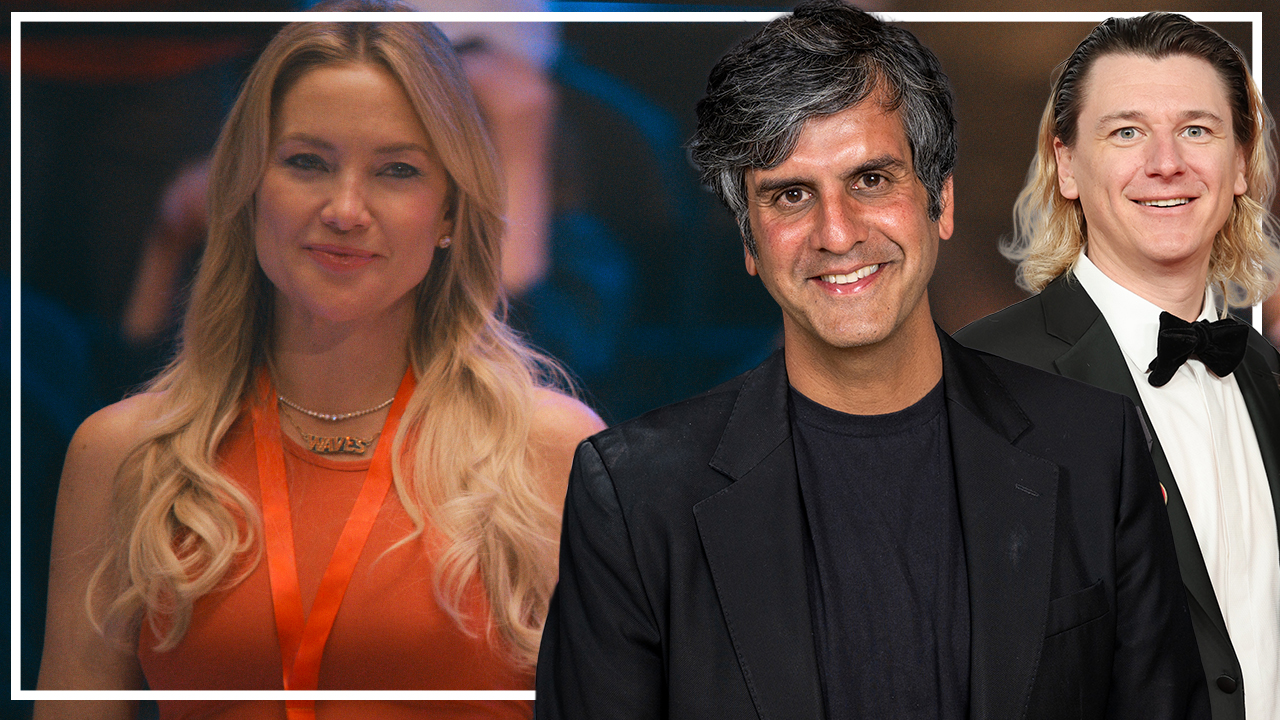
Siddhartha Khosla and Alan DeMoss are new to the Running Point team. The composers joined season two of the half-hour comedy. As Isla Gordon (Kate Hudson) fights to keep the Los Angeles Waves and win a championship, Khosla and DeMoss wanted to lean into the conflict while still keeping the show easy and breezy with a California sound.
Khosla and DeMoss have worked together for years now. DeMoss often produces Khosla’s scores, including Only Murders in the Building and Paradise. For Running Point, the co-composers wanted to reimagine the sound of the show a little bit while also maintaining, in their view, what made the score in season one “awesome.” Recently, the duo spoke with What’s On Netflix about making a score they hope relaxes listeners.
What were the main goals for scoring season two of Running Point?
Siddhartha Khosla: Well, I think with the score for the show — and it was a direction that Alan sort of took us into, because he’s a really good producer and songwriter himself — there’s a lot of great production on the score. It feels like a record when you’re listening to it.
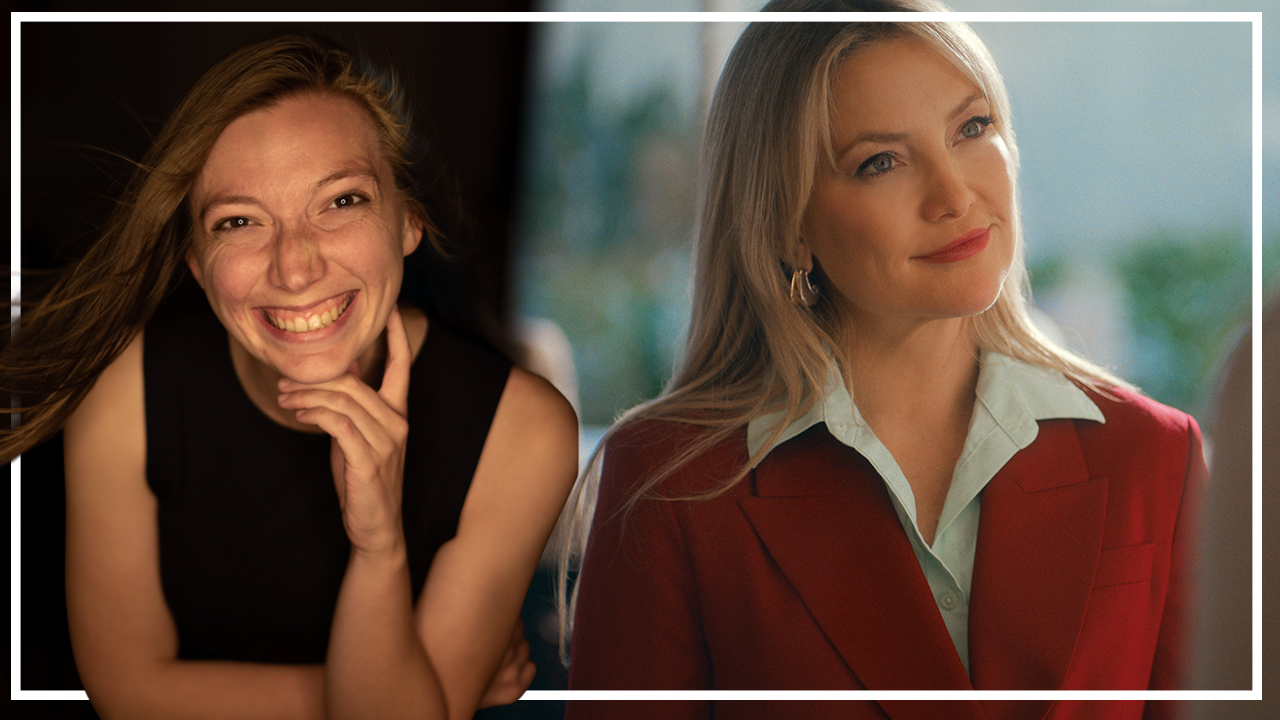
We didn’t do season one. We came in for season two and sort of had to continue what Dave Stassen, who created the show, had started. We had come up with new thematic material and go in a direction that felt appropriate for season two.
And there’s just so much good production in the score — interesting sounds and palettes — that I know, generally in our work, we spend a lot of time trying to get right. When you’re listening to a record in headphones, you sort of hear things and you’re like, “Oh, I remember when I did that.”
What are little pieces on a Running Point score where you’re refining and refining until the very end?
Siddhartha Khosla: There are a lot of those little details. There’s great production and just a lot of detail that you’re not going to get listening on a laptop speaker, but if you listen to the tracks in a vacuum, you will.
Siddhartha, I know how important conflict is for you as a composer.
Siddhartha Khosla: I love conflict.
So when you start watching episodes and scoring with Alan, how do all of the many conflicts Isla Gordon faces influence the music?
Siddhartha Khosla: Well, I think composing music for film and television, if at the core you’ve got a theme that is memorable enough and has enough of a hook, it can sort of weave throughout a show. Sometimes that’s the hardest thing to get down. And when you can do that, then the other stuff becomes easy in a way.
How so?
Siddhartha Khosla: For example, at the start of season two, we sent Dave Stassen a bunch of thematic ideas. There was this Isla theme. Whatever Alan did on it or for it, it was just a banger of a theme the second we heard it. Dave loved it, too. It became the center of the show for the season.
When there’s conflict and those types of moments, you can do variations on those themes. You can do different versions of them. You can do a more tense version of it. I mean, that wasn’t the only theme, but it becomes an easy thing to pivot off of when you have that first main idea.
And then Alan, I think you can talk a little bit more about your Cam concept. I think that was a really smart way of approaching it.
Alan, how’d you land on Cam’s theme?
Alan DeMoss: Cam is a bad guy, he’s the antagonist of the show, but he’s also not like a supervillain. He’s not going to kill anybody. So it’s definitely not hero music, but it’s fun at the same time because the problems they face aren’t the worst problems in the world.
The two main themes for this season were the Isla theme and the Cam theme. What they do is make everything feel bigger when you hear them come in, as opposed to scoring every scene internally. So, it creates more of a thread throughout the season between the conflict between them and the emotional arcs between them, as opposed to moment to moment being like, “This is a tension scene, this is a comedy thing.” You play the larger picture throughout the season as opposed to just what’s happening moment to moment.
What were the instruments you used for Cam?
Alan DeMoss: For the Cam theme, it’s actually an African bass that has a bunch of effects on it. It’s guitar-esque, but it’s not guitar, and so it lives in this space where it just sounds different. You’re not really sure what it is.
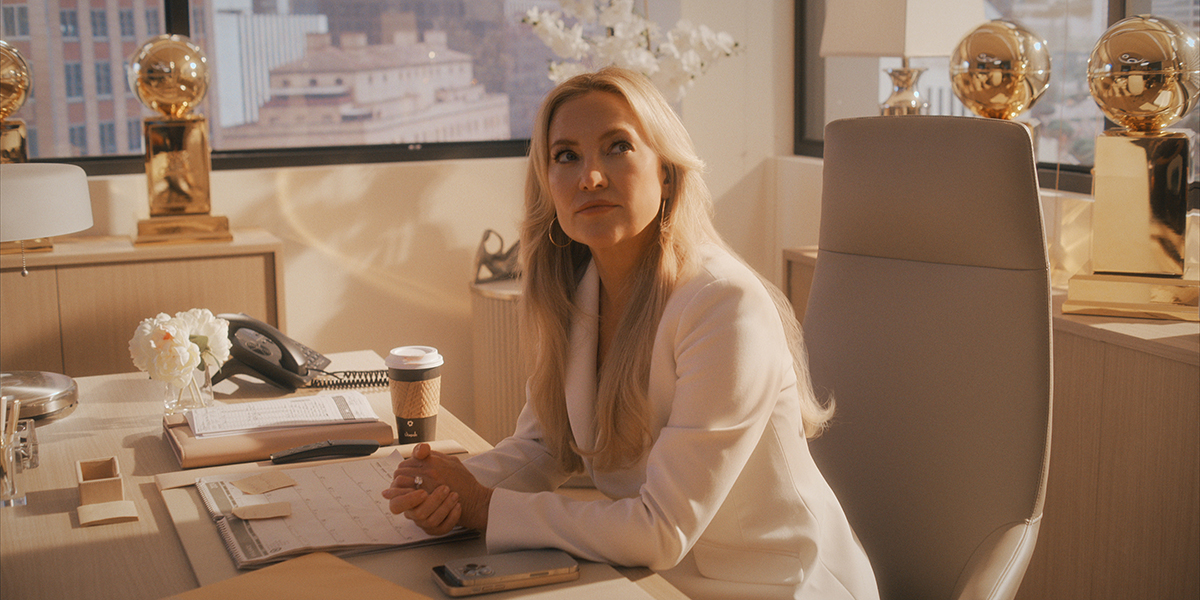
RUNNING POINT SEASON 2. Kate Hudson as Isla Gordon in Episode 201 of Running Point Season 2. Cr. Courtesy of Netflix © 2026
How do you land on an African bass for Cam? What about that sound feels right for his scenes?
Siddhartha Khosla: When you see Cam, don’t you think “African bass” right away? I think it goes back to this idea of trying to make a record for television. Alan and I come from band backgrounds. Neither of us went to school for composing music per se.
I think the best education in our trade prior to actually doing this work — which is where the real education is, obviously — was being in bands. When you’re in a band, you’re trying different stuff and messing around with different sounds to create something unique. You’re always trying to find something original and, to Alan’s point, unrecognizable.
It’s fun for us to do that too, as opposed to being like, “Oh, here is the sound I found on this keyboard that everyone has access to, and I’m going to use this.” Instead, looking at an African bass or something else that feels like it’s got its own sweet little sound that we like.
It almost has nothing to do with Cam. You’re not like, “Oh, Cam would be perfect with an African bass.” It’s not some Peter and the Wolf-ish idea where this person evokes this instrument. It comes down to writing and creating stuff that we think is interesting and then sticking with it.
Alan DeMoss: I obviously have the African bass lying around, but it’s not something I sit around playing all day. So, you’re just messing around with it and then you’re like, “Oh, this sounds cool.”
You go to different places because it’s not something you play all the time. If you sit down at the piano, you start playing chords and things that are familiar to you, and you maybe don’t get someplace as interesting as what you end up doing on an instrument you don’t normally play.
Siddhartha Khosla: When you work on different shows and projects like we do, I kind of have a rule of thumb for myself that I cannot use the same instruments from score to score. It gets harder and harder, honestly. I don’t know how successful I am at it anymore.
I have to find something completely different. On This Is Us, I had this guitar I used, and I’ve not used it since This Is Us. I’m just like, “That was for that.” So you’re always trying to find something different and new because it also helps inspire you, I think. Otherwise, if you play the same instrument over and over again, you start to do the same things, it feels like. I do, at least.
Sometimes the instrument can also inspire. There’s a tonality to it. When you try to play with different instrumentation from score to score, it opens us up creatively. At least for me, and probably for Alan too.
Siddhartha, I know you’re a huge Beach Boys fan. Were there any California bands or just California vibes that you were thinking of while working on Running Point?
Siddhartha Khosla: I think the score was built more like a pop world. Right, Alan? I would say that.
Maybe in some of the rhythmic ideas in the score, there is a sense of — I don’t know — maybe the multiculturalism of L.A. Maybe the occasional Latin flavors in the percussion, or the types of percussion being used sometimes.
It feels like L.A. when I hear that score too, and I don’t know why. We’ve lived here long enough that it feels like it’s probably just naturally what’s coming out of our studios.

Cr. Courtesy of Netflix © 2026
Alan DeMoss: I think what it is – all the percussion that comes in could be on a plethora of pop songs from the last 20 years. Sometimes it feels more indie, sometimes it feels more like Latin pop, sometimes it feels like something that came out in 2010. The percussion across the board on the show is very broadly pop.
Laidback. It’s a comfort show, so that sound feels right.
Alan DeMoss: Right. There’s always an element of fun to it, which I think is sort of the L.A. thing.
Siddhartha Khosla: It feels like driving music a little bit. I want to put my top down. Just something that feels good when you hear it. It’s not overly tense. It has a little hooky melody. There’s something warm and familiar about it. It’s easy.
Some of the best music, to me, is stuff that’s easy to listen to. It’s not in a simplistic way, but something that just makes you feel good. Yeah, that’s what it is: something that makes you feel good.