





There are productions that do not so much tell a biography as listen to it and Sardar Tagirovsky’s Broken Melody, produced by the Almetyevsk Tatar State Drama Theater, belongs to that rare category. It is not a monument to a composer, and not an illustrated chapter of cultural history. It is a delicate attempt to hear a human being in the place where, at first, only a name, a score, family memory, and silence seem to remain.
Presented within the program of MİTEM, where theatre created in minority languages and within minority cultures occupies a necessary and meaningful place, Broken Melody speaks with particular precision. The performance is dedicated to Farid Yarullin, the composer of Shurale, the first Tatar ballet. His life was cut short by his disappearance during wartime, yet his music was not. This contradiction is the central pulse of the production. The title promises fracture, loss, an unfinished phrase. But the theatre does not show an emptiness after disappearance. It shows a strange continuation after death: the melody has not ended; it has changed its keeper. It now lives in parents, fairy tales, a home, a language, and a stage.
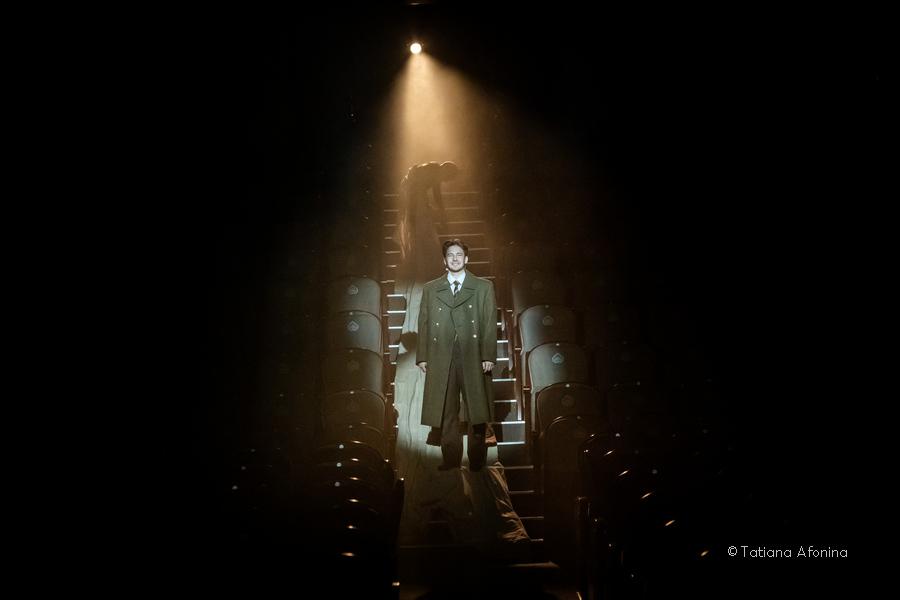
Photo by Tatiana Afonina
Tagirovsky chooses intimacy, and in doing so refuses false monumentality. Yarullin’s story could easily have become a grand, solemn canvas: genius, war, loss, the immortality of art. Instead, the production resists frontal pathos. The spectators are not placed in the ordinary safety of the auditorium. They sit onstage, within a circular arrangement, close to the actors, almost inside the memory itself. The turntable slowly rotates them through the performance. This is not a mere scenic device. It becomes a way of thinking. This quiet physical displacement makes the audience feel memory not as an idea, but as a slow alteration of perspective.
The audience does not simply watch time pass; it is carried by it. The circular movement makes memory physical. Time in Broken Melody does not move forward in a straight line. It returns, approaches from another side, repeats gestures, shifts focus. One does not look at Yarullin’s fate from a distance. One is turned within it. The past is not behind us, but around us.
Yarullin’s parents remain in the terrible, motionless time of waiting, that suspended zone in which a person has disappeared but has not fully died because he is still expected home. The composer himself appears as a presence from another dimension: less a biographical character than a soul trying to recognize its own life through what has survived it. This is one of the production’s strongest and most ethical choices. The theatre does not pretend to know Farid Yarullin completely. It does not fill the gaps with invented psychology or force the missing man to say what no one can know. Instead, the staging works honestly with absence.
The most painful moments are not necessarily spoken. They appear in the way a parent remains still a second longer than expected, in the way a look is held toward an empty place, in the way silence gathers before anyone dares to continue. The tension does not come from dramatic announcement, but from the small delay before movement resumes.
Farid is not explained. He is summoned.

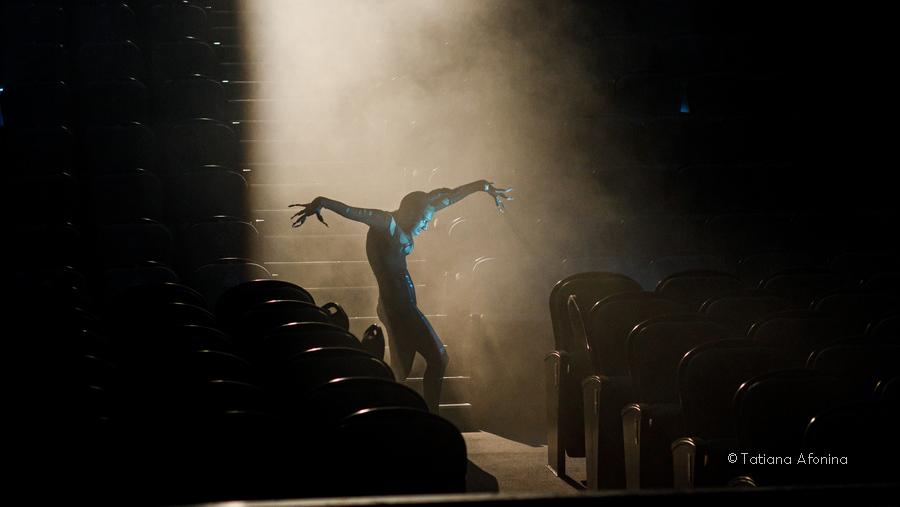
Photo by Tatiana Afonina
He exists between those who remember him and what he managed to create. Between family story and musical score. Between fairy tale and history. Between home and the other side of being. This in-betweenness gives the production its quiet tension. It is not interested in theatrical resurrection as consolation. Rather, it asks what remains of a person when the body is gone, and whether music can become a form of return.
The particular tenderness of Broken Melody lies in the fact that it does not separate talent from the world that nourished it. At the center are not only the composer and his work, but also family stories, childhood images, Tatar fairy tales, horsemen, beautiful maidens, and Shurale himself–the imaginative ground from which the music could grow before it became art. The production says something simple and important: talent does not appear in a vacuum. Behind it are voices, cadences, bedtime tales, parental memory, the rhythm of language, and the private mythology of a home.
That is why Shurale is not treated merely as a cultural fact. It becomes a sign of how collective imagination can pass through the destiny of one person and become music strong enough to outlive him. Yarullin disappears, but the world he shaped continues to move. There is consolation here, but it is not easy consolation. Art may be stronger than a biographical ending, but it does not erase the pain of loss.
The quiet power of Broken Melody is precisely in this restraint. The production does not pressure the viewer with tragedy. It does not demand tears. It tunes attention. What matters here is not the loud gesture but the pause; not historical declaration but a look; not external action but the attempt to hear how the past continues to sound in the present.
Such theatre requires a particular kind of acting. As Farid Yarullin, Raushan Mukhametzyanov seems to build the role not on biographical resemblance but on a state of being: a man simultaneously here and not here. He does not return in the conventional theatrical sense, not to restore justice or finish a conversation. He seems to search for a frequency on which he might still connect with his family, his music, and himself. This is a difficult task: to play not a hero, but a presence; not a fate, but the trace of a fate.

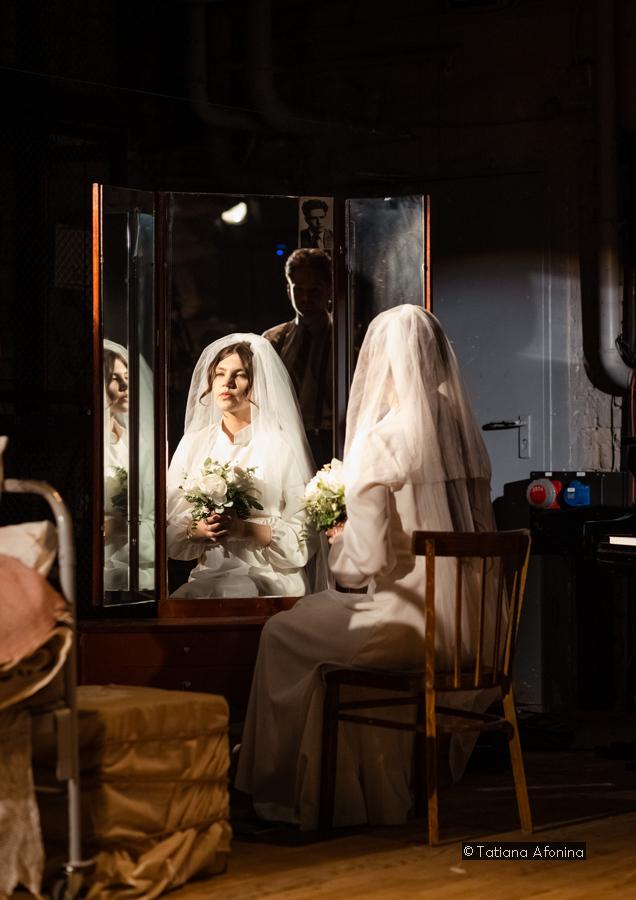
Photo by Tatiana Afonina
The parents, in this structure, are not supporting figures. They are the guardians of the world. Their memory is not passive. It continues to create the son after his disappearance. This may be one of the most human motifs in the production: while someone remembers, a person does not become a date. He remains an intonation, a name spoken at home, a gesture of the hand, a tale, an unfinished sentence.
The stage image of a coat is especially eloquent as a sign of absence. Objects in theatre are often more truthful than explanation. A coat can hold the form of a body no longer there; it can become memory, substitute, shell, remainder. Seen from so close, it is not an abstract symbol. The fabric, its weight, the empty sleeves, the way it occupies space without being worn–all these details make absence strangely material. The spectator does not need to be told whom the coat recalls; the object has already begun to speak. In such a detail, the production reaches the density at which symbol no longer feels imposed. The object simply exists in space, and the space around it begins to ache.
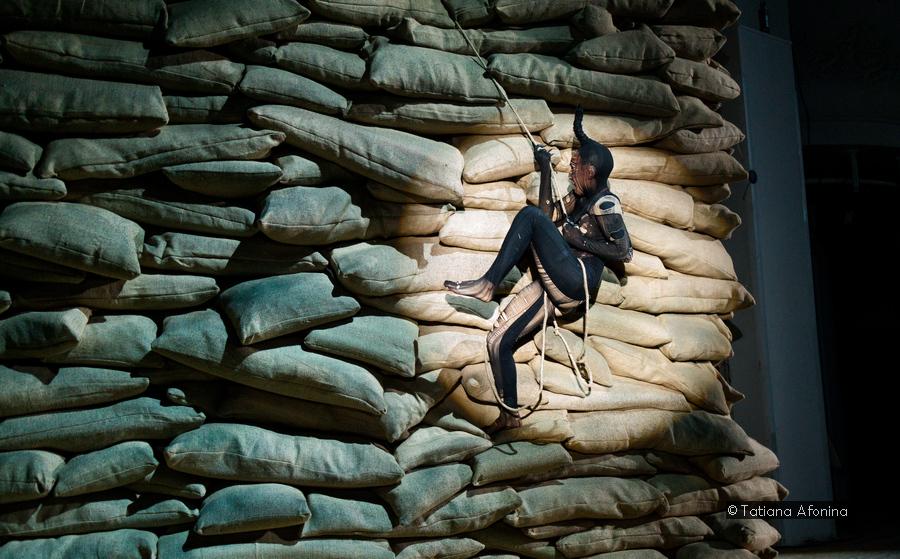
The visual world shaped by Anastasia Ryazanova works not as decoration but as concentration. Grey sacks, the closed circle, the proximity of spectators, the chamber scale of the stage–all this does not illustrate an era so much as produce a state of mind. The world appears assembled from remnants: things, memories, fragments of movement, sounds that refuse to vanish. In this space, Ilnar Sibgatullin’s music and the remembered presence of Yarullin’s score become not accompaniment but dramatic substance.
It is also important that Broken Melody does not turn national culture into a subject belonging safely to the past. On the contrary, it presents culture as a living form of resistance to oblivion. Language, fairy tale, music, family memory–none of this belongs to the archive here. It is energy. For this reason, the production’s presence at MİTEM feels like more than an international engagement. It feels like an exact meeting between work and context. Here is a theatre speaking from within its own culture while addressing experiences that travel beyond it: parents who wait; an artist whose life did not have time to complete itself; a work that proved more enduring than destiny; pain that cannot be cancelled, but can be transformed into sound.
The phrase “art defeats death” is often too beautiful to be true. Broken Melody offers a more honest formulation: art does not defeat death, but it prevents death from having the last word. Death breaks the biography. Music continues the sentence.

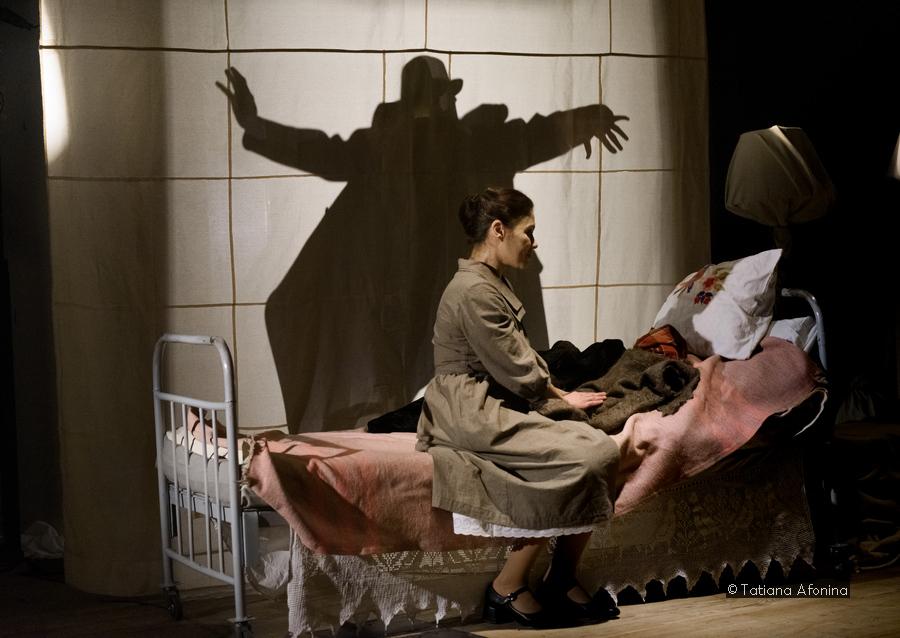
Photo by Tatiana Afonina
And this is the production’s quiet victory. It does not close the wound, make loss comfortable, or turn Yarullin into bronze. It returns fragility to him. It returns him to a home. It returns him to his parents. It returns him to the stories from which music may have first been born. It returns the stage to its oldest function: a place where the absent may, for a brief time, become audible again.
For a festival spectator at MİTEM, this production is valuable because it asks for neither indulgence nor exotic fascination. It arrives with its own intonation–confident, soft, sorrowful, musical. If theatre begins where memory receives a body, then Broken Melody is a production about that beginning: about a melody that was broken and nevertheless found its way back to the living.
he fabric, its weight, the empty sleeves, the way it occupies space without being worn–all these details make absence strangely material. The spectator does not need to be told whom the coat recalls; the object has already begun to speak. In such a detail, the production reaches the density at which symbol no longer feels imposed. The object simply exists in space, and the space around it begins to ache.
The visual world shaped by Anastasia Ryazanova works not as decoration but as concentration. Grey sacks, the closed circle, the proximity of spectators, the chamber scale of the stage–all this does not illustrate an era so much as produce a state of mind. The world appears assembled from remnants: things, memories, fragments of movement, sounds that refuse to vanish. In this space, Ilnar Sibgatullin’s music and the remembered presence of Yarullin’s score become not accompaniment but dramatic substance.

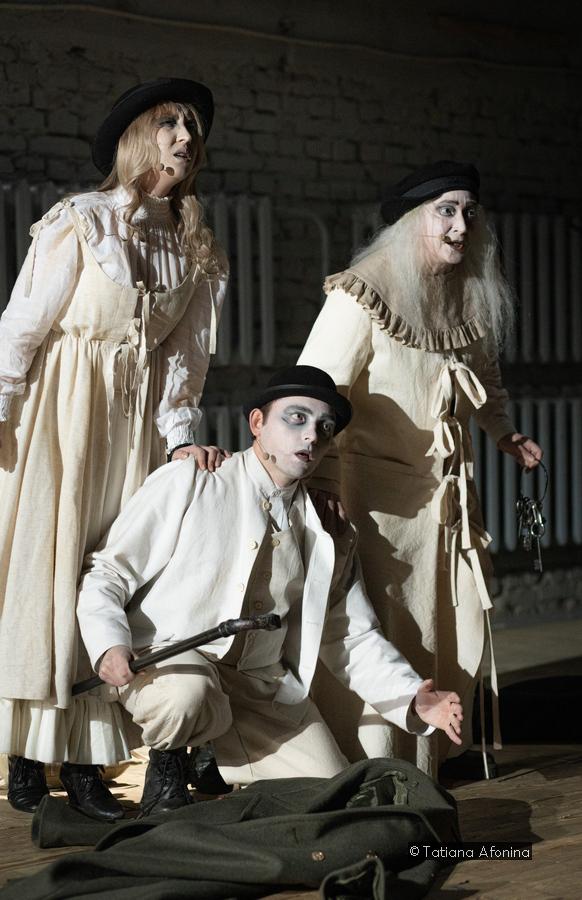
Photo by Tatiana Afonina
It is also important that Broken Melody does not turn national culture into a subject belonging safely to the past. On the contrary, it presents culture as a living form of resistance to oblivion. Language, fairy tale, music, family memory–none of this belongs to the archive here. It is energy. For this reason, the production’s presence at MİTEM feels like more than an international engagement. It feels like an exact meeting between work and context. Here is a theatre speaking from within its own culture while addressing experiences that travel beyond it: parents who wait; an artist whose life did not have time to complete itself; a work that proved more enduring than destiny; pain that cannot be cancelled, but can be transformed into sound.
The phrase “art defeats death” is often too beautiful to be true. Broken Melody offers a more honest formulation: art does not defeat death, but it prevents death from having the last word. Death breaks the biography. Music continues the sentence.
And this is the production’s quiet victory. It does not close the wound, make loss comfortable, or turn Yarullin into bronze. It returns fragility to him. It returns him to a home. It returns him to his parents. It returns him to the stories from which music may have first been born. It returns the stage to its oldest function: a place where the absent may, for a brief time, become audible again.
For a festival spectator at MİTEM, this production is valuable because it asks for neither indulgence nor exotic fascination. It arrives with its own intonation–confident, soft, sorrowful, musical. If theatre begins where memory receives a body, then Broken Melody is a production about that beginning: about a melody that was broken and nevertheless found its way back to the living.

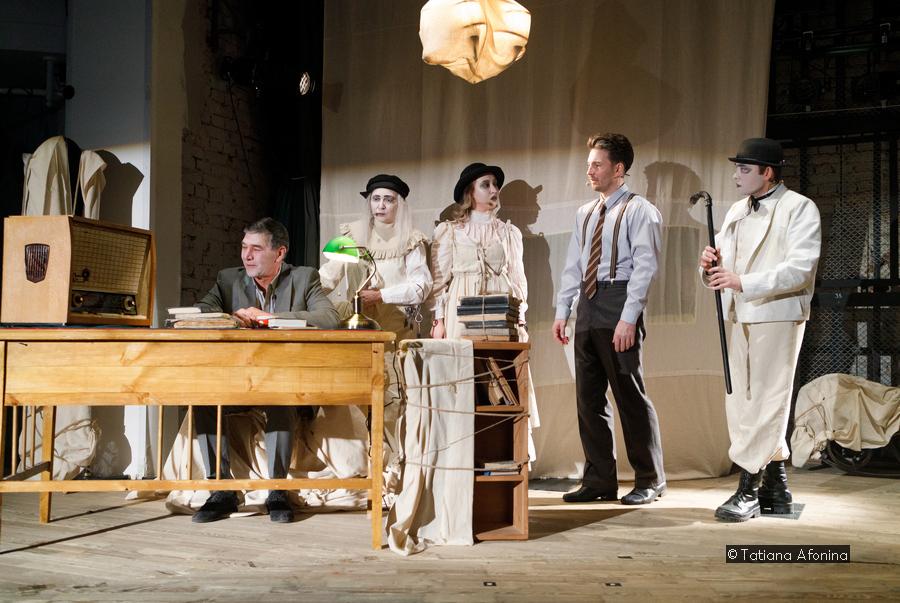
Photo by Tatiana Afonina
This post was written by the author in their personal capacity.The opinions expressed in this article are the author’s own and do not reflect the view of The Theatre Times, their staff or collaborators.
This post was written by Emiliia Dementsova.
The views expressed here belong to the author and do not necessarily reflect our views and opinions.