


A British Columbia First Nation says it has launched a legal challenge against a plan by the Vancouver Fraser Port Authority to dredge Burrard Inlet to make room for oil tankers with larger loads to operate.
In a release, the Tsleil-Waututh Nation says it has filed for a judicial review, seeking to overturn the permits issued by the port authority to allow for the dredging to take place.
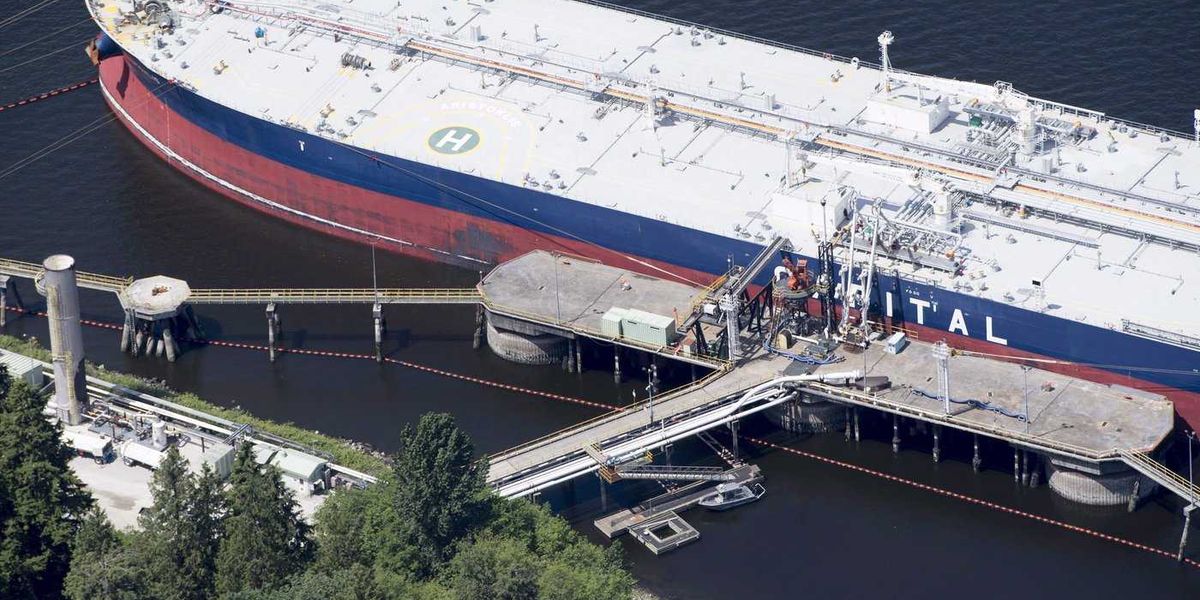
The plan calls for the dredging along northern and southern edges of the navigation channel in Vancouver’s Burrard Inlet underneath the Second Narrows bridge, starting in September.
The Tsleil-Waututh Nation says while it understands the project’s importance for Canada’s trade needs, the approval process was “rushed” and did not address any of its concerns about the impacts of the operation — including the “risks of more fully laden oil tankers traversing the inlet.”
The nation also says the existing cumulative impact of shipping in the inlet has already infringed on the Tsleil-Waututh to the point where community members cannot practice their way of life.
The statement says dredging to accommodate larger tankers brings with it changes in marine shipping patterns, oil spill risk and shoreline erosion, all of which would add to the already damaging existing cumulative impacts.
“Tsleil-Waututh has a sacred stewardship obligation, a responsibility to care for our lands, air and waters,” Chief Justin George says in the statement.
“While we attempted to resolve these outstanding issues in good faith, our concerns were ignored, leaving us no choice but to go to court to protect our territory and interests.”
The port authority said in June that it had received all federal permits to allow the dredging, which would open up room for more heavily laden tankers to load up from the Trans Mountain pipeline.
The authority has said the operation would allow larger vessels such as Aframax-class tankers filling up at the Westridge Marine Terminal to “load more fully.”
Currently, Trans Mountain says on its website that such tankers are generally loaded to about 80 per cent of capacity because that’s what the inlet’s depth could allow.
Prime Minister Mark Carney first floated the idea of dredging Burrard Inlet in the spring 2025, but the most recent federal budget does not include any specific references to the project, beyond promises to “improve access” to overseas markets by investing in new airport, railway and port infrastructure.
B.C.’s government also supports the project, and Energy Minister Adrian Dix said last year that the federal project “would allow for less traffic at the port and better utilization” because ships could fully load.
The port says the work will not change the number or size of the largest vessel type currently sailing underneath the Second Narrows, noting that Aframax-class tankers will remain the largest vessels.
The dredging comes about two years after the expanded TMX pipeline started operating in May 2024 and there have been calls to expand it again to help diversify energy exports away from the United States during recent trade friction.
A background document from the agency has said that dredging would remove about 25,000 cubic metres of material while digging to a maximum depth of about six metres below the sea floor.
This report by The Canadian Press was first published July 9, 2026.
Copyright 2026, The Canadian Press. All rights reserved.


![9th Jul: Peddi (2026), 3hr 5m [TV-14] (6/10)](https://occ-0-533-1007.1.nflxso.net/dnm/api/v6/0Qzqdxw-HG1AiOKLWWPsFOUDA2E/AAAABUcA-fzGM10JqzeZtWKrgygLXdWS-rQKRqkOmxyVnxrj85w2okrrtDnve6DqxquXGjmFykZw9hUm2110QiiW0XDICa8HY9EkjzxtYGuwrvfk1vm6aZJ2VY8tnCbPxu_0PsE3PMig_-P9vpy8QYYsZKFz8Jvk3welc3nEXXQrx9d9Wg.jpg?r=42a "9th Jul: Peddi (2026), 3hr 5m [TV-14] (6/10)")