



With the release of The Odyssey, Christopher Nolan is facing some rather obnoxious backlash. Some people are complaining about the historical inaccuracies of the ships and the costumes, but it’s utterly ridiculous to complain about historical inaccuracies in a story that features a cyclops and magical singing women. There’s also been some opposition to the use of modern, informal English in the film, but unless Nolan made the film entirely in a now-dead form of Greek, why would any era of English be better than another?
But the aspect of The Odyssey which is attracting the most controversy is the cast. Nolan chose a diverse group of actors to portray the Greek characters and perhaps unsurprisingly given our racially-charged politics, the casting of Black actors has come under scrutiny, particularly Lupita Nyong’o as Helen of Troy. Nolan’s casting of trans actor Elliot Page as the soldier Sinon has also received criticism. Across the internet, people are saying Nolan’s choice of a diverse cast is “woke,” turning the adventure movie into a manufactured political controversy.
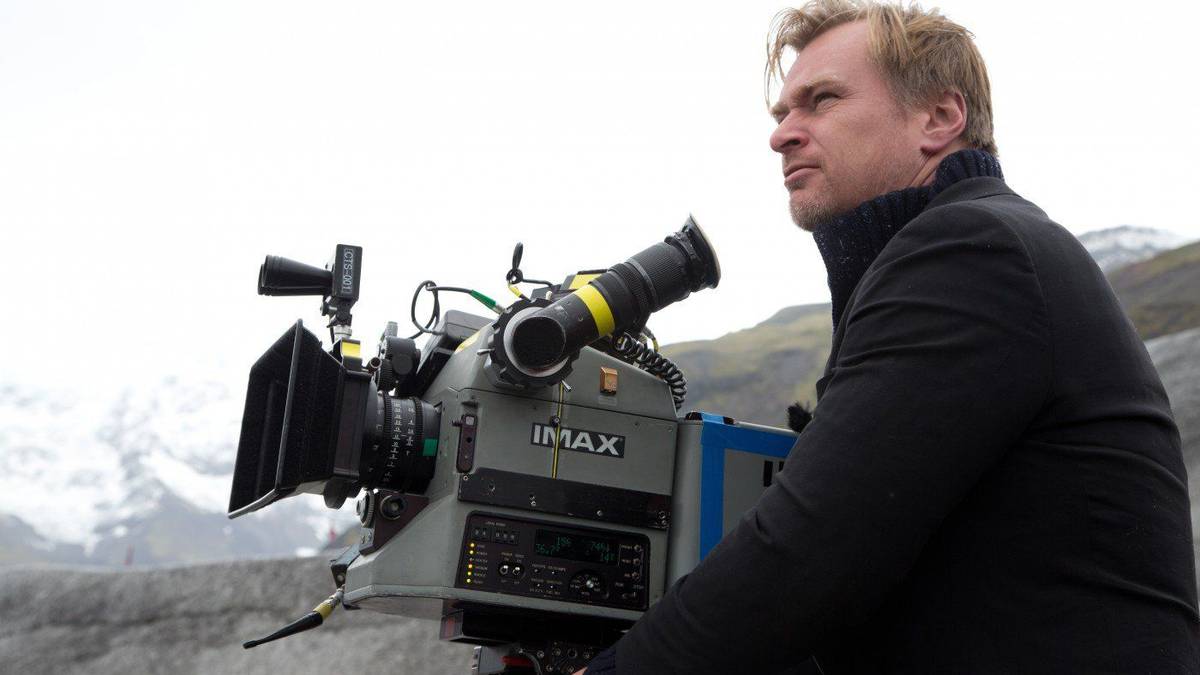
Having seen The Odyssey, I can tell you it’s not political. Nolan just chose the best people for his interpretation of these characters, perhaps to tell a more universal retelling of the ancient fantasy story. It’s an artistic choice, just like the IMAX cameras used to shoot the film.
No matter what people read into The Odyssey, Nolan’s most political movie remains his 2012 conclusion to his Batman trilogy, The Dark Knight Rises and the muddled politics of that movie are a huge part of the reason why it’s his worst film.
The Dark Knight Rises picks up eight years into Batman’s exile after the end of The Dark Knight. Batman (Christian Bale) has taken credit for the killing of hero district attorney Harvey Dent, as well as the lives Dent took as Two-Face, and disappeared back into his life as reclusive billionaire Bruce Wayne. Gotham is doing well though thanks to the Harvey Dent Act, a law which gave harsher penalties and denied parole to members of organized crime. Enter Bane (Tom Hardy), who exposes the lies Gotham’s newfound peace is built upon by telling the truth about Harvey Dent’s crimes as Two-Face. He also frees the criminals in Blackgate prison and bankrupts the Gotham stock exchange in order to restore Gotham to the people, instead of the rich elites.
There are a lot of issues with The Dark Knight Rises, but one of its biggest problems is how muddled its message is, which is primarily conveyed by Bane’s evil scheme. Unlike the dishonest nature of many of Batman’s villains, Bane is sincere in his desire to return the power to the people by crippling Gotham’s corrupt, elitist infrastructure. To help him, he has an army composed of members of the League of Shadows, the freed prisoners from Blackgate, and Gotham’s underprivileged, some of whom had even taken refuge in the sewers of Gotham. But there’s no dividing line between who is who in Bane’s army. Instead it’s just a mad mob, which is especially insulting to the poor, as it ties them into the rest of Bane’s rabble, categorizing them as no different than the assassins from the League of Shadows and the organized crime members imprisoned after The Dark Knight.
Those optics are bad enough, but it was especially insulting back in 2012 thanks to a political movement known as Occupy Wall Street.
Occupy Wall Street was a non-violent, left-wing political protest in New York City that began on September 17, 2011. It started with a 2,000-person march in Lower Manhattan that then took up residence with an encampment in Zuccotti Park, just around the corner from Wall Street. In addition to protesting corporate greed, money in politics, and the most egregious elements of unchecked capitalism, the movement was built in opposition to the handling of the 2008 financial crisis, where banks and automakers were bailed out while ordinary citizens suffered. The movement became a national one, sparking approximately a thousand similar protests across the country (and around the world). But its epicenter remained Zuccotti Park until November 15, 2011 when, as Time magazine put it, “Occupy Wall Street was pepper-sprayed into the night by a squadron of police officers.”
While it lasted just 59 days, Occupy Wall Street was one of the biggest political movements of the 21st century. (When Bernie Sanders rails about the 99% versus the 1%, he’s referencing Occupy Wall Street.) Christopher Nolan even had to film around for The Dark Knight Rises’ scenes at the Gotham Stock Exchange, which were filmed at the real New York Stock Exchange on Wall Street. Actor Matthew Modine, who plays Deputy Commissioner Peter Foley in The Dark Knight Rises, revealed in an interview at the time that Nolan considered filming the protest as part of the film, but it was decided that what was going on there was too important. It was more respectful to work around the protest than trivialize it with a film.
But instead of merely trivializing the movement, The Dark Knight Rises seemed to outright rebuke it. With the Wall Street setting and a movement designed to take down the rich and restore the power to the people, Bane and his mob read as Gotham’s version of Occupy Wall Street. Meanwhile, the major force against Bane’s army in the film is Batman and an army of cops. The film’s big showdown features a giant clash between the two mobs. And obviously, since this is a Batman movie, the audience should be on Batman’s side.

At the time, Nolan denied this was the intention of the film, saying that politics did not come into it and that it’s a mistake to read too far into this kind of film. However, he seemed to want it both ways, also saying that he’s glad that he touched on an issue that people care about. He even made the argument that the film’s message was progressive and that Bane, a demagogue, co-opted a legitimate cause. Except the “cause” in the film is mostly just a plot by the League of Shadows that was established way back in Batman Begins. Plus, there’s no major character in the film who represents the uncorrupted component of the protests. It just looks like Bane started Occupy Wall Street and gave them guns, even though the real-life movement was explicitly non-violent. (The protests in its name mostly adhered to that principle, even when violence was inflicted upon the protesters.)
In truth, I tend to think Nolan didn’t intend for The Dark Knight Rises to be anti-poor, pro-rich, and pro-cop, even though the end result reads exactly that way. I think, after The Dark Knight and the death of Heath Ledger, Nolan just did not want to do a third Batman movie. He said as much in some interviews after The Dark Knight. It is widely believed the Joker played a major role in the original story for the third film, which was then abandoned and changed into the plot with Bane. Because of his resistance to making a third movie at all, I believe the messages in The Dark Knight Rises were not as thought through as they could or should have been. The result was a movie that was unintentionally very political, and what the film says about the poor, about police, and about the nature of power and corruption got muddled in a film that is messy in a lot of ways.
Fortunately, this isn’t the case with The Odyssey. Despite the politics of the moment being infused into it, the movie is not political either intentionally or unintentionally. It’s just an epic, apolitical retelling of one of the grandest, most important stories in the history of mankind, with a universal message about the cost of war, including the lives lost, sacrifices made, and the nature of PTSD. Maybe in another timeline, The Dark Knight Rises could have achieved something similar.