



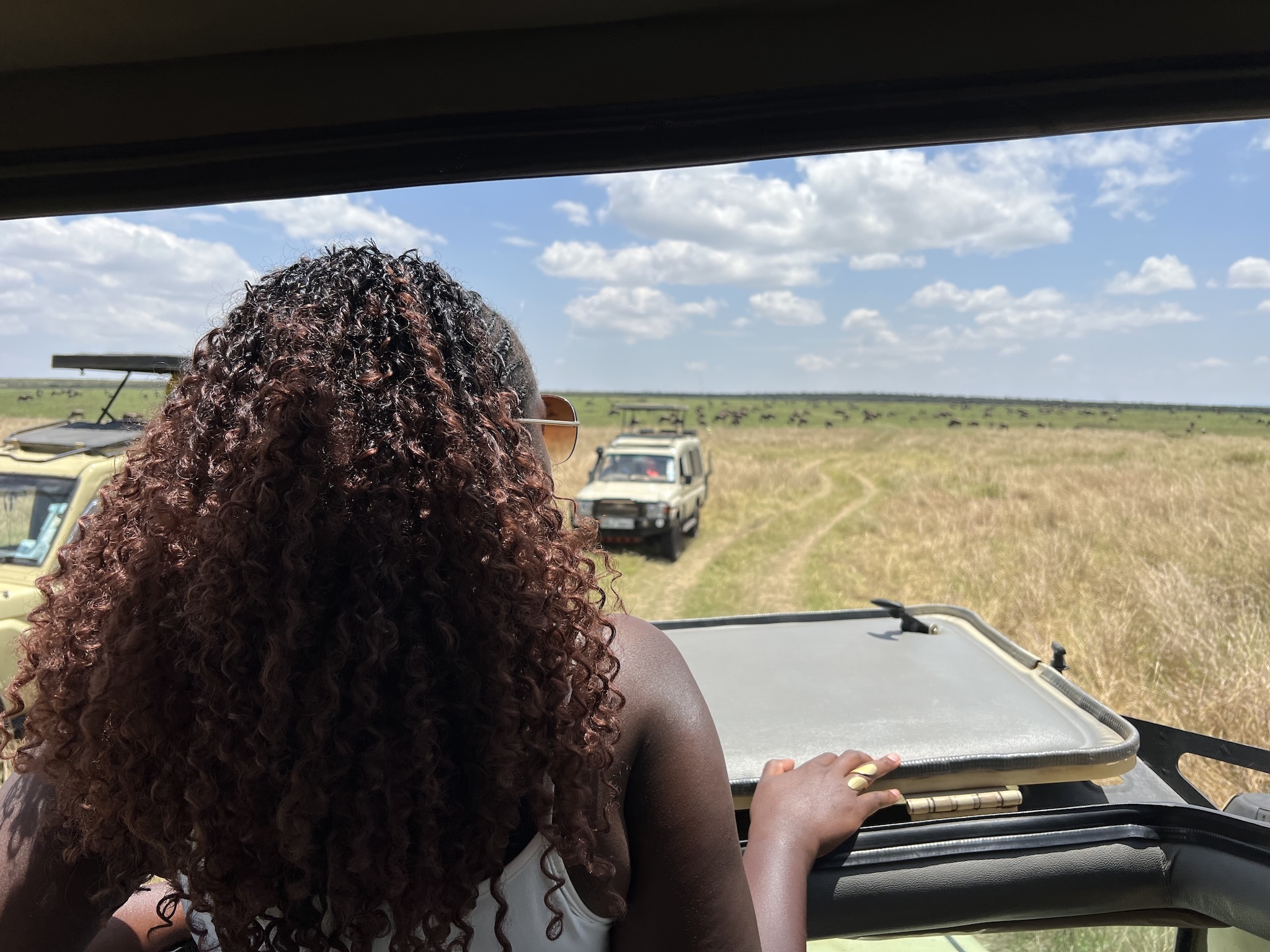
In March 2026, a Threads post by Martinique Lewis, travel content creator and President of Black Travel Alliance, went viral. After scrolling through more than 300 Google Images results, she could not find a single photo of a Black person on a safari. Frustrated, she urged other Black travellers to share their own safari photos. Over 1,000 comments flooded in.
Photos were posted with pride, along with the stories behind them, including a group of 30 Black travellers on a shared trip, a mother and daughter who prioritised quality time together, a birthday celebrant with wildlife as her backdrop, and a woman proudly marking her fifteenth safari. What started as a thread ultimately became a joyful archive, proving what the community already knew: Black people go on safaris too.
RECOMMENDED: Heritage tourism is leading to an African travel boom – here’s why Black travellers are embracing the trend
Unfortunately, I could relate to Martinique’s frustrations. I have been on safari in Zambia, across Mosi-oa-Tunya and South Luangwa national parks, to Kenya’s Maasai Mara, all while travelling solo. Even as a Black woman exploring the African continent, I have been bluntly reminded – more than once – that I am not considered a regular guest on a safari.
At a luxury lodge in Zambia, a fellow guest clocked the lodge fleece I was wearing, which any guest could buy at the lodge’s merchandise store.
His opening comment to me was that if he didn’t know any better – as he had seen me arrive at the back of a safari truck a few minutes earlier – he would have asked me to take his drink order. After I looked behind me and asked him where the cameras were, because surely this had to be some sort of prank, his sister ran over to apologise. He was there again at dinner – group dinners are standard at small lodges – and even the staff noticed how surprised the group was that I was there as a guest. Still, I took pleasure in sharing with them my love of travel and my professional and academic accomplishments.
As that group headed off to their rooms, I gave the lodge manager a look. She completely understood. I was reminded of how much off-the-cuff comments can dampen an experience, even when you have to remain poised. But I deserved to be there as much as they did, without being mistaken for staff in the process.

Interestingly enough, while the destination or its people can be the source of difficulties when I travel as a Black woman, in Africa, it is anything but: the culprit is nearly always other guests. A certain type of traveller comes to Africa exclusively for safaris, and their only reference point for Black people in that space is the guides and staff who serve them. So when a Black person shows up as a fellow guest, it disrupts a dynamic they are not used to.
Travelling around Africa is generally easier for me, and I hope it will always continue to be. But when I participate in activities that attract a particular crowd, my presence isn’t considered the norm.
In Kenya, I sat next to a couple as we made the 6-hour journey from Nairobi to the Maasai Mara. I got along well with both of them, a Black Kenyan woman and a white American man. That is until I sat down to eat lunch with them and the man delivered what can only be described as a casually racist monologue about Black Americans, Africans and Mexicans. I was too stunned to speak, because I couldn’t believe he was making derogatory comments about Africans, in Africa, with two African women at the table, all while being a guest of the continent.

Once I picked my mouth up from the floor, I snapped at him and called him out. This time, I was angrier because his comments extended beyond me. They included the helpful staff who were clearing his plates and pouring his drinks. I also felt disrespected because, since I’m also British, he thought I had some sort of distance from what he was saying. I told him to never speak to me again, wished his Kenyan partner good luck, reported him to our guide and moved to the front of the truck for our game drives.
Black travellers deserve to have these experiences and to enjoy them fully
Others can decompress while on a once-in-a-lifetime experience, while simply being in the same space and doing the same activity has either raised questions from others about why I am there, or kept me on high alert because a problematic scenario always feels imminent. I have grown exhausted by the emotional tax of simply being present. Black travellers deserve to have these experiences and to enjoy them fully. I deserve to have the childlike twinkle in my eye when I see wildlife in their natural habitat, and not always be waiting for a shoe to drop, or wondering if I will see other guests who look like me.

Even though our presence is unexpected, I will continue to seek this particular experience out. Besides, there are many reasons to keep going: my time on safari has directly shaped the mission of my platform, Melanin Travel, which I built to help Black people travel on their own terms in an industry that has long underrepresented us. It’s also why I founded Akovi Comms, to make sure the right audiences see themselves reflected by brands.
I have travelled to 18 African countries and intend to keep going. Nothing beats gasping in glee while a lion walks alongside my truck, or sitting in silence with an elephant, or anticipating watching my first potential kill as a leopard waits to pounce on a warthog during golden hour. Or the moments when it’s only me and my guide, having deep conversations that no one else will know the context of.

I deserve to see all of it – the wildlife and culture of every corner of the continent – just like the thousands who shared their pictures in defiance of the search engine results page.
Stay in the loop: sign up to our free Travel newsletter for all the latest travel news and best stuff happening across the world.