



The best thing about an anthology show is that, if one season or episode is bad, there’s no reason not to skip it. After all, nobody can force you to watch True Detective season 2 or that one Black Mirror episode with Miley Cyrus in it. But sometimes, the most underrated entry in a beloved anthology deserves another chance, and that’s the case with the most hated season of Noah Hawley’s FX series, Fargo.
If you were to ask fans of the FX series Fargo to rank all five seasons of the show, nearly all of them would put season 4 at the bottom, and they wouldn’t be wrong. When compared to the other seasons of the series, there are fewer quirky Coen brothers-esque characters, making it less fun than the other seasons. Season 4 also moves a bit more slowly and, with the change in setting from Minnesota down to Kansas City, Missouri, the flavor of season 4 is also different, which is only exacerbated by the fact that it takes place in the early 1950s, far earlier than the other seasons.
But while season 4 of Fargo may be the most different season of the anthology series, it’s still an excellent crime drama with some incredible performances that is heavily informed by one of the Coen brothers’ best movies. That’s why the 11-episode season is perfect for a good weekend binge.
Fargo is based on the 1996 Coen brothers dark comedy crime drama of the same name where a small-town Minnesota cop investigates a series of gruesome crimes. The show follows a similar formula, with its anthology format meaning each season introduces a new cast of cops and criminals against the backdrop of the snowy American midwest.
Season 4, however, is a bit of an outlier. While the second season of Fargo took place in 1979 (with the others taking place after the year 2000), the jump back to 1950 for season 4 was a big one for the series. It also moved from mostly rural Minnesota during the winter to urban Kansas City, Missouri during the fall, a big aesthetic change. Gone too is the Minnesota accent, with just one exception from the main cast.
The story is about two rival crime families, one Black and one Italian, vying for control of Kansas City. The Black crime family is led by Loy Cannon (Chris Rock), a smart, temperate, business-savvy leader held back by the prejudice of his times. Meanwhile, the Italians are led by the longstanding Kansas City crime boss Donatello Fadda (Tommaso Ragno). Each family previously surrendered the son of their leaders to the rival gang, meaning the Faddas are raising Cannon’s son and the Cannons are raising Fadda’s son. This is in keeping with a longstanding, theoretically peace-keeping tradition in the Kansas City criminal underworld.
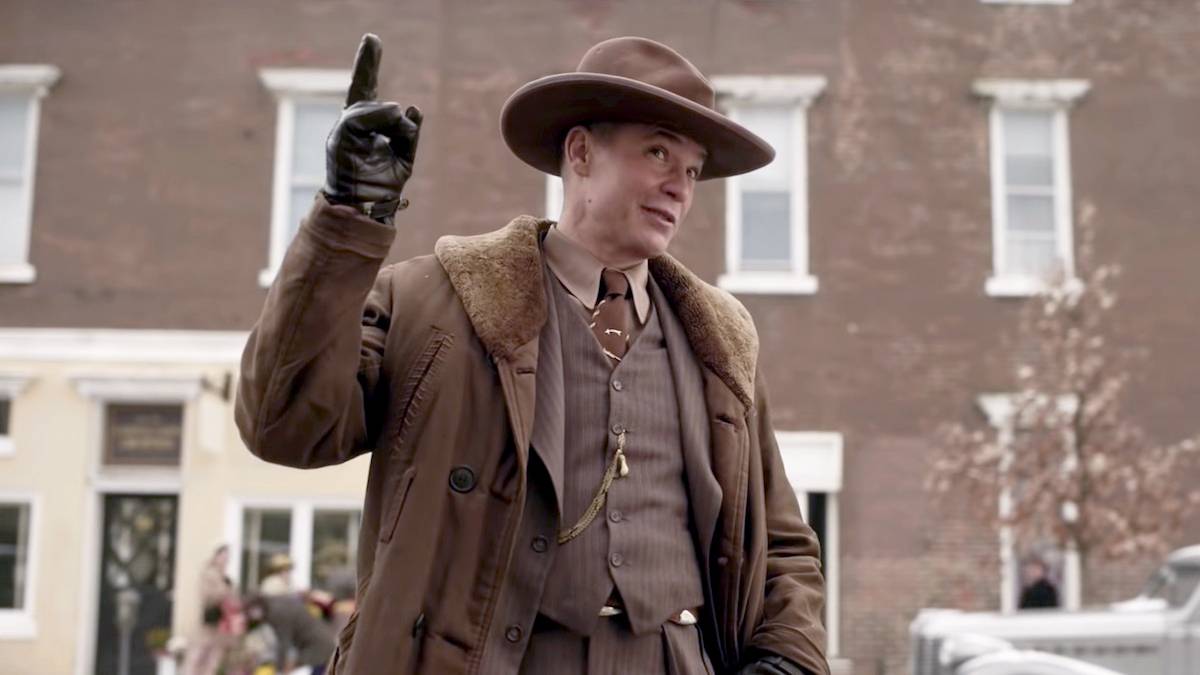
The unstable peace then gets shaken with the death of Donatello, who is replaced by his insecure, impulsive son Josto Fadda (Jason Schwartzman). Over the course of the season, Josto’s poor judgement leads to all-out war, resulting in many deaths on both sides and several unexpected turns, especially with Josto’s bizarre girlfriend Oraetta Mayflower (Jessie Buckley), the only character with the Minnesota accent and the closest thing the season has to a “typical” Coen brothers character. In terms of the requisite police characters, Timothy Olyphant turns in a charming performance as U.S. Marshal Dick “Deafy” Wickware.
The crime story unfolds with a slow, methodical burn, and there are a lot of characters to keep track of. There are also not a lot of people to root for, as most of them are doing terrible things. Still, it all feels very real and thoughtful and there is particular focus on the prejudice of the times, which adds a new element to a show mostly populated by white characters. The way Fargo season 4 season links up with season 2 is especially rewarding, though I won’t spoil the surprise.
Instead of going for the more common Coen brothers style of dark humor, the show is quieter and subtler than other seasons, but the crime drama is still intriguing. Chris Rock gives the best performance of his entire career and Schwartzman is wonderful as a failson. Buckley’s character is also sure to elicit some gasps.
With that, Fargo season 4 is less like Fargo the film and more like a Coen brothers movie from six years earlier, Miller’s Crossing. Like season 4 of Fargo, Miller’s Crossing is a similarly straightforward crime drama with little of the Coen brothers flourish, while still being an expertly told, if quieter, story than most of their films.
Having season 4 of Fargo be more closely related to another Coen brothers film is not without precedent. Other Coen movies have been referenced in previous seasons. Emmit Stussy (Ewan McGregor) in Fargo season 3 is the “Parking Lot King of Minnesota,” who bears more than a passing resemblance to Nathan Arizona (Trey Wilson) from Raising Arizona. In the first season, Billy Bob Thornton’s unkillable assassin character seems to be a callback to Anton Chigurh (Javier Bardem) from No Country for Old Men.

Perhaps it’s fair to say, with all of its changes presented in one place, season 4 of Fargo was jarring, and certainly not as funny or fun as the other seasons, which may explain the backlash. Had someone watched Miller’s Crossing after watching 3 much more lighthearted Coen brothers movies — like The Big Lebowski, Burn After Reading and O Brother, Where Art Thou? — perhaps they would be similarly disappointed. But the change in vibe does not mean season 4 is bad. It’s just different from what people expected.
Taken on its own, season 4 of Fargo is a smart, methodical, thoughtful crime drama that does indeed pay off — unless you’re looking for laughs.
All seasons of Fargo the series are available on Hulu.