



To read PART I of this interview, go to this link.
IAB: What role can translation play in bringing contemporary Greek playwriting into wider European and international contexts?
IM: Greek language is, in itself, a kind of border we have to cross. Unfortunately, although it is one of the oldest and most important languages in human history, its use has gradually become limited to a relatively small part of the world’s population. So, we are a country whose language does not give us access to a wider international audience. At the same time, there is no appropriate state cultural policy to support this process, no systematic program for translation, and no sustained strategy for introducing Greek playwriting to international audiences. Most of the efforts made so far have been private initiatives. They come either from playwrights themselves, who try to have their work translated in an effort to strengthen and expand their voice internationally, or from publishing houses such as Sokolis Publications, that have collaborated with publishers abroad to translate and publish Greek plays in Italian, English, and Polish. Translation, therefore, is one of the essential paths forward. And, in my opinion, if we want our theatre to cross borders, we have to do something ourselves to make that happen. We cannot just sit and wait for Finnish, Spanish, Portuguese, African or American theatre professionals to somehow know what is happening in Greece, what is happening in Greek dramaturgy, or on the Greek theatre stages. We have to invest in the future of our theatre ourselves. We have to take action to ensure that our voices are heard more widely.
And I believe that the State has a responsibility here as well. There should be specially designed programs supporting the translation, publishing, and international promotion of Greek dramaturgy, helping playwrights and theatre professionals travel their work beyond the country’s borders. If we wish Greek theatre to have a place in the international conversation, we cannot simply wait for the world to discover us. We have to create the conditions that will allow our voices to be heard.
IAB: What makes an international theatre encounter become a meaningful and lasting artistic relationship?
IM: Continuity and Stability. We need to build relationships based on trust and a genuine knowledge of one another. We cannot expect meaningful results overnight, simply because we have organized a showcase, taken a production on tour, met some people or sent emails to theatre institutions proposing collaborations. Real partnerships are built through presence, dialogue and sustained engagement over time. This is something that the National Theatre of Greece has invested in very consciously over the past few years and, of course, this has also become possible by the openness and international vision of our artistic directors. We are active members of international networks, we are represented on the Board of the ETC, we travel, we participate in international meetings, and we invite theatre professionals to Greece through Showcases, Residencies, and other opportunities, allowing them to become familiar with our work and artistic context. This continuous exchange creates relationships of trust. And trust takes time. It requires a great deal of work, commitment and dedication, as well as a willingness to offer your partner the very best of what you can bring to the table. Many collaborations, projects and synergies emerge from this kind of sustained engagement, and not all of them are about productions travelling abroad. Some of them are about building structures, creating networks and developing new ways of working together. I think the National Theatre has achieved a great deal in this direction in recent years, and we are continuing that work with our current Artistic Director, Argyro Chioti, who is a dynamic artist, a European-oriented person, open to international dialogue and exchange.
IAB: What have the three editions of the Athens National Theatre Showcase revealed to you about the current generation of Greek theatre-makers?
IM: The three editions of the Showcase have demonstrated the very strong interest that exists among international professionals and the wider artistic community in Greece and, particularly, in discovering talented Greek artists, artists with a distinctive identity, a personal voice and the ability to develop a very individual artistic language. Very important international professionals, programmers and curators have come to see our work, and we already know that some of them are saving the dates for the next Showcase. One very good example is Mario Banushi, who was discovered internationally through the first Showcase. His first major production, Goodbye, Lindita, subsequently travelled to theatres and festivals around the world and continues to do so. That was a fortunate moment, but it was also the result of a process. It was not simply a coincidence. You can imagine how proud we are that, just a few months ago he became the youngest artist ever to receive the Silver Lion at the Venice Theatre Biennale. It is an extraordinary recognition, not only of Mario’s exceptional talent and highly personal artistic language, but also of what can happen when a platform such as the NTG Showcase creates the conditions for an artist to be discovered internationally. This is perhaps the most important thing the Showcase has revealed: Greece has artists with very strong personalities and distinctive artistic languages, and when we create the opportunity for their work to be seen, encounters can happen, relationships can develop and careers can open up internationally. We tried to create a two-way movement rather than a one-way showcase. It is not simply about bringing the international community to Greece; it is also about enabling Greek artists to move outward.
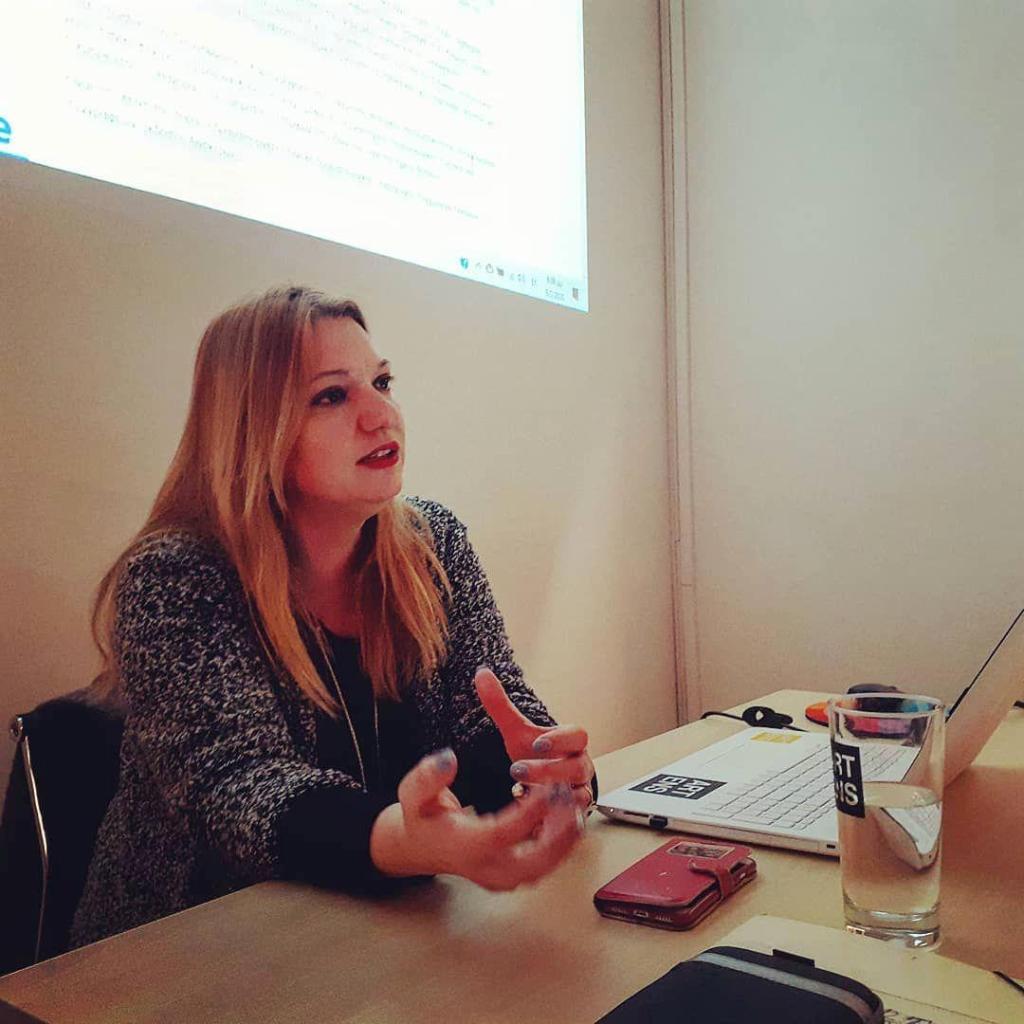
Photo credit: Irene Moundraki.
IAB: Beyond visibility, what has the Showcase actually enabled for Greek artists and their work?
IM: So, on the one hand NTG Showcases and communication with the international community help build networks and strengthen the visibility of Greek theatre internationally. On the other hand, they empower Greek artists themselves. They no longer feel quite so isolated. They get used to engaging with their European and international colleagues, to sit around the same table and talk about their work as equals. This is something we deliberately introduced at the National Theatre from our very first Showcase in 2023 through a special event called Meet the Artists. Greek artists sit around the table with our international guests and have a genuine conversation about their work. And this is important: they are not there simply to sell their performances. It is not just a pitch. It is a much more meaningful exchange. I think this is also part of the responsibility of a major cultural institution: not only to present its artists to the world, but also to help them enter that world – to communicate, build relationships and, ultimately, become part of the international artistic community as equals.
IAB: What led the NTG to move from the Showcase towards SYSTEMA 2026?
IM: SYSTEMA is a very important initiative. It was born out of the willingness of three major Greek cultural organizations to collaborate: the National Theatre of Greece, the Athens Epidaurus Festival, and the Kalamata International Dance Festival. It is important to acknowledge that Michael Marmarinos, the Director of the Athens Epidaurus Festival, was the person who invited Argyro Chioti, the Director of the National Theatre of Greece, and Jenny Argyriou, the Director of the Kalamata International Dance Festival, to develop this proposal. Both of them immediately embraced the idea and decided to move from an institution-specific showcase to a collective platform. Three major institutions joining their resources, networks and expertise in order to create a strong platform of visibility for theatre and dance.
IAB: What does SYSTEMA make possible that a traditional theatre showcase cannot?
IM: What is particularly important about SYSTEMA is that, within an already very dense and sometimes overwhelming international landscape of activities, showcases, and collaborations, it creates a common ground, a shared place where people from all over the world can come together and, within a compact timeframe, discover the work being created in Greece. And I think this is its greatest strength: it brings together the work of the country’s major theatre institutions with that of the independent theatre scene and contemporary dance, creating a space for dialogue and exchange between different artistic communities and structures. This is not something to be taken for granted. It takes courage and a genuine willingness to collaborate across different organizations, structures and artistic communities. SYSTEMA is also an example of collaboration.
IAB: What kind of artistic exchange do you hope SYSTEMA will generate between Greek and international theatre-makers?
IM: SYSTEMA, the Showcases and all these initiatives see international exchange as much more than productions travelling abroad. Of course, we very much hope that the work presented will travel this is an important goal. But we do not approach our guests as buyers. What matters is the network of relationships that we can develop through these encounters: the conversations, the exchanges, the unexpected connections, and the possibility of future collaborations. We encourage the Greek artists who participate to become active participants in this international exchange encounter themselves. Such initiatives give them the opportunity to search beyond our borders, discover what is happening elsewhere, and seek out workshops, festivals, residencies or other professional challenges. Systema also has a fund that can partially support this international mobility, which can make a real difference.
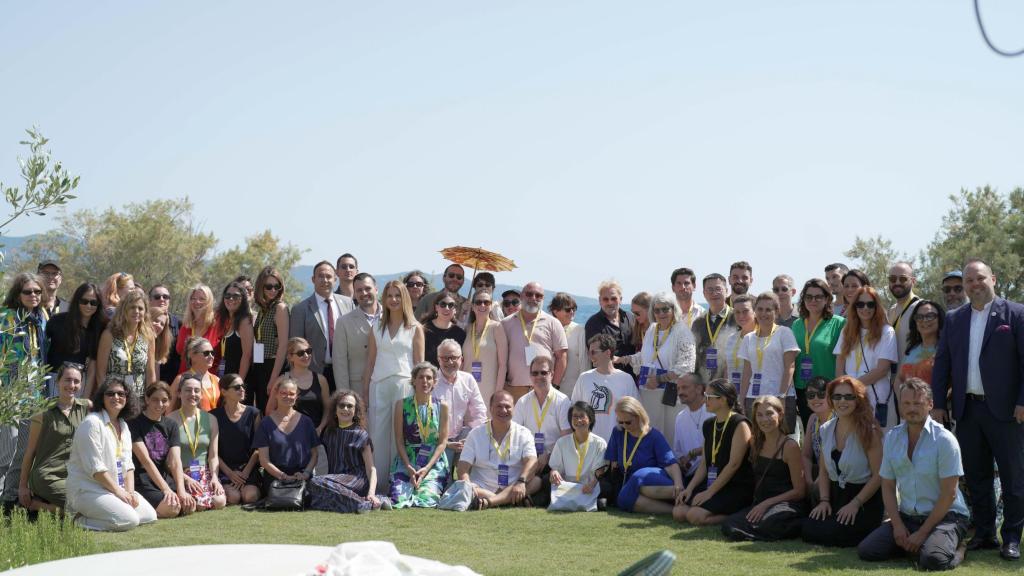
Photo credit: Systema Filoxenia (c)arch labyrinth
IAB: What would meaningful success for SYSTEMA look like beyond its first edition?
IM: I think the real success of SYSTEMA and in fact of any showcase lies precisely in the encounter. It is about bringing people together; giving international professionals the opportunity to meet Greek artists and to gain not simply an impression, but a deeper understanding of the dynamics and diversity of the Greek theatre and performing arts scene. Success should not simply be measured by the number of international guests who attend or the number of productions that travel afterwards. It should be measured by what remains once the event is over: the connections, the conversations that develop into projects, and the relationships that grow over time.
IAB: If you could introduce one aspect of contemporary Greek theatre to the international theatre community that you feel is still insufficiently visible, what would it be?
IM: I would probably draw more attention to Greek playwriting and contemporary Greek dramaturgy. I think there are many voices, both new and older, that deserve to be much more widely known internationally. They have managed to capture aspects of our world, its anxieties and contradictions, its concerns and emotional journeys, with remarkable sensitivity and depth.
At the same time, we have a new generation of playwrights and theatre-makers who are experimenting with forms and exploring more research-driven and unconventional ways of writing and creating theatre. Their work is often in a very vivid confrontation with the reality around us and this is a reality that is, in many ways, increasingly dystopian. What I find particularly interesting is that, even within these very dark landscapes, there is very often a crack of hope. And I think this is something worth paying attention to: whatever it confronts, it does not necessarily surrender to despair. So, if I could introduce one aspect of contemporary Greek theatre to the international community, it would be this body of writing and these voices: playwrights who are looking very directly at the world we live in, while at the same time searching for new theatrical forms through which to understand it. I think there is a great deal there that remains to be discovered.
IAB: Thank you very much, dear Irene Moundraki.
(Athens/Skopje, 2026)
This post was written by the author in their personal capacity.The opinions expressed in this article are the author’s own and do not reflect the view of The Theatre Times, their staff or collaborators.
This post was written by Ivanka Apostolova Baskar.
The views expressed here belong to the author and do not necessarily reflect our views and opinions.