



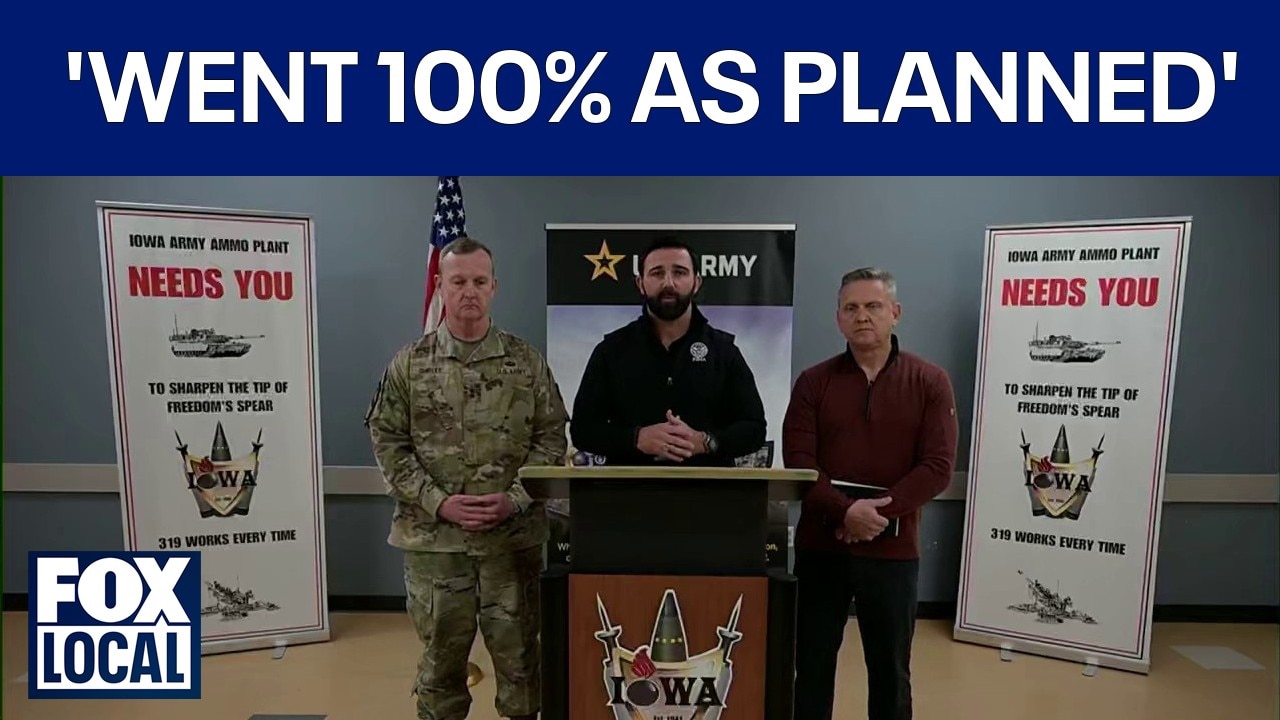
MIDDLETOWN, Iowa – The U.S. Army detonated nearly 10,000 pounds of degraded lead azide in Iowa on Wednesday, Nov. 25.
After the intentional explosion, the Environmental Protection Agency said immediate testing found no toxic airborne lead above the nearby farms, homes and businesses.
According to the EPA, crews are now collecting soil and water samples to test for lead contamination.
So, with Iowa farmers providing about 8% of the nation’s food supply, what does the explosion mean for food safety?
USDA says the food supply is safe
Big picture view:
A spokesperson for the U.S. Department of Agriculture told Fox that “the food supply is safe. Both USDA and FDA have proper protocols in place to ensure there are no heavy metals, including lead, in the food that enters the supply chain.”
Iowa Secretary of Agriculture Mike Naig concurred, saying he doesn’t “anticipate the detonation will have any negative impact on livestock health or food safety.”
Most of the state’s corn and soybean crops had already been harvested at the time of the detonation, according to a report from the Iowa Department of Agriculture and Land Stewardship.
READ MORE: Iowa lead explosion aftermath: Here’s what happens next
The USDA will remain in Iowa to assist concerned farmers, U.S. Secretary of Agriculture Brooke Rollins said.
“Our priority remains the safety of every Iowan affected,” Rollins said on X. “USDA is on the ground, and we’ll bring every resource we can to help our farmers and ranchers. To the families and producers worried about your homes, your livestock, and your livelihoods, I hear you. More than 140 USDA offices within 100 miles of Middletown will remain open to help. Our team will be here in the days and weeks ahead to answer your questions, help you access USDA resources, and assist with filing claims with the Army.”
Ramped up testing:
The USDA said it’s ramping up its own food testing program and asked farmers to do the same.
Impacted farmers should check with their veterinarian before slaughtering or selling their livestock, the agency said.
READ MORE: Iowa lead detonation: Army blows up bomb-making chemicals
“USDA recommends that producers work with their local veterinarian for blood testing to ensure that animals are safe for slaughter,” the agency said. “Additionally, USDA will increase post-slaughter tissue sampling of meat, poultry, and egg products in the impacted region to test for any lead residues.”
In an effort to avoid contamination, the USDA and the Iowa Beef Center asked farmers to bring livestock indoors ahead of the detonation.
Lingering impacts?:
While lasting air contamination wasn’t readily apparent after the explosion, Dr. Stephanie Widmer, New York City emergency medicine physician and medical toxicologist told Fox News that there could still be lingering impacts.
Lead “can stay in soil, it could stay in water,” Widmer said. “The very concerning thing is that lead can have negative effects on the human body without even showing any symptoms. There’s still going to have to be testing. Follow-up is really key here.”
Iowa is the nation’s third-largest agricultural producer
By the numbers:
The lead azide bomb-making material was detonated in Middletown, Iowa, at the Iowa Army Ammunition Plant.
That’s located in Des Moines County, which, according to the Army, has more than 140,000 acres of cropland.
Moreover, it’s in the middle of the country’s agricultural heartland.
Iowa is among the nation’s leading producers of pork, corn and soybeans. It also is a major producer of turkey, beef and eggs.
MORE: Army detonates 5 tons of toxic lead azide in Iowa as questions remain over delayed response
In a press conference on Tuesday, officials said that about 350 farms could be downwind of the detonation.
Residents within 5 miles of the site in Middletown, Iowa, were told to evacuate ahead of Wednesday’s detonation, and people living within 20 miles of the blast were told to stay indoors to avoid lead dust in the air.
The Source: This story was reported using a statement from the USDA, social media posts from Iowa Secretary of Agriculture Mike Naig; U.S. Secretary of Agriculture Brooke Rollins; and the EPA; an Iowa Department of Agriculture and Land Stewardship crop report, and previous Fox reporting. It was reported from Eden Prairie, Minnesota.