



Article content
We independently select everything we recommend. Buying through us may earn us a commission, which supports our work.
Known primarily for his narrative features (including Apollo 13 and The Da Vinci Code), director Ron Howard has amassed a few documentaries under his belt, mostly showbiz-oriented profiles (Pavarotti, Jim Henson: Idea Man).
Advertisement 2
Article content
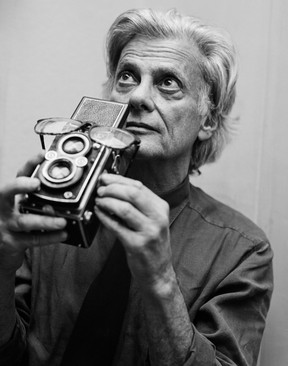
His new doc Avedon (currently streaming on Netflix), is not only one of his better docs, it is one of his best films.
Article content
Article content
Credit a certain game-recognizes-game in the film’s dynamic.
Richard Avedon was best known as a fashion photographer, creating fantastic campaigns for the likes of Christian Dior, Versace and Calvin Klein. (It was Avedon’s idea to refer to Klein’s jeans as “Calvins” in a series of provocative Brooke Shields commercials circa 1980.) Avedon served as the inspiration for the fashion photographer Dick Avery (played by Fred Astaire), in the 1957 fashion industry musical Funny Face starring Audrey Hepburn.
But Avedon’s ambitions reached far beyond the hallowed studios of couture. He also documented the civil rights movement, the war in Vietnam, and other social/historical flashpoints, mostly through the art of portraiture.
It is suggested Avedon’s famous esthetic — black-and-white portraits against a white backdrop — sprang from his stint in the merchant marine, when his job was to take thousands of identification photos — black-and-white faces against a white backdrop. Evidently, in that photographic drudgery, Avedon found inspiration.

Shopping Essentials
Article content
Advertisement 3
Article content
Certainly, he elevated that photography into an art form by engaging with his subjects the way a film director ideally engages with actors, a quality with which Howard presumably connects. Supermodel Lauren Hutton (still stubbornly gorgeous), describes the process as a kind of intimacy fuelled by a willingness to collaborate, a testament to Avedon’s curiosity and his charisma.
Avedon died in 2004 during a New Yorker assignment in the American south, which Hutton aptly describes as dying “with his boots on.”
In addition to being an insightful bio, Howard’s film about Avedon also serves as a cultural history of the latter half of the 20th century, a period of conflict, change and challenge that Avedon quite literally took on face to face.
Bunny Yeager, on the other hand, was a professional photographer who specialized in cheesecake photos, that is, photos that celebrated female beauty with proudly prurient overtones. Her life and career are discussed in the 2024 doc Naked Ambition (streaming on Tubi).
Advertisement 4
Article content
Yeager herself was a model accustomed to posing in bikinis at a time when women might get arrested for wearing such revealing swimwear.
Fortunately, Yeager’s career behind the camera started in the 1950s in Miami, a city celebrated for its relatively liberal attitude to sexuality.
The late broadcaster Larry King, of all people, illustrates the Miami zeitgeist of that era, telling a story of how he was effectively seduced over the phone while working the nightfly shift at a radio station, only to have his quickie-facilitating absence exposed when the long-playing Harry Belafonte record he put on to cover the assignation started skipping.
It’s a great yarn, admittedly with little to do with Yeager specifically, demonstrating that the doc’s co-directors Dennis Scholl and Kareem Tabsch aren’t ones to let relevance get in the way of a good story.
Alas, Yeager died just days after she agreed to participate in the doc, which means her own testimony is lacking. The directors rely heavily on interviews with Yeager’s two daughters who have conflicting attitudes to their mom’s work, with the eldest, Cherilu Irwin, disapproving of its sexual exploitation and the youngest Lisa Irwin embracing her mom’s body of work, a piquant portrait of the schism between first and third-wave feminism.
Advertisement 5
Article content
Of all the film’s interview subjects, including King, Hugh Hefner (Yeager was one of Playboy’s first staff photographers), and fellow photographer Bruce Weber, it may be model/stripper Dita Von Teese who demonstrates the best understanding of Yeager as an artist, coming as she did, from the ranks of cheesecake model. Von Teese gets it: Yeager understood how models wanted to be directed for the camera.
The film courts hagiography by skipping over some less savoury aspects of Yeager’s life, such as the 1967 suicide of her best friend and favourite model Maria Stinger “the Marilyn Monroe of Miami” as well as the firing of her cop husband Bud Irwin for falsifying burglary reports. (The film suggests that the Miami police took issue with Irwin’s sideline in the sex industry.)
But the film does pay tribute to the period when Yeager met model Bettie Page, and the two created images that remain fun, sexy and visually striking: the apotheosis of cheesecake.
randall.king.arts@gmail.com
Article content