




Sirât is finally upon us. Like its small convoy of nomadic ravers traversing the North African desert, the year’s most startling slice of cinema is rolling into cinemas with a cargo of traumatic twists and spiritual enlightenment – all set to a techno score that will reverberate in your head for weeks. It is, put simply, like nothing else you’ll see this year: think Vanishing Point for acid heads, or William Friedkin’s Sorcerer with the handbrake ripped out and lobbed out of the window.
Spanish-French filmmaker Óliver Laxe has called it ‘Mad Max Zero’, which gives some sense of its apocalyptic world-building and vehicular mayhem. Since winning a jury prize at Cannes, Sirât has picked up two Oscar nominations and left a wealth of shaken-up audiences in its wake. We asked the writer-director to take us behind the scenes on his sun-baked opus. Strap in.
Contains minor Sirât plot spoilers
The set-up
Sirât opens with a desert rave, its citadel-shaped speaker stacks backdropped by North Africa’s Atlas Mountains. A man, Luis, with his young son Esteban in tow, hands out flyers to ravers with a photograph of his missing daughter, last seen taking part in the nomadic rave scene. When the rave is shut down and a handful of ravers, Luis and Esteban follow behind, hoping they’ll lead to the missing girl. ‘We were shooting at the same time they were organising the real rave,’ says Laxe. ‘We organised it in Teruel in Aragon because we wanted to have real punks, real ravers.’

The rave
To give the movie its throbbing techno and ambient score, Laxe turned to Berlin DJ and producer Kangding Ray, whose 2014 club hit ‘Amber Decay’ has caught his ear years previously. ‘I could feel that it was really cinematic,’ he remembers. ‘It’s dusty, it’s ethereal.’ The pair’s close collaboration took in trips to Berlin and Laxe’s home in Galicia to share musical references and images. ‘Really quick, he gave me a lot of tracks that we didn’t change. We were really connected. He’s like a filmmaker and I’m a bit like a musician.’

The ravers
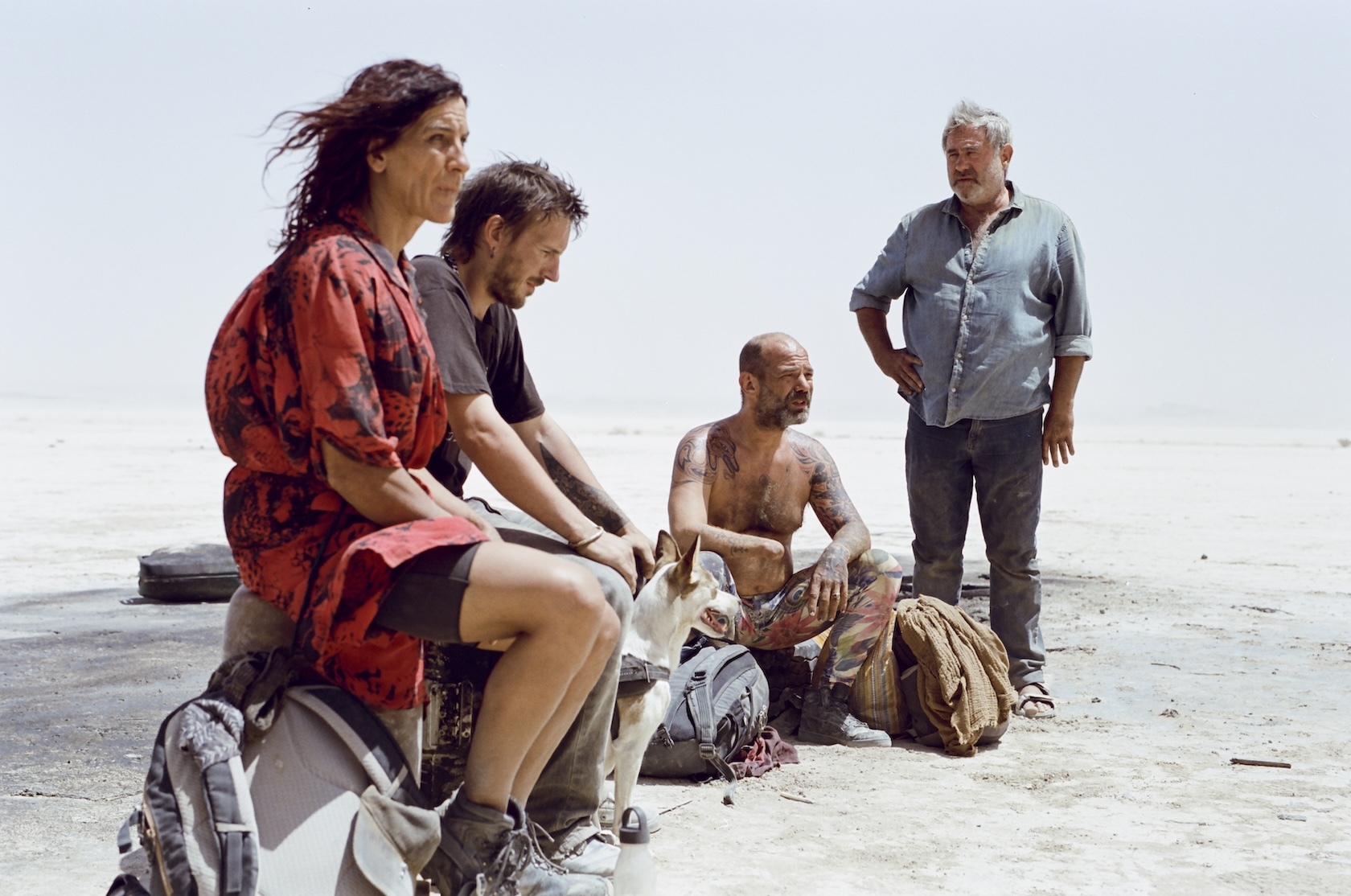
Partly street-cast at real raves, Sirât’s handful of nomads are played by Stefania Gadda (Stef), Joshua Liam Henderson (Josh), Tonin Janvier (Tonin), Jade Oukid (Jade) and Richard ‘Bigui’ Bellamy (Bigui). ‘They are just in front of the camera and they don’t act,’ says Laxe. ‘Bigui has been a friend of mine for 15 years, we’ve been raving a lot so he was in the script from the beginning. This guy Joshua, he belongs to the team who cleans after the end of the rave. Every rave he goes is like three days cleaning the shit out of it.’

The dad
Four movies into his filmmaking career, Laxe turned to a professional actor for the first time. Pan’s Labyrinth and Happy as Lazzaro’s Spanish star Sergi López inhabits worried dad Luis with deep humanity. ‘I learned a lot with him, he is really demanding,’ says Laxe. ‘The [cast] came to my home [to prep] and Sergi helped the [non-professional actors] a lot. This guy who has made 50 films says to them: “I don’t know how to do this film. We will find the way by making mistakes so jump into the abyss.”’
And the hat? ‘It’s British. We call it “Bombín” in Spanish – a bowler.’

The kid
Luis’ preteen son Esteban is played by Bruno Núñez Arjona. ‘He’s a really good actor but we couldn’t allow him to improvise much because we wanted someone something more [contained],’ says Laxe. The director handled the film’s shocking middle act twist with great care. ‘That sequence was difficult to write, to shoot, to rehearse, to make the sound, everything was painful. I could be easily interpreted as a cruel or sadistic guy, when it’s not my intention. It’s shock therapy, but it’s good. It’s good medicine.’

The trucks
The ravers’ two trucks – ‘911’ and ‘508’ – were built by Mercedes and retooled to Sirât specs in France, before being shipped out to Spain and then Morocco. ‘The trucks are characters in the film,’ says Laxe. ‘We had two of each, because they’re exploding and you cannot explode your actors.’ One set was unfurnished and used only for exterior shots. ‘They’re in Catalonia now,’ says Laxe, ‘but I want to take them to my village’.

The shoot
Seven weeks in the arid surrounds of Aragon in Spain and the mountains and deserts of Morocco took their toll. ‘We were shooting in 45-degree Moroccan heat in June, July,’ says Laxe. ‘We are so stressed physically, psychologically. In a way when you’re making a film, you are looking for love. There are more simple ways to ask for love than making a film in the desert.’

The aftermath
A prize at Cannes and two Oscar nominations – aided by the support of producer Pedro Almodóvar – represent a major breakthrough for Sirât and its director. ‘Part of my fear with this project was to be misunderstood,’ he remembers. ‘Now I’m breathing, but you know this film was more near to be a failure than to be nominated for two Oscars. It’s really risky, this film. We are getting messages, and actors are interested in my work. Have there been approaches to remake Sirât in America? No, no. What they want from me is the visionary side, the sensoriality. For them, it’s a surprise that someone can have this radical trust in cinema.’
Read our review of Sirât here.
The best films of 2026 (so far).