



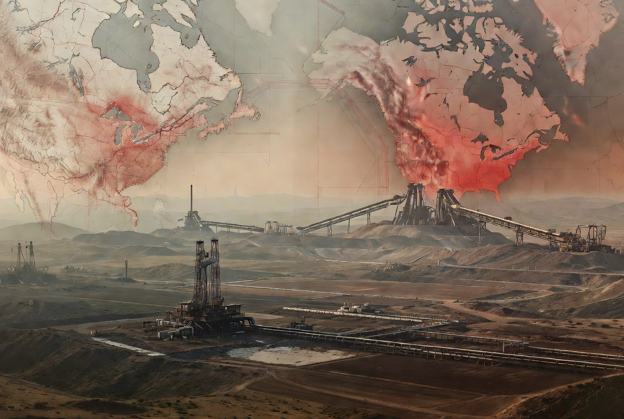
The Iranian sky lit up with missiles and drone swarms, but the slower, quieter war continued beneath the surface – in offices, boardrooms, and diplomatic backchannels. The capture of strategic resource regions around the globe is happening in plain sight, yet rarely is it framed as part of the same contest that produced the Twelve-Day War or ongoing proxy activations.
This is where narrative filters do their most effective work: encouraging the public to believe certain developments are not happening, or at least not connected.
Venezuela provides the clearest case study. After years of sanctions and isolation, calibrated political realignments and selective relief have allowed Venezuelan heavy crude to re-enter global markets in meaningful volumes. Official western messaging emphasizes humanitarian relief, democratic openings, and regional stability.
These elements do exist.
But the deeper strategic layer is unmistakable: loosening Chinese and Russian footholds in a nation possessing some of the world’s largest proven oil reserves and notable critical mineral deposits. This is no mere influence peddling. It is measurable barrels per day and tons of refined material that can tilt the endurance curve in any prolonged conflict. The quiet re-entry of Venezuelan supply helps stabilize allied energy margins while reducing adversarial leverage. These moves are material, not rhetorical.
The rhetoric of the Iranian conflict also diverts attention away from Venezuela.
And Canada.
Canada’s oilsands present a near-perfect mirror of strategic containment. Alberta sits atop vast proven conventional oil reserves and, importantly, tailings streams from existing bitumen operations that concentrate recoverable rare-earth elements and other critical minerals. Studies have identified elevated concentrations in froth-treatment tailings – enough to suggest meaningful co-production potential alongside the enormous daily oil output.
Yet development crawls.
Regulatory timelines stretch into decades, environmental and political-environmental opposition remains intense. Political caution prevails. Canadian regional grievances persist, their value in persistence exceeding their value in resolution.
The outcome is effective containment: a massive, allied-adjacent resource base kept largely offline or underdeveloped while competitors position elsewhere. Both Venezuela and the oilsands demonstrate how control over permitting, capital allocation, and public framing matters more than raw geology.
This pattern directly parallels the selective reporting dissected in my climate series’ Antarctic ice essay. There, dramatic claims of collapse and tipping points dominated coverage, while data showing stable or growing ice mass in key regions received minimal attention. Here, resource realignments are presented as isolated economic stories, environmental disputes, or humanitarian footnotes rather than integrated components of great-power positioning.
The public is invited to believe the real contest remains kinetic and visible via missiles, proxies, and headlines.
Meanwhile, the material foundations of endurance are managed quietly in the background.
The Iranian conflict makes the linkage impossible to ignore. Disruptions in the Strait of Hormuz, Red Sea shipping, and refining margins rewarded flexible, allied-controlled supply chains. Venezuelan barrels help cushion the blow. Canadian barrels, left unrealized, underscore the opportunity cost of domestic hesitation.
These are not side notes to the war. They are quiet geopolitical wins that alter cost curves, supply reliability, and escalation thresholds for decades to come.
The undulating ceasefires in Iran create narrative air cover.
As noted at the outset, the machines of modern warfare run on these realities. The mineral chokehold determines what can be manufactured. The energy shell game determines what can be moved and sustained. This essay reveals how narrative filters decide which resources are treated as strategic prizes and which are kept off the board through selective belief – believing things that are not happening, or refusing to connect things that clearly are.

In both the climate essays and this war series, the most consequential developments are often the ones least loudly declared. Projection bias thrives in this gap: the resource plays of the West’s adversaries are cast as aggressive grabs, while western plays are framed as responsible stewardship, unfortunate regulatory necessities, or the prudent balance of economics and environment. The result is a public conversation disconnected from the physics and economics that govern outcomes.
The Iranian conflict is a noisy, kinetic stress test. The quieter scenarios in Venezuela and the Canadian oilsands represent a structural test. Honest analysis requires connecting them.
Until we confront this honestly, we remain vulnerable to the most dangerous form of self-deception: believing the war is only what we see on the surface, while the foundations are quietly being secured – or conceded – elsewhere.
Scratch below the surface, suffer not venereal disease.
(Richard LeBlanc – BIG Media Ltd., 2026)