![31st Jul: Shine (2025), 8 Episodes [TV-MA] (6/10)](https://occ-0-858-92.1.nflxso.net/dnm/api/v6/0Qzqdxw-HG1AiOKLWWPsFOUDA2E/AAAABTVM3_CSznq3OejsabyU4j2Ray1dZlfQ7D_T66PP3Z4a4O2AmaTjBwaeI6FFk7r9BZRhgqzBIDD1MuSlp-2ctpRVMyNK_FjmaKvvCGT2sBkhGh4dk_7SpcH66KFnDYBQn-84VChuw_bdx19Lh4jF6IwCLsoo95m4Fe3MV7L7Kc7Y7Q.jpg?r=8fa "31st Jul: Shine (2025), 8 Episodes [TV-MA] (6/10)")






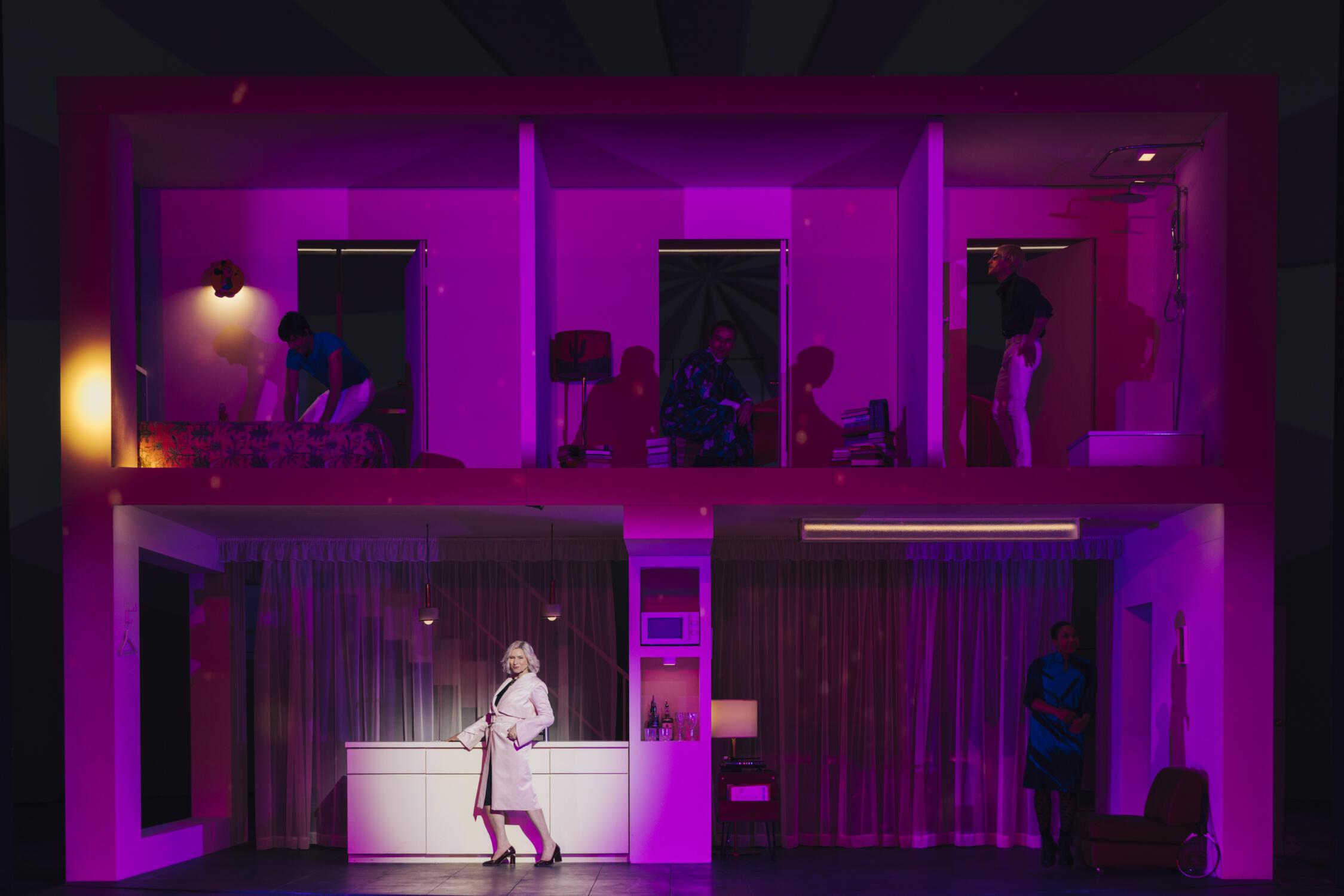
Spirit and the Dust is a play by American dramatist Noah Haidle. The world premiere of the play, in its translation into German by Barbara Christ, took place on 27th February 2026 at Deutsches Theater Berlin, directed by Anna Bergmann. She also directed the German language premiere of Haidle’s Birthday Candles (2022, also at Deutsches Theater), translated by Barbara Christ, and the world premiere of The Homemaker at Schauspiel Hannover on 16th May 2016, translated by Brigitte Landes and Nina Peters.
In Spirit and the Dust, eminent German stage and screen actress Corinna Harfouch (b. 1954), who has worked repeatedly with Bergmann before, plays the central character, tellingly called Hope. She is an architect, divorced, showing a young couple, about to get married, Margaret and Will, around a house: open plan ground floor and three rooms on the first floor. The revolve turns to reveal the pool and garden, complete with oversized and broken Mickey Mouse sculpture. Hope senses that Margaret is not too certain about going through with the impending marriage and successfully dissuades her. Hope also meets Lee, a man whom she mistakes for another potential buyer, and falls in love with him, and he with her. Lee is actually Will’s father, and not too pleased at Hope’s interference. Neighbor Donna shares a shockingly sad history with Hope, the depth of which is only gradually revealed in the course of the play: at some point in the past, in a random moment of being distracted, Hope did not pay enough attention to her and Donna’s young children, and both drowned in the pool. The final character is security advisor Jerry.
The characters have in common that they are all confronted with existential dilemmas, with the aftermath of, or impending, shipwreck on the voyage of life. This makes them attractive to each other. Haidle’s writing is such that it offers sound and sufficiently nuanced material for the actors and director to work with and to explore and develop for production purposes. Bergmann’s approach cleverly combined televisual realism with a dose of poetry inherent in the text, sufficient to elevate the characters and their plot out of the pit of soap opera to something more worth-while.
The play pivots around Hope, and any production rises or falls with the actress cast in this role. Corinna Harfouch commanded full attention when she was on the stage. Her technical skills told the tale of many years of experience. She used her voice with consummate attention to detail and nuance, with every aspect of intonation, speed, volume and pitch very precise, accurate, to the point, chiseled, crafted, but at the same time sounding completely natural, unforced, spontaneous, direct, unaffected and at ease. The same is true for the physical side of her acting, the way she moved her body, the ever-so-subtle physical responses to some of the utterances of the other characters, such as a minute gesture, a tilting of the head, a protective movement of arms and hands, in response to a sudden insight, or an unreflected gut reaction. The house represented by the set lived and breathed her atmosphere, and her stage presence was tremendous. To the credit of the team, that towering stage presence did not overpower the others – on the contrary, they seemed to be drawn in, inspired, elevated, and united by that unique presence, allowing their own individual potential as actors to grow and shine considerably as a result.
This post was written by the author in their personal capacity.The opinions expressed in this article are the author’s own and do not reflect the view of The Theatre Times, their staff or collaborators.