![10th Jul: Naruto Shippuden (2017), 12 Seasons [TV-14] – New Episodes (6.55/10)](https://occ-0-4458-2430.1.nflxso.net/dnm/api/v6/0Qzqdxw-HG1AiOKLWWPsFOUDA2E/AAAABSKKCEPXApXDNpga4jPZt6MoHfrKNKJW1lzQ_iGX5hWbSdCoBIB9--IKqfuKbaIMh3Fy3sJLaidt2Oz4Pcmy-UrkcdbizrluecX9GYIqQy4Nl1zje4WMQ_YXW47Q_waBfPROwUiQn1sAdpOXCoU9xnRrRDYcmjKWLyEXGQGHAA.jpg?r=0ea "10th Jul: Naruto Shippuden (2017), 12 Seasons [TV-14] – New Episodes (6.55/10)")





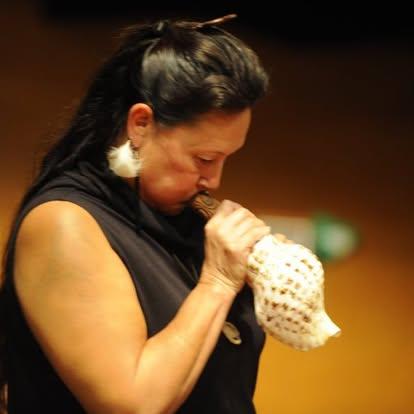
This article is dedicated to the memory of Rua McCallum – teacher, kaitiaki, scholar, performance practitioner, and playwright – who passed away on May 9th 2024.
In her article “The Limits of Cross-cultural Dialogue: Pedagogy, Desire, and Absolution in the Classroom”, Alison Jones critiques the dominant-culture classroom as a site for potential cross-cultural dialogues. She claims that because a dominant ideology is present within the classroom, the “subaltern” continues to find it difficult to “speak” (Jones citing Spivak, 299). For Jones space is a powerful signifier in that “[i]t invokes that familiar social geography of centers and (shifting) margins populated by the powerful and the others, respectively” (Jones ,306). This same phenomenon is manifest in the conventional university classroom. To respond to this issue we investigated the integration of Māori pedagogical and lifeworld models into the university teaching and learning context as precarious, productive and sometimes uneasy bedfellows.
This article was co-written by the late Rua McCallum (Kāi Tahu) and Hilary Halba. Rua was a teacher, kaitiaki (cultural guardian), scholar, performance practitioner and playwright. Hilary is Associate Professor of Theatre Studies at Ōtakou Whakaihu Waka/the University of Otago, and is an actor, director and performance-maker with over 30 years’ professional theatre experience in Aotearoa/New Zealand and beyond. We undertook this research in a course that we taught for ten years from 2007 – 2017 at Ōtakou Whakaihu Waka/the University in Ōtepoti/Dunedin, the southernmost university in Aotearoa/New Zealand. Initially titled ‘Bicultural Theatre’ and later ‘Theatre, Culture and Identity in Aotearoa’, the course explored the potential for western theatrical form/s to work in conversation with tikanga Māori (Māori customary practices) in a way that retains the mana (status) of each, and in which tikanga provides both the undergirding framework and terms for engagement as well as becoming a pedagogical principle in itself. The course also sought to be led and informed by Tiriti o Waitangi. Theatre director and commentator Roma Potiki observes that mainstream society in Aotearoa/New Zealand is dominated by non-Māori systems (58) which have a “powerbase of buildings, money and resources.” (58). In order to redress the imbalance of social power that Potiki remarks upon, and acknowledging the work of James Ritchie (1992), Jay T. Johnson (2003) and many others in this space, we argue, that to be ‘bicultural’, any process needs to be underpinned by Māori systems and processes, philosophies and practices. Most students entered the course familiar with aspects of the world of theatre more widely, that being the main focus of their studies. However many were unfamiliar with Māori tikanga and worldviews, and most had a nascent understanding of the principles of biculturalism, postcolonialism and decolonisation. Additionally, each year, the course enjoyed a small international student cohort from outside of Aotearoa/New Zealand, including from several countries in Asia and Europe as well as from North and South America.
During the time we ran the course, we identified the following issue: although students were generally eager to learn and to engage in theoretical discussions to do with tikanga Māori in theatre, they were understandably apprehensive or uncertain about finding ways to incorporate those principles and practices into their own theatre work. They were concerned about the perceived authenticity of what they were doing, anxious that they were guilty of cultural appropriation, and unsure of their authority to articulate in this space. Conversely, those familiar with Māori tikanga and with knowledge of Te Tiriti, at times also struggled to find a way to incorporate those ideas into theatre practice, as they were more familiar with doing so in Māori lifeworld contexts. We trialled several approaches to help students strengthen their understanding of and confidence with the material, and to incorporate Māori principles into theatre. We conducted evening workshops on aspects of Māori tikanga in order for students to formulate proposed tikanga for the class. We provided community ‘research partners’ with expertise in Māori scholarship and cultural practices as well as theatre, such as prominent playwright and scholar Emeritus Professor John Broughton (Ngai Tahu, Ngati Kahunguna Ki Heretaunga), to guide the students. We encouraged students to articulate their own identities in and through theatre. However we realized that everything we had undertaken had been based in a western epistemological framework in that each initiative was still located within the university context, and carried with it (for the students and for us) all the assumptions that the university classroom site carried with it. The Pākehā-centric focus of mainstream tertiary education meant that our students were operating at a disadvantage within the university classroom when seeking to engage with Māori tikanga and give primacy to Te Tiriti as a set of guiding principles. The issue – as far as Māori pedagogy went – was that mainstream educational institutions are often framed by what Alison Jones calls “problematic imperialist assumptions” (299) or what Rua described as “colonial baggage”. Furthermore it was not simply a physical location of ‘the university’ that we identified as ‘western’ or ‘euro-centric’, but all the attendant notions of teaching and learning that site brought with it – for us and for the students – were also based on western pedagogical tools and methods.
In order to investigate this issue, we took our lead from Peter and David Jansen, and their article “The Influence of Place and Culture on Practice-Based Learning: Focus on Marae Learning”. That essay focuses on the authors’ investigations into teaching Māori health professionals in a marae setting to “ensur[e] that…health workers had access to relevant [Māori] knowledge and experiences in a culturally appropriate setting” (p. 258). Consequently, we introduced a marae-based wānanga as a module within the course, and simultaneously conducted a research project investigating the efficacy of employing wānanga as a teaching tool in a university context. In Māori terms, a wānanga is a traditional – often marae-based – forum for imparting higher-level Māori epistemologies. It is important to note that in Aotearoa, smaller, industry-focussed organisations such as Toi Whakaari o Aotearoa: New Zealand Drama School (hereafter Toi Whakaari) have successfully incorporated wānanga into their pedagogy for a number of years in a way that “tethered Māori frameworks to artistic practice” (Zazzili, 81) and where “Māori beliefs and principles permeated” (Zazzili, 82). Drawing from successful examples of wānanga practice in higher education, we theorized that the marae-based locus, and wānanga principles and practices would result in markers of ‘western’ power in the classroom being traded for different ways of knowing and being in the world.
In the traditional Māori world, “[w]hare wānanga utilised specialised methods for transmitting esoteric knowledge” (Paringatai and Wharerau, 41) and “[a]n expert or elder (pūkenga) took a candidate under their care and “fed” them knowledge” (ibid. quoting Metge 1984). Wānanga, in the Māori world, referred not only a locus – a place – but also a process and an energy that leads to understanding and knowledge. In Māori worldviews, humankind and the natural order are inextricably linked, so the natural world embodies knowledge that speaks directly to human beings. The concept of wānanga has shifted over time. In contemporary times, one of the ways in which a re-vitalisation of Māori epistemologies has taken place is through two kinds of wānanga:
(a) Wānanga which are Māori-focussed tertiary institutions – actual places such as te Wānanga o Aotearoa;
and
(b) wānanga more generally as teaching and learning spaces, which might include workshops, forums and other platforms for learning, often taking place on marae.
It is this second kind of wānanga upon which we focused our research. It is important to note, too, that, as Paringatai and Wharerau point out, many New Zealand universities have adopted the word “wānanga” in their titles since the later part of the 20th century, although their “curriculum, teaching pedagogies, and physical design of the campuses did not incorporate anything culturally appropriate to the indigenous people of Aotearoa” (Paringatai and Wharerau, 42).
Our research into wānanga differed in some key ways from other studies into the contemporary pedagogical uses of wānanga. In many other studies, the students who visit marae and participated in wānanga were mainly of Māori descent and – in the main –were more familiar with the Māori world than most of our students. Wānanga, in those cases, were either aimed at reconnecting those learners with their culture or providing instruction into Māori epistemologies for professional disciplines such as health sciences. It is also crucial to differentiate wānanga from what might be called an ‘educational marae experience’ where learners are taken to a marae – usually for a day – to learn fundamental concepts from the Māori world. The learning is more elementary – known as kau-wae-raro or ‘lower jaw’ knowledge – than that often imparted in traditional wānanga.
As previously mentioned, performing arts training institutions in Aotearoa, including Toi Whakaari and Unitec’s Performing Arts program, take their students on a noho marae. The purpose of such an activity is typically manifold but usually involves the imbrication of Māori kawa (protocols) into the performing arts in an immersive situation. Wānanga, at their fundamental root, are focused on transmitting what Charles Royal terms ‘deep knowledge’ in a Māori context. For Shane Edwards wānanga, and wānanga principles and practices do just that. They represent, “our own [that is, Māori] frameworks for being” that “facilitate a shift from an over-reliance on ‘others’ way of knowing to distinctively Māori ways of knowing and being” (2013, 69).
To read PART II of this essay, go to this link.
We gratefully acknowledge the support of University Teaching Development Grant from Ōtakou Whakaihu Waka/the University of Otago, which made this research possible.
This post was written by the author in their personal capacity.The opinions expressed in this article are the author’s own and do not reflect the view of The Theatre Times, their staff or collaborators.