

![17th Apr: Primal Fear (1996), 2hr 11m [R] – Streaming Again (6.85/10)](https://occ-0-7328-92.1.nflxso.net/dnm/api/v6/0Qzqdxw-HG1AiOKLWWPsFOUDA2E/AAAABTOPiQ49LnVuD8HXEVr3AK3Sa77KkvXpSJ0xvMna_pEjAIuHkHvdF9XNvL-f5Lwcebeksaws_gYAFPPl2ZaU-UA6eC26_Kp0vf_OpP_w-A.jpg?r=d27 "17th Apr: Primal Fear (1996), 2hr 11m [R] – Streaming Again (6.85/10)")



-
Hotel Boom at the Expense of the City? – By Susann Sparwasser – Image Credit Unsplash+
In Kaiserslautern, ECE plans to convert vacant retail space in the “K in Lautern” mall into a 139-room hotel, raising concerns among existing hoteliers already facing low occupancy rates and recent competition from a 146-room Holiday Inn Express opened in 2023.
The project highlights a critical question: who bears the risk of new hotel developments in markets with existing overcapacity, especially when hotel investments are difficult to reverse and failed projects can become permanent urban planning burdens?
Against this background, the present article examines how cities and municipalities in the DACH region handle hotel permits, which control models – from market-oriented to needs-assessed to active supply limitation – exist, and what risks arise from them for investors, existing hoteliers, citizens, and urban development. The Kaiserslautern case serves as an example of a debate that has long been politicized and lies between market logic, growth pressure, and the preservation of existing structures.
A look at common models in practice
In principle, interventions by cities in hotel development can be assigned to three ideal-typical models. Either the market largely decides freely, the city reviews market and demand within the framework of informal concepts, or the supply is actively managed by the city and new capacities are consciously limited.
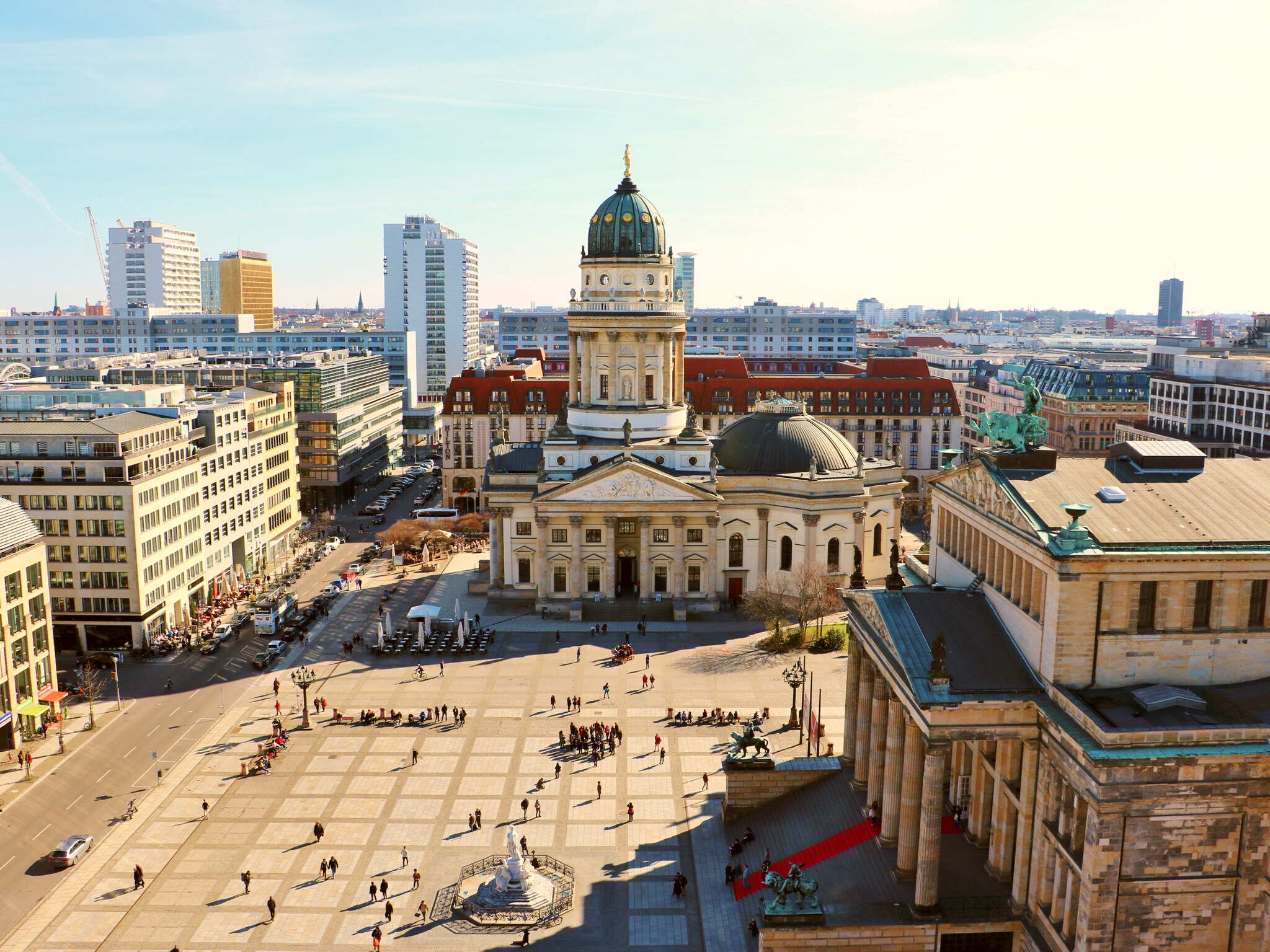
In Model A, “The Market Decides,” the decision-making authority lies in fact with the investor. Approval is granted for what is legally permissible under planning law; economic viability or market compatibility are initially not considered. This model shapes practice in Germany, where, if the formal criteria are fully met, there is a legal entitlement to a building permit. Major cities such as Frankfurt, Hamburg, Berlin, or Munich review zoning plans, building distances, and fire safety, but not the question of whether the market “needs” more hotels. In Austria, this model generally also applies, as long as local tourism concepts do not intervene. “In Switzerland, urban cantons such as Zurich, Basel, and Geneva also follow a liberal approach,” confirms Andrea Jörger, Managing Partner at Horwath HTL Switzerland.
Model B, “Assessment of Market and Demand,” represents a pragmatic middle ground. Here, the municipality uses market analyses, hotel studies, or accommodation concepts as informal planning bases. New projects are evaluated according to defined criteria, such as segment demand, site compatibility, or impacts on the housing market. Legally, the scope for action remains limited, and rejection is only permissible for urban planning reasons; however, in practice, the public sector indirectly influences where and which types of hotels are developed. This model is mainly applied in medium-sized German cities such as Heidelberg or Freiburg, as well as in Austrian tourist cities like Salzburg, Innsbruck, or Bregenz. The goal is to promote quality tourism, year-round occupancy, and MICE (meetings, incentives, conferences, events) while simultaneously limiting overtourism and housing impacts.
Model C, “Active Management of Supply,” goes a step further. The city consciously decides whether and to what extent new hotel capacities are even permissible. International frontrunners in this approach are Barcelona and Amsterdam. For example, Barcelona already imposed a hotel construction moratorium in the city center in 2015 and announced that all vacation rental licenses would expire by 2028 to reclaim housing. Since 2024, Amsterdam has been pursuing a zero-growth model, in which new hotels are only approved if existing ones close and annual overnight stays remain below a set maximum. In both cities, tourism is no longer primarily understood as a growth objective, but as a tool for managing urban quality, city structure, and public acceptance.
In the DACH region, Model C is still the exception, but tendencies in this direction are emerging. In Hallstatt, for example, a 228-bed hotel project in 2025 was stopped despite positive building and commercial approvals due to a nature protection veto. Here, the municipality effectively decided against additional capacity to protect the landscape, UNESCO status, and quality of life. “Another example is Salzburg, where political restrictions for micro-hotels and boarding houses are currently being discussed, as these are considered disguised vacation rentals that burden the housing market,” explains Brigitte T. Gruber, Managing Partner of Horwath HTL Austria.
Overall, in major economic and MICE cities in the DACH region, Model A remains dominant. However, with increasing pressure from overtourism, climate targets, and housing shortages, the debate over active supply management is also likely to grow in the DACH region.
What happens if no intervention takes place? The dynamics of chain logic
The “Market Decides” principle appears rational and efficient in theory. Investors build hotels when they see demand, and competition leads to better prices and quality. However, the reality in the German and European hotel markets shows that large international hotel chains often make location decisions not based on demand, but strategically. This reveals a central asymmetry, as Model A leaves the full economic risk with the investor, while hotel chains usually shift it to owners, franchise partners, and operators through their asset-light strategies.
The major hotel groups (Marriott, Hilton, IHG, Hyatt) pursue aggressive expansion goals through their development pipelines, which are filled with hundreds of thousands of new rooms for the next five years. This pipeline is not the result of market research, but of the strategic objectives of the corporations, which aim to fill geographic gaps, secure market share, and displace competitors. As reported by hotel inside: “The currently leading hotel groups are striving to rapidly close territorial gaps in their global presence and to balance the risk of economic downturns across various continents.”
The consequences of this are already visible in Germany, with massive oversupply and RevPAR pressure, for example in Frankfurt am Main. One of Germany’s most important hotel metropolises, with eleven million overnight stays per year, has seen RevPAR stagnate at around EUR 97 since 2014. Despite strong demand and significant capacity growth, hoteliers have been unable to increase revenues because competition is too intense. Berlin, Düsseldorf, and Dresden also show this pattern, in which overnight stays increase while RevPAR stagnates or even declines.
This, in turn, leads to aggressive discount campaigns and price dumping in order to push occupancy, putting increasing pressure on small, owner-operated hotels, while large chains are better able to withstand price competition due to economies of scale. And even though a vacant hotel ultimately harms the attractiveness of an entire district, it is primarily the owners who are left bearing the costs.
When supply comes first: demand driven by quality offerings
One of the most important and often overlooked dynamics in the hotel market is the phenomenon of induced demand, in which (international) hotel chains not only create additional supply but also activate previously untapped latent demand that could not materialize due to a lack of suitable accommodation. The risk of a purely stock-based assessment is that municipalities systematically overlook latent demand when analyzing occupancy levels and room rates. A city with exclusively budget hotels may well achieve an occupancy rate of 65 percent, but this does not rule out demand for a four-star hotel.
On the contrary, premium guests (business travelers, MICE, wellness tourists) may divert to neighboring cities or not travel at all because no adequate offering exists. Once an upscale hotel is developed, an entirely new layer of demand can become visible—one that did not appear in previous market analyses because it was never realized due to the absence of suitable supply. The risk, however, is that this effect does not occur automatically. “Flagship hotel projects” must be part of a holistic destination strategy and be supported by appropriate complementary offerings in order to genuinely generate demand.
But how much intervention is actually sensible, and at what point does it start to harm the market?
According to Christian Buer, Managing Partner of Horwath HTL Germany, argues: “Since overall political responsibility ultimately lies with the municipality, such decisions must always be considered within the broader context of the destination. Against the backdrop of economic development, it is therefore advisable to carry out an independent market analysis.”
Neutral, independent feasibility studies are a key instrument for municipalities to make informed decisions without relying solely on investor calculations. They objectively demonstrate whether a hotel project is truly market-appropriate and economically viable, and help to avoid risks such as vacancy, misinvestment in infrastructure, or the displacement of existing businesses. At the same time, they identify opportunities such as latent demand or supply gaps that the market alone does not recognize.
Note: At Horwath HTL, we combine hotel and tourism expertise to assess hotel projects within the broader context of urban development. This creates a holistic view of hospitality, tourism, and leisure, providing a reliable foundation for strategic decision-making. Our approach allows municipalities to seize opportunities without falling into interventionism, while giving investors and stakeholders clear, objective guidance. A professional feasibility study is therefore not a market intervention, but responsible planning that strengthens all parties involved. It is precisely this neutral perspective that we offer to cities and municipalities.

Susann Sparwasser is a consultant at Horwath HTL Germany. Her areas of expertise include feasibility studies, project management, conception and long-term strategic planning for hotels and destinations. Connect with Susann on LinkedIn.
This article originally appeared on Horwath HTL.