



Hi Performancz: Visitors’ Programme, Ostrava 2026
PerformCzech is the Czech platform for the internationalization of contemporary performing arts, coordinated by the International Cooperation Department of the Arts and Theatre Institute, a state-funded institution established by the Ministry of Culture of the Czech Republic. It focuses on theatre, dance, contemporary circus and interdisciplinary practices, providing international professionals with information, contacts and opportunities for artistic exchange and collaboration. PerformCzech initiates and supports international projects, showcases, professional visits, mobility programs, co-productions and networking activities, connecting Czech artists and organizations with partners and professionals worldwide. We are currently in communication with Director Michal Laznovsky and Manager Barbora Formankova regarding potential professional exchange and collaboration.
Ivanka Apostolova Baskar: What were the key artistic, cultural, and strategic factors that influenced the selection of Ostrava as the host city for this edition of the Hi PerformanCZ Visitors’ Programme 2026?
Barbora Formankova & Michal Laznovsky on behalf of PerformCzech: One of the key values of the Czech Cultural Institute, and by extension of our PerformCzech department, is to provide balanced support to the individual regions of the Czech Republic. In a sense, then, it was simply the Moravian-Silesian Region’s turn. The proactive approach of the Dream Factory Ostrava festival and its team, who were extremely helpful in coordinating the program, also played a key role. Above all, however, it is an excellent festival presenting a diverse selection of high-quality Czech productions, many of which have been acclaimed by critics and audiences alike. We also saw the willingness of Ostrava’s theatres to take part in the accompanying program as a welcome bonus. They helped us give international professionals a comprehensive view of Czech theatre beyond its main center. The final, and no less important, criterion was the place itself – Ostrava. This third-largest city in the Czech Republic is sometimes unfairly overlooked because of its distance from the capital, despite being a vibrant cultural center in a distinctive and inspiring region. It is a multi-layered city that may not dazzle at first sight, but whose character, dynamism and beauty reveal themselves gradually. We wanted to introduce this side of the city to our international guests as well.
IAB: Ostrava has undergone a remarkable transformation from an industrial center into a dynamic cultural hub. How does this unique identity contribute to the city’s appeal for international performing arts professionals?
PerformCzech: Ostrava is distinctive in this respect. Its industrial past is still strongly present, yet it is also being transformed into something new – a cultural and creative environment. International theatre professionals may also find it interesting that Ostrava is not a typical historic European metropolis. It adds a distinctive piece to the overall picture of the Czech Republic, underlining the country’s diversity and showing how culture and art can develop and reshape the character of a place, thereby strengthening the identity of both the city and the wider region. We believe that this combination of industrial heritage, contemporary art and a certain rawness gives Ostrava an atmosphere found nowhere else in the Czech Republic.

PerformanCZ Logo. Courtesy: PerformanCZ.
IAB: The program offered access to a wide range of institutions, including the National Moravian-Silesian Theatre, PLATO Ostrava, BoCirk, and other cultural spaces. What was the curatorial thinking behind selecting these particular institutions and experiences for international visitors?
PerformCzech: We aimed to present Ostrava in all its diversity and to show that its cultural life is not built solely around traditional theatre institutions. We therefore designed the program so that international professionals could encounter both established pillars of local cultural life, such as the National Moravian-Silesian Theatre, and independent and contemporary art, represented for example by PLATO Gallery and the contemporary circus company BoCirk. The diversity of approaches, forms and settings was also important to us. We did not want simply to present a showcase of individual institutions, but rather to offer a picture of the city and its cultural ecosystem – from traditional stages to independent work and new forms of performance.
IAB: How would you describe the current identity of Ostrava’s performing arts scene, and what distinguishes it from other cultural centers in the Czech Republic?
PerformCzech: Ostrava’s scene is not as large as those of Prague or Brno, but that is precisely why it feels close-knit while also having a strong need to find its own paths and themes. The independent scene, including the Dream Factory festival itself, developed very organically, almost entirely through grassroots initiative, and has undergone a major transformation in recent decades. It therefore radiates a vitality and creativity that have also positively motivated and influenced the city’s larger, core cultural organizations. The result is a diverse scene distinguished by its topicality, relevance and close relationship with the people who matter most – its audiences.
IAB: Dream Factory Ostrava was a central part of the program. What makes this festival an important platform for presenting contemporary Czech theatre and performing arts to international audiences and professionals?
PerformCzech: Founded in 2008, Dream Factory Ostrava focuses on contemporary drama and progressive stage forms and has developed into one of the Czech Republic’s prominent showcases of contemporary theatre. It presents a striking cross-section of contemporary Czech theatre in one place and time while situating it within the specific environment of Ostrava. The festival aspires to bring high-quality productions from across the country, giving international professionals an opportunity to discover the Czech scene in a relatively short time and in a concentrated form. Until now, it has not often been on the radar of international professionals, but we believe that our program helped convince its participants that it deserves their attention. Other festivals naturally provide excellent opportunities to encounter Czech theatre as well, but Ostrava is unique in this respect thanks to its unconventional cultural infrastructure and the people who bring an exceptional degree of enthusiasm and passion to their work at the festival and its various institutions.


Photo credit Barbora Formankova.
IAB: How do you approach the selection of performances included in the visitors’ program, and what criteria help you balance artistic excellence, innovation, diversity, and international relevance?
PerformCzech: The Czech Performance Collection online catalogue plays a key role in selecting work for every Visitors’ Programme we organize. It serves as a showcase of what can currently be seen on the Czech theatre scene. The principal criteria are quality, innovation, transferability and accessibility to international audiences. We update the catalogue twice a year, and its content is selected with the involvement of PerformCzech’s dramaturgical council, which consists of independent experts and professionals, including critics, theorists, educators and artists. Each edition of the Visitors’ Programme is different. Some focus on a particular performing arts discipline; in Ostrava, however, we chose not to impose such limits because our intention was to highlight the diversity and distinctive character of the region described above. Nor did we restrict the selection on the basis of technical parameters such as how easily a production can tour. Our aim was to give our guests a chance to understand the character of Czech theatre – its styles, themes and artists – and to develop a relationship with it, rather than simply to ‘buy’ particular titles. Therefore the 2026 Ostrava edition included drama, interdisciplinary work and circus in the same time. It also combined English-subtitled performances with discussions, lectures, presentations and visits to Ostrava venues.
IAB: The program brought together theatre, puppetry, contemporary art, circus, interdisciplinary projects, and site-specific works. How important is this cross-disciplinary approach in representing the current Czech performing arts landscape?
PerformCzech: Cross-disciplinary work is not merely a way of diversifying the program; it is a fairly accurate reflection of where the Czech performing arts are heading today and of everything the field encompasses. Czech puppetry, for example, enjoys a strong international reputation, but other disciplines – including contemporary circus, physical theatre and dance – are also developing rapidly and gaining prominence. We consider it important to show these trends to international guests.
IAB: Looking at the performances included in this year’s program, what trends or developments in contemporary Czech theatre and performing arts do you believe are most significant today?
PerformCzech: One of the most prominent trends in contemporary Czech theatre is its growing openness to different forms and modes of storytelling, together with an emphasis on authenticity. Alongside contemporary interpretations of classic texts, we are seeing highly personal and intimate statements. There is also a strong tendency to connect theatre with current social issues. One example is An Enemy of the People at Ostrava’s Petr Bezruč Theatre. The production is not only concerned with a universal conflict over truth; in Ostrava, its environmental theme and the clash between economic interests and public health acquire very concrete implications. At the same time, the traditional boundaries between theatre, visual art and other forms of performance are becoming increasingly blurred in Czech theatre. One example is Carpe(t) Diem by the artistic collective MOVE Ostrava, a performative walk through the industrial setting of Dolní Vítkovice. We see this diversity as one of the most important features of the contemporary Czech scene: a willingness to experiment with form, space and the relationship between performer and audience, while also opening up important contemporary issues.
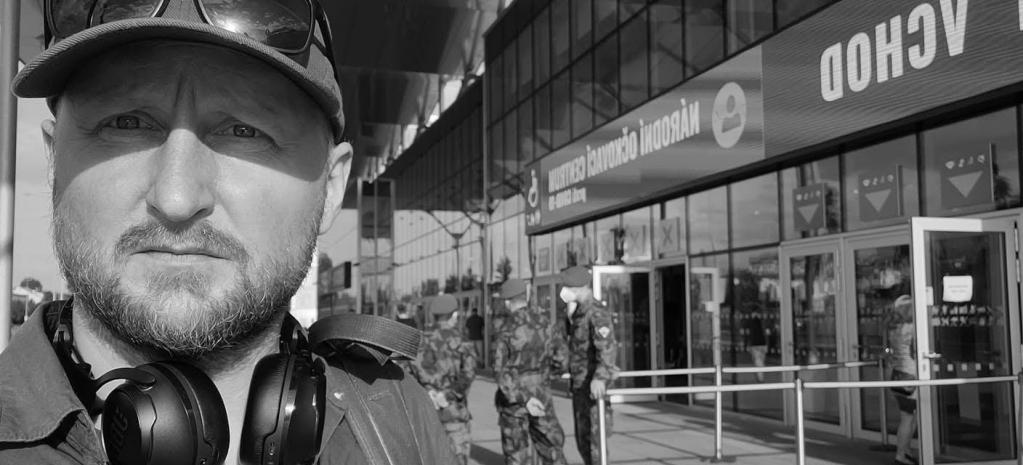
Photo credit Michal Laznovsky.
IAB: One of the strengths of the program is the opportunity for direct encounters with artists, directors, dramaturges, and cultural leaders. Why is personal exchange such an essential element in building international partnerships and professional networks?
PerformCzech: These encounters often take place in an intimate setting immediately after a performance. The audience – our guests – are still full of immediate emotions and impressions, so the atmosphere is relaxed and open. Direct contact creates space not only for exchanging experience and ideas, or for challenging one another, but also for gaining a better understanding of how people from different countries and cultural backgrounds think and work. International cultural cooperation couldn’t evolve and exist without personal relationships. This is especially true in the performing arts: it is impossible to understand someone’s work – its ideas, character or power – without experiencing it first-hand. Personal encounters are therefore irreplaceable in this field.
IAB: The visitors’ program brought together professionals from different countries and cultural contexts. What opportunities for collaboration and exchange do you hope will emerge from these encounters?
PerformCzech: Time will tell. This year, for example, several international guests took a strong interest in the Ostrava contemporary circus company BoCirk, and we hope that this interest will lead to an invitation from an international festival. One specific example might be the A Part festival in Katowice, which regularly hosts Czech companies. Other impacts may be much less visible but more enduring. We believe that we engaged our guests and left them with a lasting experience that will enable them to become connectors, or even ambassadors, for Czech culture abroad.
IAB: The debate on culture in the Silesian region highlighted regional perspectives and cross-border collaboration. How do you see the future of cultural cooperation between the Czech Republic, Poland, Slovakia, and the wider Central European region?
PerformCzech: We believe the future of cultural cooperation among the Czech Republic, Poland, Slovakia, and other Central European countries is very open. We are geographically close and share many historical and cultural experiences, yet each country also has its own artistic tradition and contemporary scene. This combination of proximity and difference creates favorable conditions for mutual inspiration and potential collaboration. The scope and form of cultural cooperation with individual international partners will probably change over time, including in response to political developments in the respective countries. Nevertheless, we believe that cultural cooperation is essential and has wholly positive effects, so we will do everything we can to make it as broad and diverse as possible.

Photo credit Barbora Formankova.
IAB: How does PerformCzech support Czech artists and institutions in developing sustainable international partnerships and touring opportunities?
PerformCzech: PerformCzech serves as a link between the Czech scene and international theatre professionals. It helps establish contacts, present Czech work, organize activities such as the Visitors’ Programme, and co-create concrete opportunities for collaboration and mobility – for example, by supporting short-term trips abroad for Czech theatre professionals. We also ensure a Czech presence at major international trade fairs and festivals, wherever possible, with Czech theatre practitioners attending in person. We also aim for the co-productions, translations, international tours and artist residencies as possible long-term outcomes of the professional relationships we support. International artists and other theatre professionals also approach us quite frequently when they are researching a particular subject, planning a study visit to the Czech Republic or seeking specific contacts within the Czech theatre community. We often connect them with Czech organizations or their professional associations. These professional networks are crucial to our work. They are the result of systematic, long-term effort and, above all, relationships built on trust and ongoing communication.
IAB: After several editions of the international Visitors’ Programme, what have been some of the most significant outcomes in terms of collaborations, touring opportunities, co-productions, or long-term professional relationships?
PerformCzech: Hi PerformanCZ has been running since 2018 and we plan to bring it on under the brand “LinksIn” starting next year. Our experience over that period is that some international professionals return repeatedly and follow the Czech theatre scene on an ongoing basis. We consider the long-term nature of these relationships to be one of the program’s most important outcomes. At the same time, the international visibility of the Czech scene is gradually increasing. Over the years, we have organized several thematically focused Visitors’ Programmes devoted, for example, to drama, theatre for children and young people, and puppetry. Reflections on these programs and on the Czech performing arts scene have subsequently appeared in international professional media, including Critical Stages and Plays International & Europe. As regards touring and cooperation with festivals abroad, the impact is perhaps most visible in puppetry festivals and festivals for children and young people. The people involved in puppetry and theatre for young audiences seem to be somewhat closer to one another; it is a smaller, more close-knit community. The language barrier is also often less significant, as productions can speak to audiences across cultures without requiring knowledge of the language. From the perspective of travel and transport, puppetry and theatre for young audiences can also be more economical and flexible than large-scale drama. Several productions of this kind that we included in our selection and that international guests saw during our Visitors’ Programme subsequently toured to festivals abroad, including the SAMPO Festival in Finland and the LUTKE Festival in Ljubljana.

Photo credit Michal Laznovsky.
IAB: How do you evaluate the success of an international Visitors’ Programme? Is it measured by immediate collaborations, long-term partnerships, touring opportunities, or perhaps by something less tangible?
PerformCzech: We monitor the number of international tours, but less tangible outcomes are important as well. For example, an international dramaturg or producer may begin to follow the Czech scene over the long term, take an interest in particular companies or later approach us with a project of their own. Such results often become visible only after several months or years. We therefore understand success primarily as the ability to build high-quality, long-term professional relationships while giving international guests a genuinely comprehensive picture of what is happening on the Czech scene. If a concrete collaboration subsequently develops from those relationships, that is of course the ideal outcome.
IAB: What surprised international delegates the most about Ostrava and its artistic community during this year’s program?
PerformCzech: From what we know, the international guests were surprised above all by Ostrava’s diversity – not only that of its artistic scene, but also of the city itself and the places where culture is created. In a short space of time, they were able to experience very different venues and see how former industrial infrastructure is gradually being transformed into places for contemporary art and cultural life.
IAB: Looking ahead, what are the biggest opportunities and challenges for Czech performing arts in strengthening their international presence?
PerformCzech: We believe the greatest opportunity lies in the performing arts scene’s growing openness – perhaps also driven by generational change – and in its diversity. We have many artists and companies whose work is very attractive internationally, whether because of its topical themes, its interdisciplinary nature or its ability to communicate beyond its original language environment. At the same time, however, we cannot overlook the current situation in culture. The live arts need greater financial support, and funding is lacking not only for artistic creation itself but also for international cooperation. Artists frequently approach us because they want to work abroad but do not have sufficient resources. International cooperation requires time and, above all, opportunities to meet in person and build relationships. If we genuinely want to strengthen the international presence of the Czech performing arts, it is not enough merely to show their quality. We must also create the conditions that enable artists to take advantage of these opportunities. Long-term support for mobility and international cooperation is therefore one of the Czech cultural scene’s greatest needs.

Photo credits: PerformCzech International Visitors’ Program, Ostrava, 2026.
IAB: If the international delegates were to leave Ostrava with one lasting impression about Czech performing arts and contemporary cultural life, what would you hope that impression would be?
PerformCzech: We would like them to leave feeling that the Czech cultural scene is vibrant, diverse and open – that culture thrives in every corner of the country. We hope they will fall in love with it and want to return to the Czech theatre scene.
IAB: Thank you very much, dear Barbora Formankova and Michal Laznovsky.
(Prague/Ostrava/Skopje, 2026)
This post was written by the author in their personal capacity.The opinions expressed in this article are the author’s own and do not reflect the view of The Theatre Times, their staff or collaborators.
This post was written by Ivanka Apostolova Baskar.
The views expressed here belong to the author and do not necessarily reflect our views and opinions.