![15th Jul: The Tick (2019), 2 Seasons [TV-MA] (6.7/10)](https://occ-0-858-92.1.nflxso.net/dnm/api/v6/0Qzqdxw-HG1AiOKLWWPsFOUDA2E/AAAABQm95cSF4qcQzFUrw0qyFGbNGwlIhkGOBn9majc7ETH4_C7NE6kBKaGfUBg4J8B7_AQHCRiex1uMX1h8vN_Y5NHMtdP3ivwo8EY8z2YR-pRuhZPiQp46vkrsDkYqgaR4GoBK-1AYGpiO_nDdv6tfCqze_7hpwEDssSn_U8b6dyPTyw.jpg?r=795 "15th Jul: The Tick (2019), 2 Seasons [TV-MA] (6.7/10)")






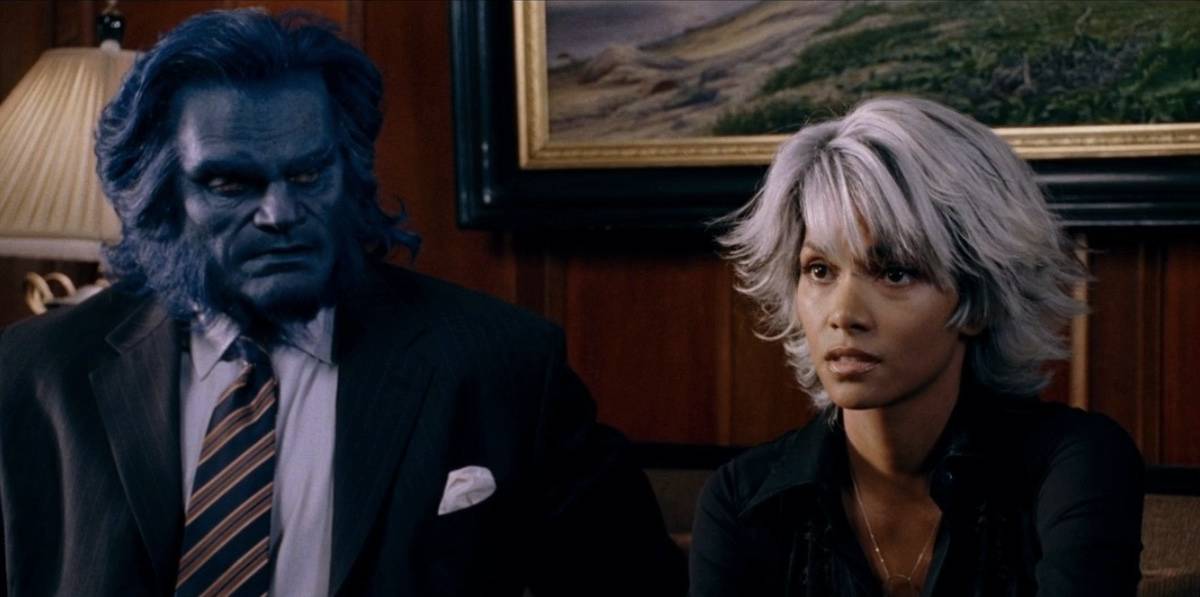
Beast should have been in the first X-Men movie.
Like Cyclops and Jean Grey, Hank McCoy was one of the founding members of the team and, also like them — but unlike other founders Iceman and Angel — he remained an integral part of every era of the heroes, up to and including the 1990s animated series, which had the greatest influence on the 2000 X-Men film (thanks, in part, to an idiotic disregard for the comics).
He was in the script for a long time too. “Most of the drafts I worked on had Beast in the film, and we were actually going to creature effects houses, like Jim Henson and Rick Baker and all those, and seeing their Beast tests,” screenwriter David Hayter told Den of Geek in 2020.
The problem was, with the film’s $75 million budget, the filmmakers couldn’t afford to include the character’s biggest action scene, which would have seen Beast swinging around the Statue of Liberty. To save money, they initially decided to have the character break his leg before the big final battle with Magneto. Eventually, the decision was made that it was better to remove the character altogether rather than shortchange him. So Beast was cut.
With a tight script featuring a number of new characters — including another blue mutant in Nightcrawler — there was really no space to introduce Beast in X2, so he was benched again. Finally, 20 years ago, Beast would be introduced in the deeply flawed third film, X-Men: The Last Stand, with an utterly flawless casting choice.
When Beast is introduced a few minutes into X-Men: The Last Stand, he is seen wearing a suit, quietly reading an issue of Scientific American while sticking to the ceiling of his White House office by his feet. Beast is then summoned for a meeting with the president, and out of his blue, furry face comes the voice of Kelsey Grammer.
In an instant, the audience is caught up on Beast. And while the setting, attire, magazine choice, and practical effects makeup play a supporting role in communicating the character’s personality, Grammar’s commanding presence immediately establishes Beast as the intellectual mutant authority.

At the time, Grammar was mostly just known for playing the eloquent, erudite therapist Frasier Crane on the sitcoms Cheers and Frasier, considered two of the best sitcoms ever made. Grammer had played Frasier for 20 years at that point and his portrayal of Beast was pretty much the same — minus a bit of Frasier’s self-importance and plus a bit of Beast’s fighting ability.
While that may sound like a criticism, it isn’t. That approach created a shorthand with the audience helping them grasp Beast’s character instantaneously. Beast already had that personality from the comic books and cartoon show, and by finding the guy who could communicate that personality more effectively than anyone else at the time, the movie made up for all the lost time from the first two X-Men films. It was also made clear that Beast had been a member of the X-Men before Logan joined in the first film, but he’d since taken a diplomatic role for mutant rights, which gave the character some much-needed history with the team and made him more than just the latest new X-Man.

Throughout the rest of The Last Stand, Grammer’s Beast was given an acceptable, if not extraordinary, amount of screentime. He played a key role in the “mutant cure” subplot and, by being a big blue furry outcast, he made clear why some mutants may not want the burden that comes with carrying the X-Gene. He was also given a few decent moments during the final fight scene and even got to deliver the final blow on Magneto (Sir Ian McKellen) when he injects him with the mutant cure, depowering the X-Men archvillain.
Unfortunately, after the critical failure of both X-Men: The Last Stand and the franchise’s next film, X-Men Origins: Wolverine, Fox’s X-Men films were essentially rebooted with the prequel X-Men: First Class, which found a new, younger (and not as good) Beast in Nicholas Hoult. This seemingly meant Grammer’s first outing as Beast would also be his last.
Over the next two decades, Grammer would get two memorable cameos as Beast. The first came at the end of 2014’s X-Men: Days of Future Past. After Wolverine (Hugh Jackman) “fixed” the past in the time travel story, Beast passes Wolverine in the Hallway and greets him. Then, in a seriously shocking post-credits scene in 2023’s The Marvels, Beast informs Monica Rambeau (Teyonah Parris) that she’s been transported to a different dimension.

With that latter cameo, it pretty much guaranteed Grammer’s return as Beast in at least one future film in the Marvel Cinematic Universe, if not more. We already know that he’ll be appearing in Avengers: Doomsday and perhaps he’ll stick around for Avengers: Secret Wars too. (After that, Marvel is expected to reboot the X-Men with a younger cast yet again.)
While I don’t know if I’ll ever quite get over the absence of my favorite X-Man in those first two X-Men movies, I’m encouraged that we’ll be getting more of him in the very near future. Because, as far as superhero casting choices go, Grammer is, I believe, on the same level as Hugh Jackman playing Wolverine, and I just hope he’ll finally get a chance to show it.