









(Al Jazeera Media Network) NASA has successfully launched the Artemis II mission, marking the first crewed mission to the moon’s vicinity since the Apollo program ended in 1972.
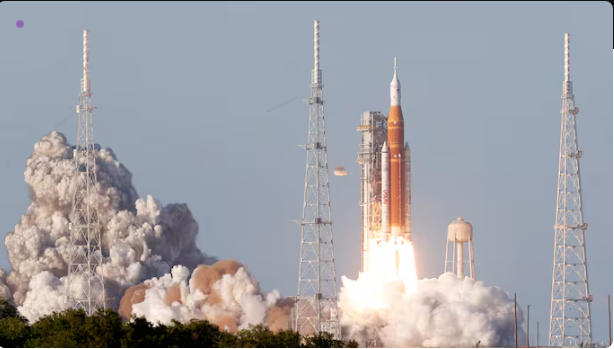
The 322-foot Space Launch System (SLS) rocket lifted off at 6:35 pm ET (22:35 GMT) on Wednesday from Cape Canaveral, Florida, sending the Orion crew capsule on a 10-day journey.
While Artemis II will not land on the moon, it will fly a “free-return” trajectory that swings around it to prove the spacecraft can sustain a crew on future missions.
The idea is to descend to the surface of the Earth’s only natural satellite again on Artemis IV in 2028.
“We have a beautiful moonrise,” said Reid Wiseman, the NASA astronaut serving as mission commander, about five minutes after the launch. “We’re heading right at it.”
Artemis II is the first crewed mission beyond low-Earth orbit in more than 50 years.
The launch followed a tense countdown, as engineers worked through several technical issues. Teams closely monitored the rocket during fuelling due to hydrogen leaks that had delayed the mission in the past, but no major leaks were detected on launch day.
Engineers also resolved last-minute problems involving battery sensors and the rocket’s flight-termination system, a critical safety system used to destroy the rocket if it goes off course, before clearing the mission for liftoff.
The 32-storey rocket lifted off in the early evening in front of large crowds gathered near the launch site.
The launch had been planned for February 6, and then March 6, until a hydrogen leak prompted NASA to roll the rocket back to its vehicle assembly building for scrutiny.
It had earlier been scheduled for November 2024, but NASA announced a delay due to technical investigations, particularly into the Orion’s heat shield.
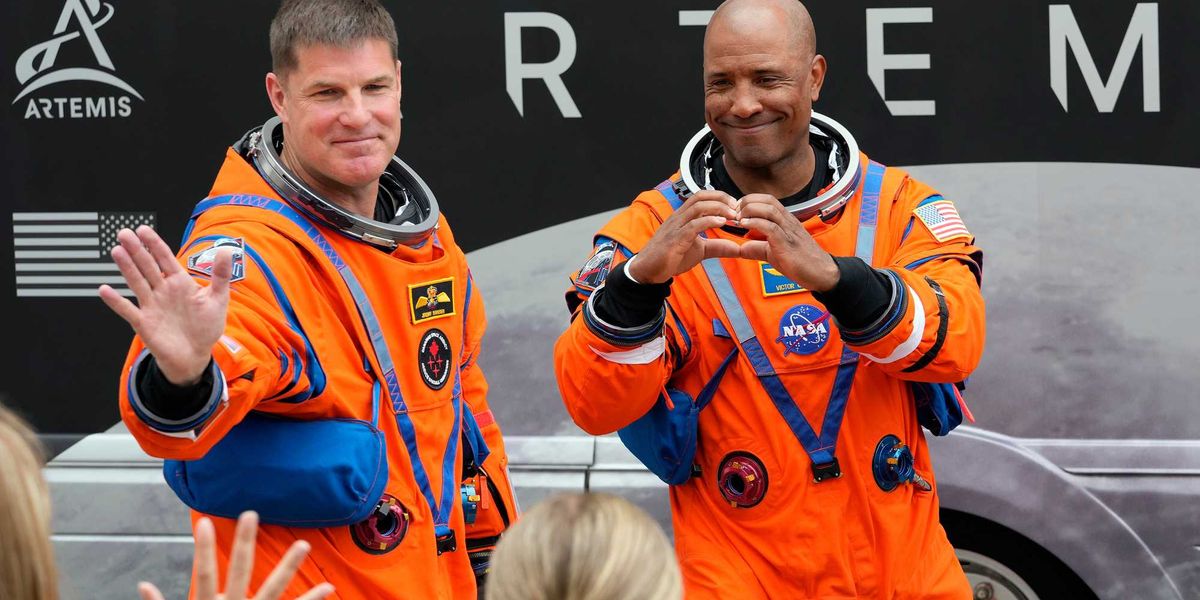
All three NASA astronauts are veterans of Earth-orbit science expeditions to the International Space Station, while the lone Canadian joining them on a voyage around the moon and back is a spaceflight rookie.
- Reid Wiseman, 50, commander: The NASA veteran and former International Space Station commander is leading the Artemis II mission. A test-pilot-turned-astronaut, he has leadership and deep spaceflight experience.
- Victor Glover, 49, pilot: The US Navy aviator is the first black astronaut assigned to a lunar mission and flew on SpaceX Crew-1.
- Christina Koch, 47, mission specialist: The record holder for the longest single spaceflight by a woman at 328 days is a veteran of multiple spacewalks and has scientific and deep-space mission expertise.
- Jeremy Hansen, 50, mission specialist: The first Canadian set to travel to the moon is a former fighter pilot. His presence represents international collaboration in deep space exploration.
If the mission goes as planned, the capsule is expected to reach the moon on about April 6, the sixth day of the mission.
The crewed Orion capsule will then fly around the moon, reaching its closest point before beginning the journey back to Earth, with splashdown expected on April 10, 2026.

https://www.aljazeera.com/news/2026/4/2/how-long-will-artemis-ii-take-to-reach-the-moon-and-what-happens-next



![2nd Apr: Vadh 2 (2025), 2hr 8m [TV-MA] (6/10)](https://occ-0-1081-999.1.nflxso.net/dnm/api/v6/0Qzqdxw-HG1AiOKLWWPsFOUDA2E/AAAABRJpkKOQfhW1pGEHHnY78tJJRmwsL3TIGX8XSK_9RGYzTNFsxYPerfW_ELRbk6kd3t_37fMZ_ot7YOu2rjnzx2kvSG4gQELoA_lQ-3455UVrcD0m0NdrLYjNEWmcAKe_hv_uWAmS00ShNVq10yW5M4KvNLE0QbVgicl-sc8j5v3j9Q.jpg?r=792 "2nd Apr: Vadh 2 (2025), 2hr 8m [TV-MA] (6/10)")