


![24th May: Bad Thoughts (2026), 2 Seasons [TV-MA] – New Episodes (6.1/10)](https://occ-0-503-2705.1.nflxso.net/dnm/api/v6/0Qzqdxw-HG1AiOKLWWPsFOUDA2E/AAAABTWZBqM4kZwLDEjOhThqN7kbrwgZ-ULslOBeTcg9NsBWtZJXNRyRBFwCXmEvHaLkvRcnwcFzCIs9ZBnZNArkhx3XznV0ib56_OwhXr_tCKeq2DGPbJoe7oKP5IaTW7c3YDkamWrxpDV44O5Z3jACd9Y7sBF0cg18XVXCFndQ.jpg?r=251 "24th May: Bad Thoughts (2026), 2 Seasons [TV-MA] – New Episodes (6.1/10)")


For his newest play, La última noche con mi hermano (The Last Night With My Brother), Alfredo Sanzol has taken inspiration from a friend telling him about the final night she spent with her dying brother and the impact it had on her: changing her approach to life and her way of coming to terms with death. La última noche con mi hermano effectively charts the final months in the life of Nagore (an extraordinary performance from Nuria Mencia) as she receives an ovarian cancer diagnosis, shares the news with her brother and his family, and then begins the treatment — first surgery and then chemotherapy — and then dies. That she will die is never in doubt for Nagore addresses the audience at the production’s opening to inform us that she will die: theatre made by the dead to give strength to the living. The play’s dynamism lies in charting the shifting family relationships as Nagore moves closer to death.
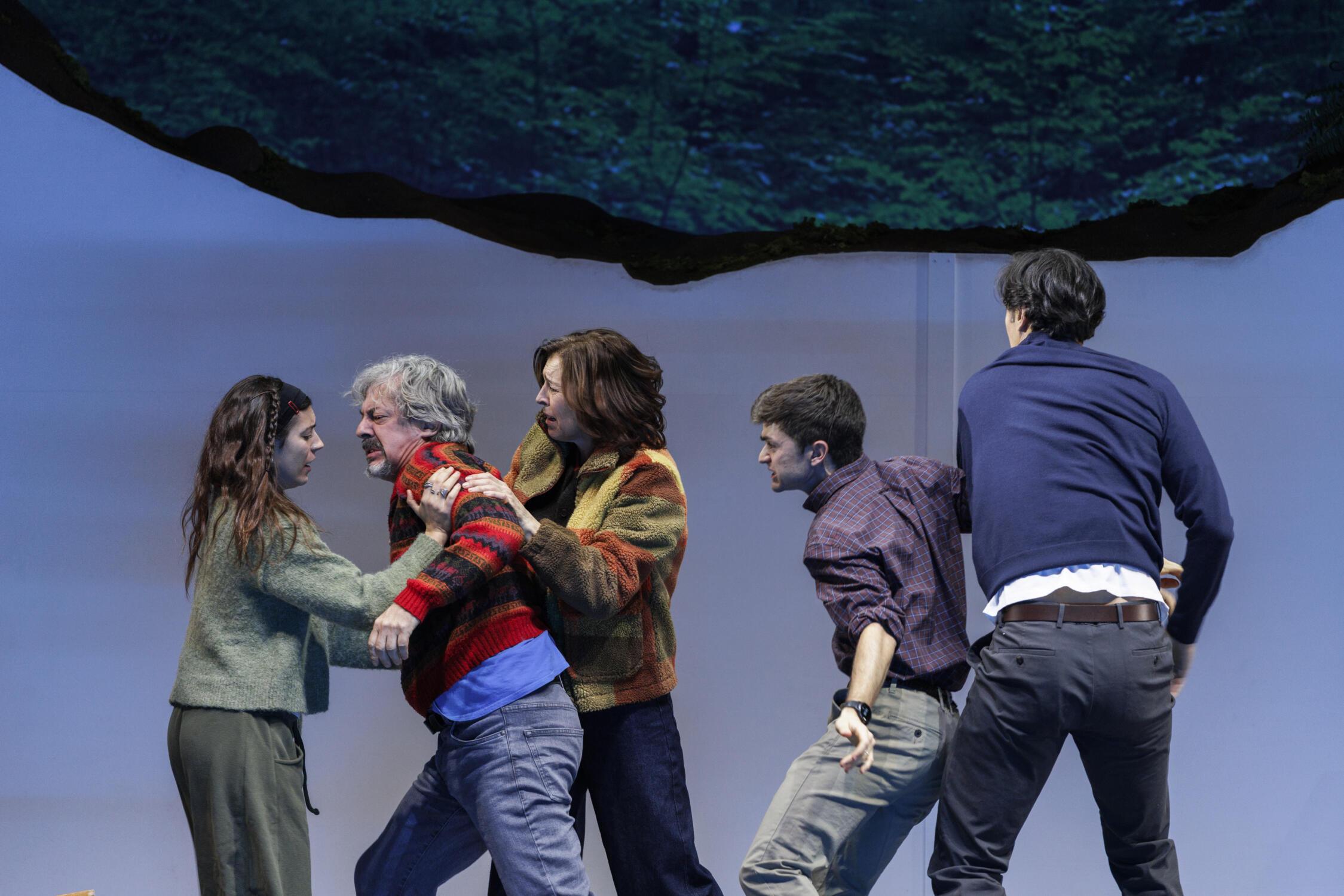
Sanzol structures a narrative that evolves through three different sibling pairings: that of Nagore and her brother Alberto (Jesús Noguero); Alberto’s partner Ainhoa (Elisabet Gelabert) and her estranged brother Claudio (Cristóbal Suárez) who blocked all contact with her five years earlier; and Ainhoa and Alberto’s children, the young adults Oier (Biel Montoro) and Nahia (Ariadna Llobet). Each pairing has its own complexities. Nagore and Alberto are close, but she cannot deal with what she sees as his mollycoddling when she begins her treatment. She doesn’t want him fussing over her but for him it is the clearest way of ensuring he can show her he cares. Oier is Ainhoa’s biological son but not Alberto’s. Alberto brought him up as his own and he has a close relationship with his younger sister Nahia although both are temperamentally and politically very different. Nahia’s political views align with her progressive parents, Oier is closer to the right – his rebellion playing out in his more conventional shirts and chinos and resentment of the failures of his parents’ leftist politics.
That’s not the case with Claudio and Ainhoa who have been estranged for some five years. Ainhoa doesn’t understand why he didn’t want to have anything to do with her or her children but has been forced to accept this. When Nagore’s cancer is diagnosed, however, Alberto reaches out to him: Claudio is an oncologist and Nagore is keen for him to be involved in her treatment. This brings Claudio back into Ainhoa’s orbit in ways that are not easy for the siblings, with their ideological differences, to navigate.
The action takes place on Blanca Añon’s fluid set where all three homes – that of Nagore, of Alberto and Ainhoa and of Claudio – blend together. The design proffers a living room and kitchen area with a space between that allows for two different locations at the same time or a single space where characters move between the kitchen and living areas. The kitchen table is often the site of heated debates, revelations and/or confessions.
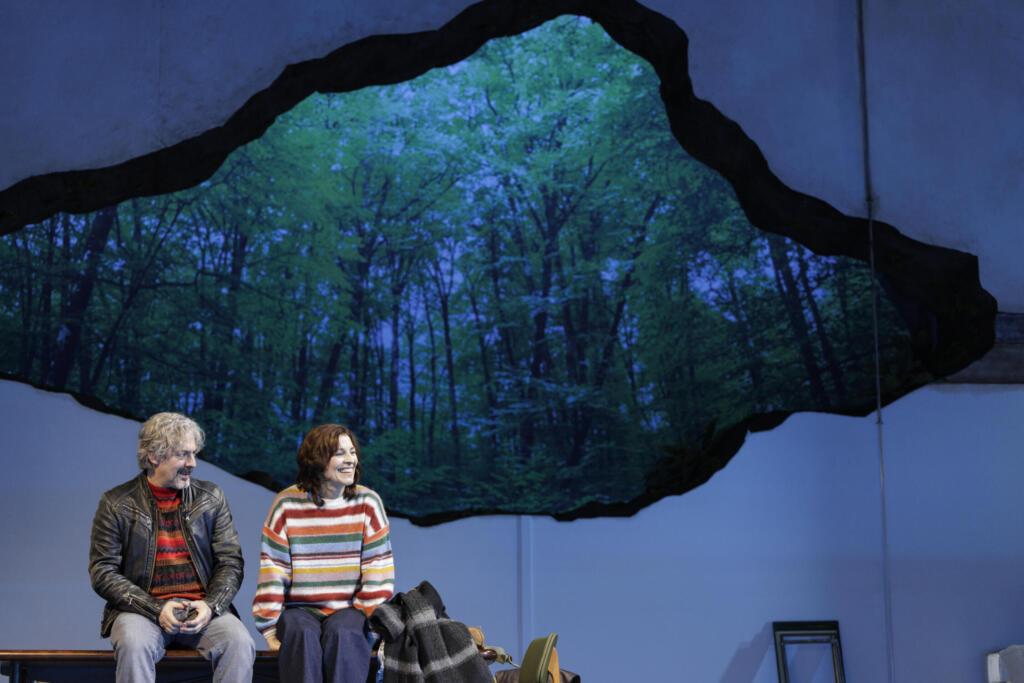
Complicity around the table between Alberto and his partner Ainhoa in La última noche con mi hermano/The Last Night With My Brother. Photograph: Bárbara Sánchez Palomero
It is where Nagore tells her brother, sister-in-law, niece and nephew that she has cancer; it’s where Claudio informs Ainhoa that he cannot be around her because of her position on the Basque separatist group ETA, and it’s where Alberto proposes to Ainhoa after more than two decades together. A giant hole in the back wall offers a view of trees in a woodland area. Nagore wants to buy a place in the country — something to look forward to. The characters may live in Madrid, but Pamplona and Navarre serve as a point of origin, something that the elder generation cannot leave behind them, marked by the history of a dictatorship that had very particular consequences for those in the Basque country and Navarre. The jagged hole in the wall has both a physical and a metaphorical resonance.

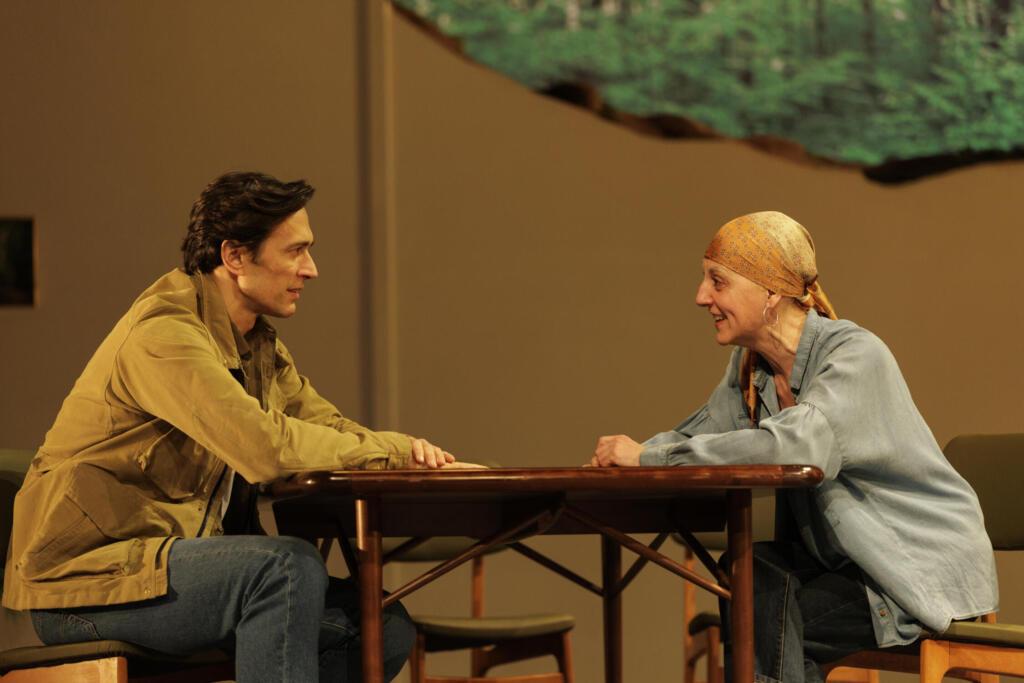
Claudio and Nagore bond in La última noche con mi hermano/The Last Night With My Brother. Photograph: Bárbara Sánchez Palomero
History is never very far from the surface in Sanzol’s intelligent play. Nagore, Ainhoa and Alberto have all been shaped by a will to ensure the principles of democracy are part of everything they do. They carry memories of the dictatorship and the impact it had on their families. Claudio has a different viewpoint and while he can put his anger aside for Nagore, it is harder for him to do so with his sister. Fraternité may, along with Égalité and Liberté be one of the foundational principles of France’s republic but it’s not so easy for the characters of La última noche con mi hermano to put this into action consistently.

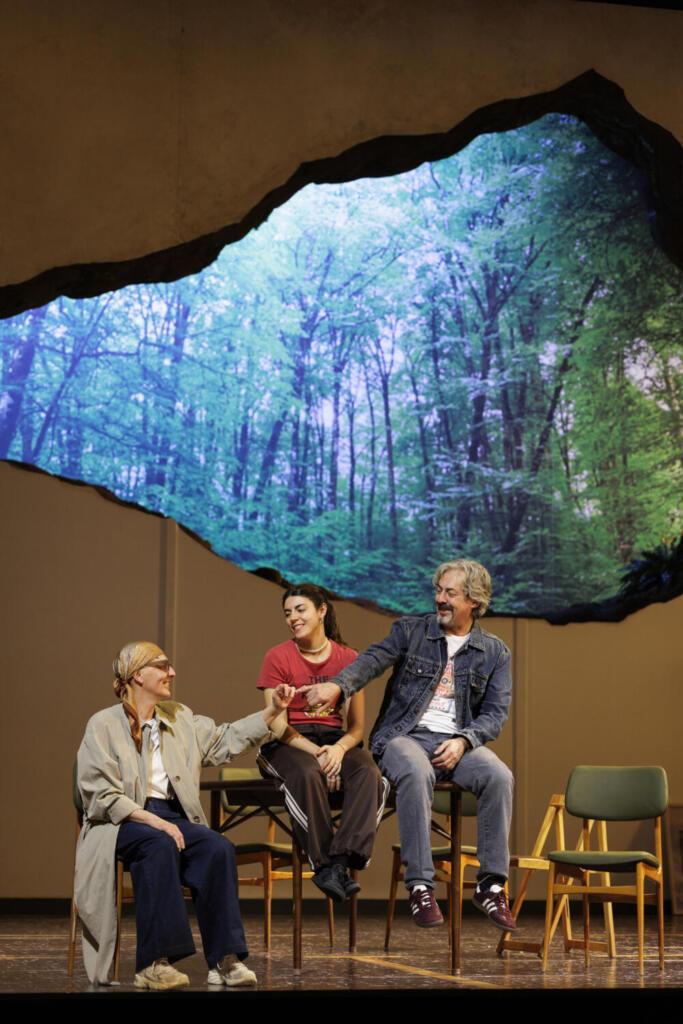
A day in the country for Nagore, Nahia and Alberto visiting a possible plot of land to buy in La última noche con mi hermano/The Last Night With My Brother. Photograph: Bárbara Sánchez Palomero
Claudio’s stiff awkwardness with his sister takes a different form as he supports Nagore through her treatment. A walk in the park allows him to open up in ways that are not possible through the shared history between Ainhoa and Claudio. Claudio gives Nagore agency at a time she feels Alberto is trying to take it from her. Alberto cannot come to terms with what is happening to Nagore; it is as if he is afraid to stay away because she might not be there when he returns.
Oier and Nahia are more accepting of each other’s differences. Nahia accepts her older brother has different priorities and views. Nahia’s kindness to her aunt — who evidently adores her — provides some of the play’s most moving scenes, including one where Nagore’s hoarding of gold in an old teapot, which she wants to give to Nahia, meets with Nahia’s response that it be shared with Oier. Nahia cannot live with keeping such a secret from her brother. Actions for Nahia speak loader than words — a decision that brings Nagore much joy.

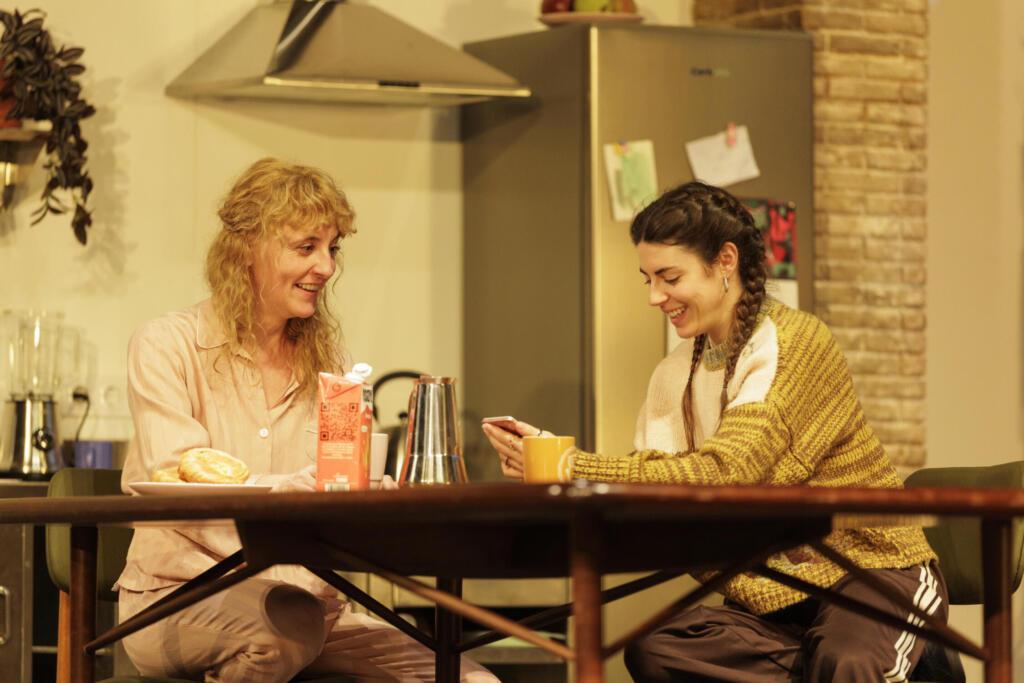
Complicity between Nagore and Nahia in La última noche con mi hermano/The Last Night With My Brother. Photograph: Bárbara Sánchez Palomero
Sanzol directs with a sinuous attention to rhythm. Scenes flow seamlessly, providing a fluid sense of time. Chairs are brought together to create a car; a lift is evoked through sound. Nuria Mencia — one of Sanzol’s regular collaborators — creates a Nagore that is both gentle and fierce. She has a warmth that allows the audience to understand why she is so loved by her brother, sister-in-law, nephew, niece and Claudio. Mencia creates a principled being, someone who is terrified of what lies ahead but determined to retain hope. She is no saint and loses her temper on various occasions, but she has a humanity that feels real and moving. Crucially, she narrates her story on her terms. She appears to shrink through the production as the cancer strips her of her strength; her face ever gaunter, her gait less assured.
The remainder of the cast are also excellent. Jesús Noguero is a happy-go-lucky Alberto, increasingly losing his sense of self as he realises he might lose Nagore. Elisabet Gelabert’s Ainhoa balances a lovely sense of reaching out to a son she fears losing with an inability to cope with her brother’s revelations. There’s a balanced mixture of irritation and complicity in Biel Montoro’s Oier and Ariadna Llobet’s Nahia. Cristóbal Suárez presents an awkward Claudio who has put up his own protections to be able to function without always understanding the consequences of his actions.
Nagore is the glue that holds the different elements of this extended family together. New relationships begin to form through the play while others find a fresh dimension. Claudio takes Oier birdwatching — both sharing a fascination with ornithology that Claudio links to shared genes. Oier enjoys spending time with his uncle but is clear that blood ties aren’t everything, as evidenced in the love he has for Alberto – father 2, as he calls him. Family is an extended concept in Sanzol’s play – one where acceptance isn’t always easy but where forgiveness is necessary. At a time when politics feels particularly polarised, La última noche con mi hermano eschews the penchant for the binary in favour of a plea towards compassion and empathy. Sharing a world with those who might hold different views feels urgent and necessary. In the year where Spain marks the 90th anniversary of the coup that led to Civil War, this is play that calls for understanding and tolerance. Claudio is aware of the fact that he comes from a divided family and doesn’t know where hate begins and ends
As the stakes get higher, different characters work to hold things together: at times it is Nagore reassuring her frustrated brother; at others it is Ainhoa offering to stay with Nagore to give Alberto and Nagore some time apart. Each character has a moment where they intervene to try and make things better. Complicity takes many shapes and forms: Alberto and Nagore singing to the Pamplona rock band Barricada’s 1991 hit, ‘En blanco y negro’ (In black and white), and lying together back to back on Nagore’s hospital bed as they did as children. The Barricada song may talk about life in black and white but the different sibling pairings show that family relationships are anything but. At the play’s end the siblings all find a moment of togetherness, however fleeting, each called on to reflect on what they might do differently or how they might reflect differently on what happened in the past. Nagore’s life is that which others remember, the small things that point to complicity and love.
La última noche con mi hermano (The Last Night With My Brother) written and directed by Alfredo Sanzol, plays at the Teatro María Guerrero of the Centro Dramático Nacional Madrid from 13 February to 5 April 2026.
This post was written by the author in their personal capacity.The opinions expressed in this article are the author’s own and do not reflect the view of The Theatre Times, their staff or collaborators.
This post was written by Maria Delgado.
The views expressed here belong to the author and do not necessarily reflect our views and opinions.