



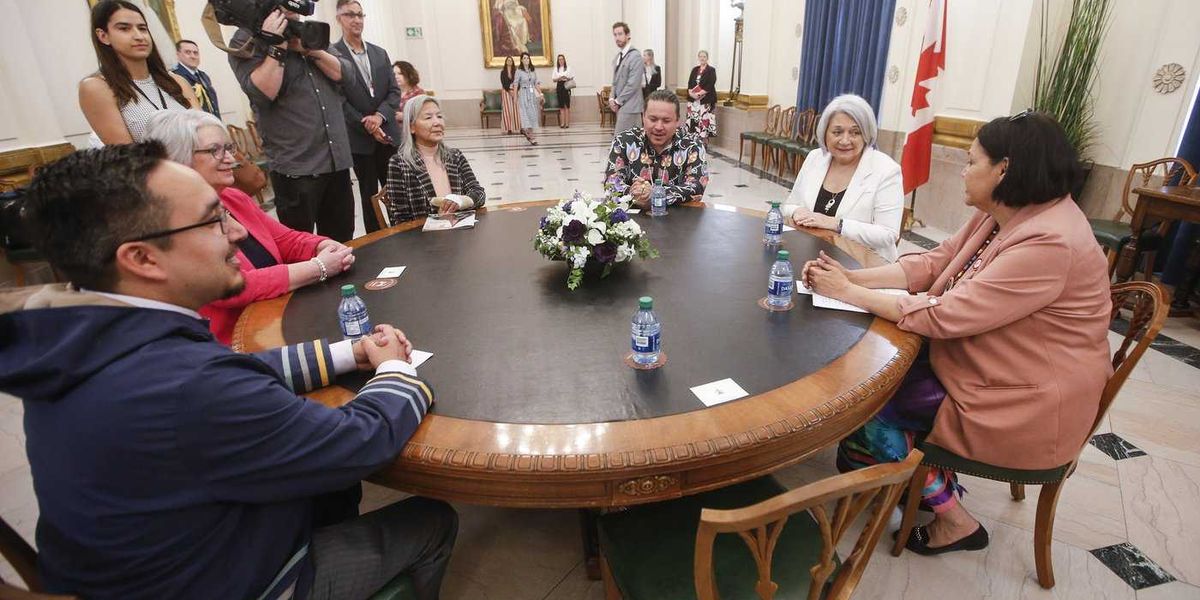







Carleton University assistant professor Oriane Couchoux says motherhood changes how women think about money.ROGER LEMOYNE/The Globe and Mail
As a professor of accounting at Carleton University, Oriane Couchoux has devoted most of her career to understanding how large organizations track finances. But six years ago, after she had her first child, she became interested in a different kind of accounting: household accounting.
As part of a study published last month in Critical Perspectives on Accounting, she interviewed Canadian women to understand how motherhood impacts financial decision-making. Along with co-author Gabrielle Patry-Beaudoin from Université de Sherbrooke, they found that, beyond the widely recognized gender income gap and “motherhood penalty,” women who have children quietly absorb a wide range of other hidden costs, too.
This is because, she says, motherhood fundamentally shifts how women think about money. And it’s a shift that can leave them at a long-term disadvantage.
What triggered this research?
After I had my first child, we couldn’t put her down to nap anywhere. So I always had to carry her. I became obsessed with baby carriers. It was the only way I could cook for myself, or do anything else. I bought, like, three baby carriers, because I couldn’t find one that was comfortable.
I made those purchases myself. I thought, “I’m not going to charge the joint account.” I remember thinking, “It’s a little excessive, buying a third carrier because I don’t like the other ones.” I was framing it as something for me and not for the baby.
And then after the fact, I wondered, “Why did I do that?”
And what did the women you interviewed tell you?
We already know that, as main caregivers, motherhood means reduced paid work, slower career progression and lower lifetime earnings. We were very interested in going beyond the income gap, and looking at how motherhood might change women’s everyday financial thinking and behaviour: What type of purchase they prioritize, how they use their money, how they see money and how they decide what to buy.
Our research shows that motherhood changes how money is managed day to day – that mothers are more likely to handle routine purchases and to absorb these costs, at times quietly, without necessarily tracking or sharing them with their co-parent.
What we found is that beyond the difference in income, the cultural and societal expectations of what a “good mother” should be, really shape how women relate to money after becoming mothers. So women tend to believe that being a good mother requires financial sacrifice. And that money is a resource that should be dedicated to children.
What kinds of sacrifices are we talking about?
There were little examples, like mothers buying new clothes for their kids, while keeping their own 20-year-old clothes. Of mothers just prioritizing their children every time.
Many of our interviewees explained that they had stopped doing things that they used to do and love, in terms of leisurely activities – sacrificing the things they love for their children.
And then there were big examples that, as an accountant, I found really concerning. Many, many women told us that they save carefully for their children’s future education, but have stopped contributing to their own retirement. Or that they’ve significantly decreased savings for their own retirement.
So the obvious question is, why weren’t these costs equally shared by fathers or co-parents? [Note: The vast majority of women the researchers spoke with were in heterosexual families.]
Many of the daily costs related to children – food, clothing, school supplies, activities – are often smaller amounts, treated as part of “care” rather than big financial decisions that need to be discussed and shared and analyzed. So they’re not getting tracked as often.
Okay, what are some of the other reasons these costs aren’t getting shared equally?
The interviewees also made comments along the lines of, “I want to be independent. It’s part of my job, as a mom, to make sure that I can provide for my children.” So there is also this discourse of being a responsible financial manager – of “I made a decision to have children. I shouldn’t need anybody else to pay for the expenses.”
That seems pretty significant.
In research, this is what we call intensive mothering – that expectation that women, as main caregivers, will do everything to make sure their children are happy and healthy and reach their full potential. It’s really seen as a mother’s responsibility, more than a parent’s responsibility.
There’s something else, too, for many mothers. They’ll say, “I don’t want to put a number on my children.” Because for many women, even thinking about calculating or tracking how much they spend on their children, that’s almost taboo.
Another phenomenon we’ve noticed is sometimes women, on purpose, are hiding these expenses. Either because they don’t want to have to negotiate, or discuss with the father or co-parent to see if they agree with the expense. So they’ll buy the expensive pyjamas for the child, and pay for them themselves.
So what are some solutions?
I think the first step is really tracking how much you actually spend on your children, including everything: clothes, food, activities and daycare and school and transportation – all of it. And then I think a very important thing is to have explicit financial conversation with your spouse, your partner, your co-parent, talking about what those expenses are, and who covers them. About how savings are divided, and how caregiving affects income.
We know these are uncomfortable conversations. People are not always comfortable talking about money, even in couples and in families. But it’s important.
Silence really can lead to inequality, even in relationships that think of themselves as being loving and supporting. But I think that discomfort is the first step to making sure you don’t sacrifice your long-term financial security.
This interview has been edited and condensed.
![10th Apr: Turn of the Tide (2026), 3 Seasons [TV-MA] – New Episodes (6.7/10)](https://occ-0-1381-999.1.nflxso.net/dnm/api/v6/0Qzqdxw-HG1AiOKLWWPsFOUDA2E/AAAABXsbZyrmbV2v6AeDN-LSZ6_gb837Tya8GLy4BWKfovocISgV8U3X1v6zOIGSmeA-DzvX5qBTQJNmh8WkU1a1YnlmuSY38jjxaeCzvDjMc47vb9VQq0P8b2r27bfNDL3HZkYAXY4aYoDPz7WelcDcuEo2hEAkjv3G98nRsrjV.jpg?r=138 "10th Apr: Turn of the Tide (2026), 3 Seasons [TV-MA] – New Episodes (6.7/10)")