



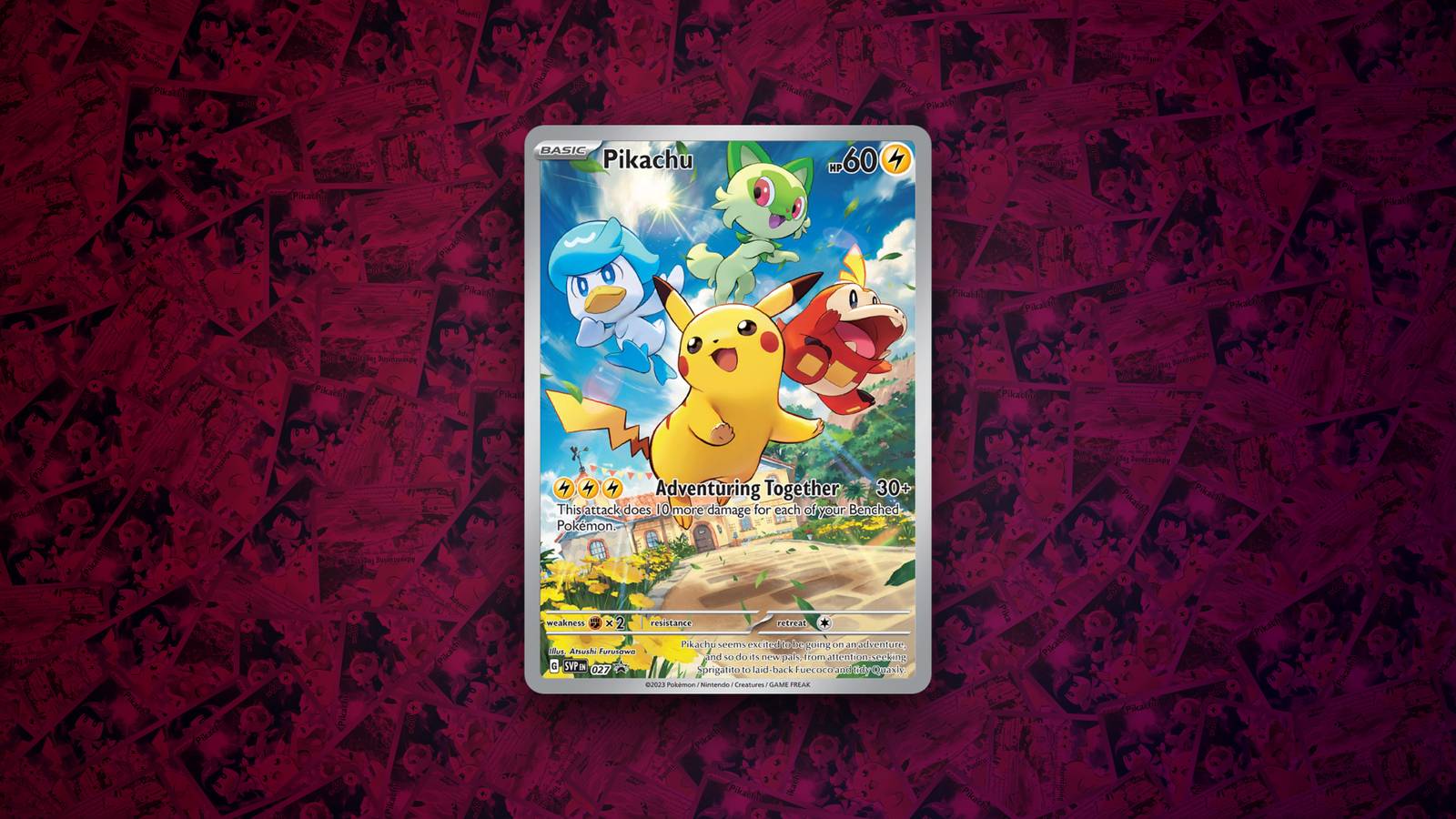
Earlier this month, The Pokémon Company released the First Partner Illustration series 2 collection, a starter-focused set with nine collectible full-art cards. It’s supposed to cost $15.99. If you want this new Pokémon set, though, you’re probably paying more than double the suggested retail value. Scalpers have set the First Partner’s market price at $58. By the time you read this, that price may be higher.
The situation with this starter Pokémon set isn’t unusual. Buying Pokémon cards without a markup is nearly impossible right now. Online Pokémon card drops see bots hammering websites until the product sells out. Pokémon cards selling at MSRP sell out within minutes online when there’s high stock. Many trading card game sets sell out in seconds.
There are many options for buying Pokémon cards, and nearly all of them are bad. Vending machines typically sell out of Pokémon products. If not, then the machines are surrounded by scalpers ready for a fight. Workers who bring Pokémon products to retail stores are sometimes tracked and harassed by scalpers, a phenomenon that has led to randomized restocking times. Other Pokémon vendors are also rumored to be in cahoots with scalpers — which could explain how resellers magically always know when the next restock will be.
Then there are store employees at major retailers, who hide or purchase new Pokémon products before customers can. If you buy online, the box might be opened and repackaged to look like new. Buy local through avenues like Facebook Marketplace, and you might end up scammed or robbed.
If you’re diligent, you can probably buy Pokémon cards somewhere. You need a lot of free time, luck, and a willingness to pay extra. Rare is the retailer who doesn’t mark up cards for a few dollars. People have likened the Pokémon card crisis to the early era of PlayStation 5 scalping, but the two are barely comparable.
Things are so bad that The Pokémon Company will soon require Japanese customers to furnish ID to buy new cards. At retailers like Target, some stores are slashing open boxes to prevent resale and turning away scalpers. At least one Target store has reportedly begun to ask for ID to buy cards as well. Companies like Walmart stash Pokémon products behind customer service, where cashiers can manually limit purchases.
These measures can only go so far. Opening boxes reduces their value, but scalpers can still sell packs for a profit. Purchasing limits and ID requirements just push scalpers to bring more people with them. And plenty of stores don’t even bother trying to mitigate the issue.
Between the bad press and rumors that The Pokémon Company is prohibiting the sale of expensive cards at official events, it seems like the company wants to fix the problem. But what is The Pokémon Company to do if nothing has worked thus far?
The Steam Machine, new hardware from Valve released for pre-sales on Monday, could be a good guiding light here. The system’s reservation system is one that Valve came up with after the fiasco surrounding Steam Controller shortages and scalpers.
Here’s how it works: For a few days, Valve will offer a Steam Machine reservation window. Once reservations close, a randomized queue begins. Some people are placed on a waitlist, while others are given a chance to purchase the product. While the initial selection is random, the queue advances deterministically as people accept or decline offers. Should Valve run out of stock, the next available product wave will go to folks already on the waitlist, in the order they were assigned.
“A launch that starts at a specific day and time tends to reward bots, people with fast internet connections, talented gaming fingers for quick F5/refresh reactions, and those who can schedule their life around that moment,” Valve’s FAQ reads. “By accepting reservation signups over the course of a few days, without any incentive to be first, we’re hoping to take away some of that friction. The longer timeframe also allows us to do some extra validation on the signups to make sure they’re real accounts, with only one per household.”
Given the incredible amount of money surrounding Pokémon cards, scalpers might still find a way around a reservation system inspired by the Steam Machine. The Pokémon Company needs to figure something out, though. The upcoming 30th anniversary Pokémon set already has scalpers salivating. If real fans can’t get a set that represents Pokémon’s legacy at a reasonable price, they might reach their limit and quit. Pokémon’s system doesn’t need to work exactly like Valve’s does, but it’s a good start.

The Pokémon TCG’s new 30th anniversary set looks so good, it’ll probably sell out immediately
There will be 30 Pikachu to collect, each drawn by a different artist