





![26th Jun: Wander (2020), 1hr 32m [R] (5.45/10)](https://occ-0-1081-999.1.nflxso.net/dnm/api/v6/0Qzqdxw-HG1AiOKLWWPsFOUDA2E/AAAABe6D_gEzVEbE1nn8aT1Wx-p-7Jr3B8I_ts6d5yGEtFdQJZhVTGV8HD5fptAe079GWXKhrKIY-I1wJOtvg_WwGmrgWkV3ZRhueXchIcMChippBok-FHhQBEHQJqeiPBFubA-tJAC7j2uNBqx5GVY7M-2-42nSm4YTt2ERRr5P1Pk2gw.jpg?r=078 "26th Jun: Wander (2020), 1hr 32m [R] (5.45/10)")




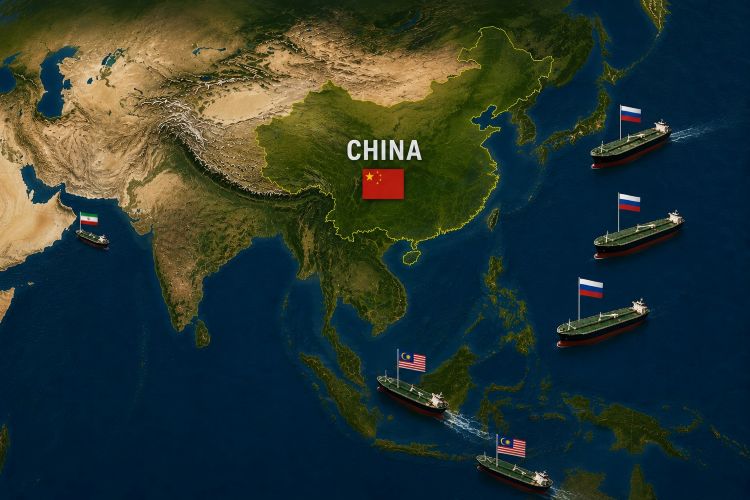
Tensions between the United States and Iran have raised fears of a prolonged oil supply shock, increasing volatility in global markets. In theory, higher oil prices should lead to higher inflation and lower real output. China’s case is more complex.
Theoretically, as shown in Diagram 1, an oil shock is a negative supply disruption that causes cost-push inflation and a fall in real output. Because oil is a key input in transportation and manufacturing, an increase in oil prices leads to an increase in production costs. This shifts aggregate supply leftward from AS1 to AS2, raising the price level from PL1 to PL2 and reducing real output from Y1 to Y2.
Diagram 1
However, this theoretical outcome has not always been reflected in China’s historical data.


Diagram 2
Diagram 2 compares China’s gross domestic product (GDP) with the global price of Brent crude, based on an index scale of 100 with 2000 as the base year, highlighting that the GDP of China is not heavily influenced by the price of Brent crude.[1]
My Excel spreadsheet shows that the correlation is 0.53, which means they are moderately correlated. However, the coefficient of determination (R squared) is low, indicating that only 28% of our data is explained by the regression. This suggests that oil is not the dominant visible driver for the Chinese economy.


As the saying goes, correlation does not equal causation; even when the price of oil and GDP appear to move together, those movements can be attributed to other factors. For instance, in Diagram 2, the decline in GDP growth and the crash in crude oil prices in 2009 are attributed to the 2008 financial crash that happened in the U.S., which adversely affected the global economy.
However, the closure of the Strait of Hormuz is more than simply an oil price movement; it is also a supply-route shock. This matters for China, as the country is dependent on imported crude. It received approximately 1.4 million barrels per day (bpd) of crude oil in 2025 from Iran, which accounts for 12% of the imports (1.4/11.66).[2] [3]This is a significant exposure from one supplier, and the Hormuz risk is wider because the route affects crude flow from other Middle Eastern suppliers such as Iraq, Saudi Arabia, and the United Arab Emirates. Furthermore, the closure of Hormuz creates uncertainty within the economy, leading to lower consumption and investment, which could hurt GDP growth.
However, China is cushioned due largely to three reasons: stockpiling, the rise of exports in renewable energy, and supply diversification.
Stockpiling
China’s oil imports rose 15.8% in the first two months of 2026, before the Iranian war, averaging approximately 12 million barrels per day.[4]While this could be due to higher refinery rates, this increase in imports could indicate higher stockpiling. The stronger stockpiling evidence comes from inventory.
China has the highest crude oil inventory of almost 1.4 billion barrels at the end of 2025, which is estimated to be three times the U.S. inventory.[5]At 11.7 million bpd, the annual import would have been 4.23 billion barrels.[6]The oil inventory of China – the second-biggest consumer of oil behind the U.S. – could cover a theoretical stoppage in crude import volumes for about 120 days (1,400/11.7). China’s domestic crude production, meanwhile, is about 4.2 million bpd.
While this data is an estimate using third-party sources, it supports the notion that China has been stockpiling crude oil, which will act as a buffer to the current supply disruption.
Rise of exports in renewable energy
From Ember, we find that China’s exports of solar panels and cells are increasing dramatically.[7]This is important because countries/regions affected by the instability of oil market prices and Middle East tensions may look to reduce their dependence on coal, crude oil, and natural gas (aka fossil fuels). Asian and European nations in particular are likely to increase use of energy sources such as solar and wind. Increased demand for Chinese clean energy could increase net exports, which would theoretically support China’s real output and provide a partial export-side cushion during periods of oil market volatility.
Diversified crude suppliers
China has the benefit of supplier diversification. Its crude supplies come from a range of countries, including Russia, Iraq, and Malaysia. Russia was the largest, but still only accounted for 18% of crude oil imports.[8]This gives China far more flexibility than countries that rely on one or two Gulf suppliers.
Even with these buffers, China’s economy is not fully insulated from the Hormuz disruption. An early signal is in the refining sector, where supply is uncertain and costs are rising, affecting decisions for crude processing. Sinopec, a state-owned enterprise that accounts for around one-third of China’s crude activity, has cut its crude processing from an initial 11% to 13%.[9]This matches the broader slowdown in China’s refining sector, where crude oil processing growth fell from 2.9% in January to -2.2% in March.[10]
While some theory suggests adverse impacts of an increase in oil prices, we observe that oil prices do not explain the movement of Chinese GDP. The current shock is less about the price of the barrel than the supply-route issue.
However, China has multiple buffers that allow it to weather this storm, with a smaller impact on its GDP compared to other countries. China may be able to absorb the first stage of this oil shock without undue hardship, but a prolonged crisis would put major pressure on its economy.
References
[1] World Bank. (1960, January 1). Gross Domestic Product for China. FRED, Federal Reserve Bank of St. Louis.
[2] Ayres, Graham, et al. “China-Iran Fact Sheet.” Uscc.gov, 2026.
[3] Downs, Erica. “Where China Gets Its Oil: Crude Imports in 2025 Reveal Stockpiling and Changing Fortunes of Certain Suppliers, Including Those Sanctioned. Center on Global Energy Policy at Columbia University SIPA | CGEP, 29 Jan. 2026.
[4] Li, Sam, and Lewis Jackson. “China January-February Crude Imports Surge on Higher Refinery Throughput, Stockpiling.” Reuters, 10 Mar. 2026.
[5] Hill, Sean , et al. “China, the United States, and Japan Hold Most Strategic Oil Inventories in 2025 – U.S. Energy Information Administration (EIA).” Eia.gov, 20 Apr. 2026.
[6] Downs, Erica. “Where China Gets Its Oil: Crude Imports in 2025 Reveal Stockpiling and Changing Fortunes of Certain Suppliers, Including Those Sanctioned. Center on Global Energy Policy at Columbia University SIPA | CGEP, 29 Jan. 2026.
[7] Copsey, Libby. “China’s Solar PV Export Explorer | Ember.” Ember, 12 Aug. 2025.
[8] Downs, Erica. “Where China Gets Its Oil: Crude Imports in 2025 Reveal Stockpiling and Changing Fortunes of Certain Suppliers, Including Those Sanctioned. Center on Global Energy Policy at Columbia University SIPA | CGEP, 29 Jan. 2026.
[9] Kennedy, Charles. “China’s Sinopec to Slash Refinery Rates amid Crude Supply Shock.” OilPrice.com, 13 Mar. 2026.
[10] National Bureau of Statistics of China. “Industrial Production Operation in March 2026.” Stats.gov.cn, 17 Apr. 2026.
Additional sources
Brown, Alexander . “China’s Economy in Q1: Economy Rebounds as Geopolitical Fallout Is yet to Come.” Merics, 24 Apr. 2026.
Herrero, Alicia . “What the War in Iran Means for China.” Bruegel | the Brussels-Based Economic Think Tank, 10 Mar. 2026.
Sen, Sumanta , et al. “How China Can Survive without the Strait of Hormuz.” Reuters, 31 Mar. 2026.
Li, Sam, and Lewis Jackson. “China’s 2025 Oil Imports, December Inflows Both Hit Record Highs.” Reuters, 14 Jan. 2026.
Yang, Stephanie. “The Iran War Has the World Buying More Clean Energy. China Stands to Benefit the Most.” CNN, 27 Apr. 2026.
Russell, Clyde. “China Boosted Crude Stockpiles at Start of 2026, but Is Not Using Them.” Reuters, 17 Mar. 2026.
(Aarav Bhatia – BIG Media Ltd., 2026)
