![7th Aug: Alone (2019), 3 Seasons [TV-14] – Streaming Again (7.2/10)](https://occ-0-748-1001.1.nflxso.net/dnm/api/v6/0Qzqdxw-HG1AiOKLWWPsFOUDA2E/AAAABbR5BdpLanPs-Sy3PZCwWg1CyRMTrWd9Pg0Q45Lkpyqs0sfQvXcy7y9cESqbgSIMh6jtaeLW0d8Ad-g6PgHcFuc3jsGBLGQ4KF-H.jpg?r=cbc "7th Aug: Alone (2019), 3 Seasons [TV-14] – Streaming Again (7.2/10)")





Fifteen years ago, I graduated from college with a literature degree and absolutely no idea what to do with it.
The world outside campus felt bleak and unstable. The economy was still clawing its way out of recession, journalism jobs were vanishing in real time, and the vague millennial promise that intelligence and hard work naturally translated into success had started to reveal itself as a lie.
Months earlier, I had read The Great Gatsby in a single sitting. The Sun Also Rises had become one of my favorite books. Fitzgerald, Hemingway, Gertrude Stein, and their hazy, wine-soaked vision of Paris had become less like history and more like mythology to me.
So when I saw Midnight in Paris in the summer of 2011, it landed on me with almost embarrassing precision.
The film was my introduction to Woody Allen, whose complex, controversial legacy I was totally unaware of at the time. What captivated me wasn’t simply the fantasy of time travel, but the way the movie treats it as a literary device. Every night at midnight, in the same remote Parisian square, Gil Pender (Owen Wilson) — a nervous, soft-spoken screenwriter desperate to become a novelist — slips into 1920s Paris, where he drinks with Hemingway (Corey Stoll), befriends Zelda (Alison Pill) and Scott Fitzgerald (Tom Hiddleston), gets Gertrude Stein (Kathy Bates) to read his novel, and falls in love with the idea of artistic greatness.
The genius of Midnight in Paris is that it indulges this fantasy completely before quietly dismantling it.
Even rewatching it 15 years later, I still want to visit this vision of Paris. The City of Light presented in the movie doesn’t feel like a travel brochure. Midnight in Paris opens on a montage of quiet shots from all over the French capital. The first time we see the Eiffel Tower, it’s framed, not as a spectacle or focus, but casually through an alleyway as a sparkling part of the background. We’re meant to see Paris via footsteps and not the tourist traps. Everything about the movie feels intimate, filmed in cafes and restaurants, at parties and shops.
That intimacy matters because Gil feels fundamentally alienated from the modern world around him. His fiancée Inez (Rachel McAdams) and her wealthy parents treat Paris as a luxury shopping trip. They complain constantly and dismiss art as pretentious. The film’s true antagonist is precisely this kind of cynicism. Michael Sheen’s Paul Bates soon appears as one of the funniest and most painfully recognizable characters in the movie.
Paul is the pseudo-intellectual dinner party guy from hell. He smugly corrects tour guides, reduces art to trivia, and approaches culture like a competition he’s already won. He’s insufferable, but he’s also important. Paul exists to vocalize every skeptical critique of Gil’s worldview. To Paul, overly romanticizing the past is naive. Nostalgia is a weakness. Art is something to dissect, not feel. And yet, Midnight in Paris never fully dismisses Paul outright, either. Because the movie ultimately decides that either extreme is a mistake.
Beneath the cozy fantasy and litany of living literary references, Midnight in Paris delivers a surprisingly sharp thesis about nostalgia itself, and it’s one that still resonates 15 years later.
Gil sees the Lost Generation — that group of American literary expats in 1920s Paris — as the golden age of art and meaning. He’s mostly content to play the role of tourist, rewriting his novel with the help of Gertrude Stein. But he also develops a crush on Adriana (Marion Cotillard), an enchanting muse to Pablo Picasso. As their relationship develops, however, Gil double-slips back in time with her to the 1890s to visit Moulin Rouge during the Belle Époque, which Adriana sees as the Golden Age of culture. Here, the likes of Paul Gauguin and Edgar Degas dream about the Renaissance. In that instant, both Gil and the viewer realize this longing is endless. Every generation imagines the real magic existed just before their own.
Or as Fitzgerald once put it, “So we beat on, boats against the current, borne back ceaselessly into the past.” Adriana decides to stay in the Belle Époque, and, though he doesn’t say so, you can tell Gil regards the decision with a kind of disgust. Nostalgia, the movie argues, is merely evidence that people struggle to live in the present. Life itself is hard, so we dive into the past. That kind of idea is universal and timeless, which makes Midnight in Paris as relevant in 2026 as it was in 2011. That’ll remain the case in 2041.

One of the movie’s most important lines comes from Gertrude Stein in a very late scene: “We all fear death and question our place in the universe,” she says. “The artist’s job is not to succumb to despair, but to find an antidote for the emptiness of existence.” Woody Allen, as he so often does, inserts the point of the whole enterprise into the mouth of a character, so the viewer has to listen. Art is the one thing that can convince us that life is not empty. Gil has to learn that art is not created by people who escape from despair but by those who learned to live alongside it, who use that pain to make life more bearable for others. What could be more meaningful than that?
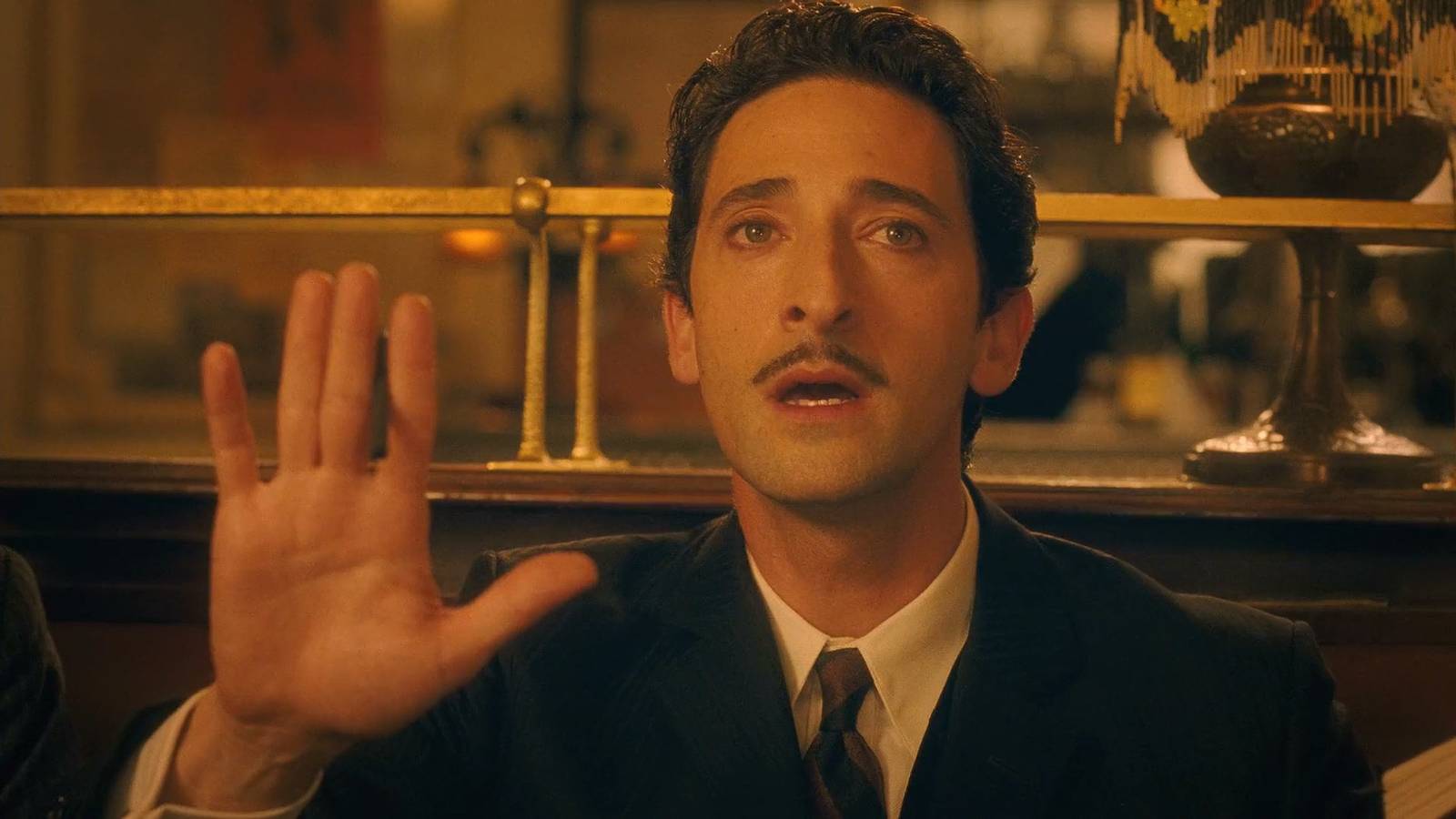
Midnight in Paris works so well largely because Wilson gives perhaps the most emotionally transparent performance of his career. The script is also genuinely funny. Every literary figure feels less like a cameo and more like an actor channeling a ghost. Stoll’s deadpan Hemingway is spot-on. Adrien Brody hams it up as a mad Salvador Dali. Paris itself is the movie’s most wonderful character, portrayed with a kind of loving tenderness that you simply feel.
Fifteen years later, I no longer fantasize about drinking wine with Hemingway and Fitzgerald in 1920s Paris. Hemingway himself was miserable much of the time and bitterly jealous of Fitzgerald. Fitzgerald died young and broken, convinced he was a failure. The myths often obscure uglier human truths.
But… if a century-old car rolled up at midnight in Paris, I’d probably still step inside.
Midnight in Paris is available to stream on Tubi.