

![12th Jul: Susana and Elvira: No Plan B (2026), 1hr 54m [TV-MA] (6/10)](https://occ-0-533-1007.1.nflxso.net/dnm/api/v6/0Qzqdxw-HG1AiOKLWWPsFOUDA2E/AAAABeJp7nJY0feiLlsES9eq0lPwh3kS63aFt5nh2eiHlnJRLj74Dv3DiqMkHh1Z2l8iEZPUj78IfIOq_11JTlGCRnePQOfnvk3eG7AAtRenpffQgm4Iv3sEcvwmbB8v7Rki-nBKq-US_Dv-RGT3-Kq2ISby5QCmdJWPunJ-p12ytRlizw.jpg?r=41c "12th Jul: Susana and Elvira: No Plan B (2026), 1hr 54m [TV-MA] (6/10)")






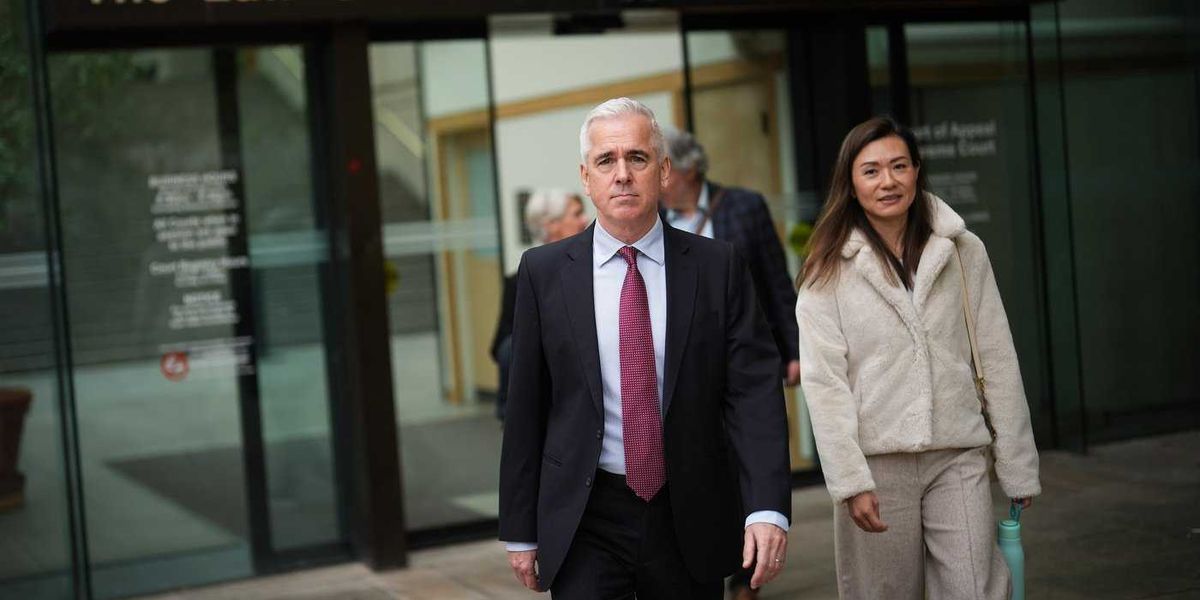
The trial of a former Mountie accused of a security offence in relation to his work helping the Chinese government has concluded in British Columbia Supreme Court, with his defence counsel saying prosecutors hadn’t proved their case that was entirely based on circumstantial evidence.
William Majcher’s trial also shed light on how the RCMP co-operated with Chinese police, as well as a previously unreported incident in which three Chinese police officials allegedly went “missing” for six hours during an RCMP-escorted visit to Vancouver in 2018 — setting off concerns they could be trying to illicitly repatriate someone.
The Crown has accused Majcher of acting as a “proxy” for Chinese authorities as he allegedly prepared to coerce a Canadian resident for their benefit in 2017.
Majcher pleaded not guilty to one charge under Canada’s Security of Information Act as his judge-alone trial got underway in Vancouver on April 20.
But defence lawyer Ian Donaldson said in closing remarks Monday that the Crown’s case against his client was “purely circumstantial” and hadn’t proved Majcher was referring to his alleged target — Vancouver-area real estate mogul Kevin Sun — in an email that was a central piece of evidence.
There was no usable evidence showing Majcher “ever knew anything” about Sun, Donaldson told Justice Martha Devlin.
Majcher’s 2017 email does not name the person he described as a “crook” he hoped to convince to agree to a settlement with Chinese authorities. It would be “unsafe” to infer the subject of the email was Sun, who the Crown accused him of preparing to extort, Donaldson said.
Crown prosecutor Ryan Carrier, meanwhile, said there could be no question Majcher was referring to Sun, who was wanted for fraud in China. The trial previously heard Sun was accused of defrauding the Industrial Commercial Bank of China of 2.8 billion yuan, now worth about $560 million, and absconding to Canada with about $120 million in the early 2000s.
Carrier said Majcher’s email included a “constellation” of details matching Sun’s alleged crime and pointed to testimony by a former RCMP liaison officer in Beijing, RCMP Supt. Peter Tsui, who told the court last week that he would have known if any other case fit the description.
Tsui had also described protocols for the RCMP when helping Chinese police, in which Mounties would question someone on behalf of the Ministry of Public Security, with the Chinese officials in the room.
He also told of the 2018 incident involving three Chinese officers, part of a group visiting Vancouver, who failed to show up to a meeting and instead went missing, with RCMP having “no idea” where they went. Tsui told the court that “safeguards” were put in place “at the borders and at the airports because there (were) certain individuals in Vancouver that we were concerned about being returned to (China).”
Carrier told the trial that Chinese authorities turned to Majcher — who retired from the RCMP in 2007 and started an asset recovery business based in Hong Kong — after the RCMP decided to stop assisting in the pursuit of Sun.
He said Majcher’s alleged actions were an “affront” to Canadian sovereignty.
But Donaldson said Monday the Crown’s case failed to prove that Majcher had a settled intention to commit the alleged offence at the time he wrote the email. The Crown’s evidence came down to a few sentences in an email that was otherwise lawful, said Donaldson, who elected not to call any evidence at the trial.
“It would be wrong in principle to extract a sentence or two, construe those in the most negative possible fashion, in order to conclude that that was the only reasonable inference, that these were steps preparatory, specifically directed toward carrying out a coercive-based offence.”
He said prosecutors hadn’t proven Majcher intended to act unlawfully, and to find him guilty the court would have to conclude that “mental element” was present.
“Threatening to sue the thief or do a variety of other things is all perfectly lawful and only becomes culpable if a particular mental state is proven,” he said.
If a fraudster were living in Canada on the proceeds of crime, it would be in the public interest to pursue that person, Donaldson added.
Devlin said she would deliver her ruling during a hearing on May 13.
The trial heard Majcher’s email to a colleague in June 2017 related to an effort to recover proceeds from a fraud matching the details of Sun’s alleged crime.
Carrier previously quoted Majcher as writing in the email that he hoped to “impress upon the crook that we hold the keys to his future.”
An earlier court ruling indicates Majcher added “the Chinese want to use this as a precedent case to settle economic crimes quietly and expeditiously.”
Donaldson told Devlin on Monday that she could not look at Majcher’s statement about “the crook” and conclude the remark reached the standard for criminal coercion.
Carrier said Majcher is charged under the section of Canada’s security legislation that deals with preparing to commit an offence under the same law, including actions for the benefit of or in association with a foreign entity or terrorist group.
The earlier April 1 ruling also includes an email in which Majcher apparently wrote that if the “target” co-operated, he hoped to settle the matter within a few weeks. “If he fights then (there) will be extradition request and lengthier process but we feel he is motivated to co-operate as we can guarantee him his passport and no jail time.”
Only Chinese authorities would be in a position to make promises that Sun would receive a passport and avoid jail time if he co-operated, Carrier said Friday.
“The only reason he’s able to do that is because the foreign entity is standing behind him. That’s the thing that produces the actual coercion,” the prosecutor said Monday in response to Donaldson’s closing remarks.
Majcher’s intended message for Sun was the Chinese government “is coming for you,” Carrier told the trial, adding a “veiled” reference may amount to extortion.
With Majcher’s help, he said Chinese police were able to “project” their power beyond China’s borders into Canada, constituting unauthorized foreign interference.
But Donaldson said the circumstantial evidence didn’t add up to intent. There was “significant and compelling evidence of innocence of purpose,” contrary to the inferences the Crown sought to have the court draw, he said.
“That is to say, no mens rea.”
Before the trial, the court found Majcher’s arrest at Vancouver’s airport in 2023 occurred without reasonable or probable grounds, breaching his Charter rights.
The court had also ruled that a warrant authorizing a search of another former Mountie’s home as part of the investigation into Majcher was invalid.
This report by The Canadian Press was first published April 27, 2026.
By Brenna Owen | Copyright 2026, The Canadian Press. All rights reserved.
