






Atlantic hurricane season forecast: NOAA tropical outlook | See the numbers
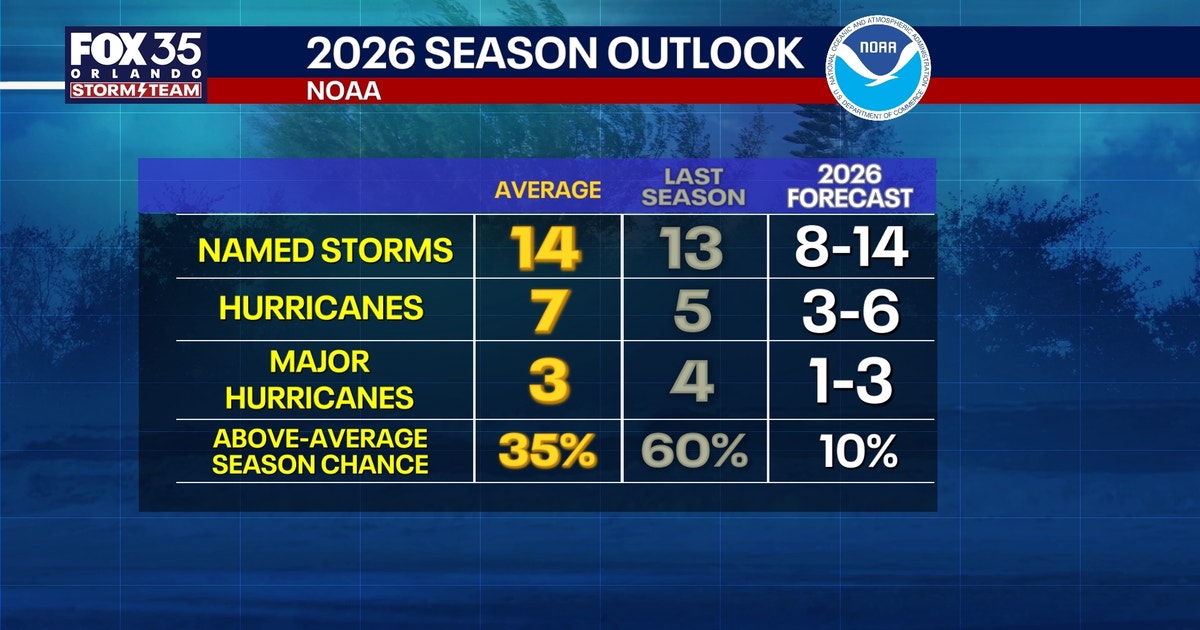
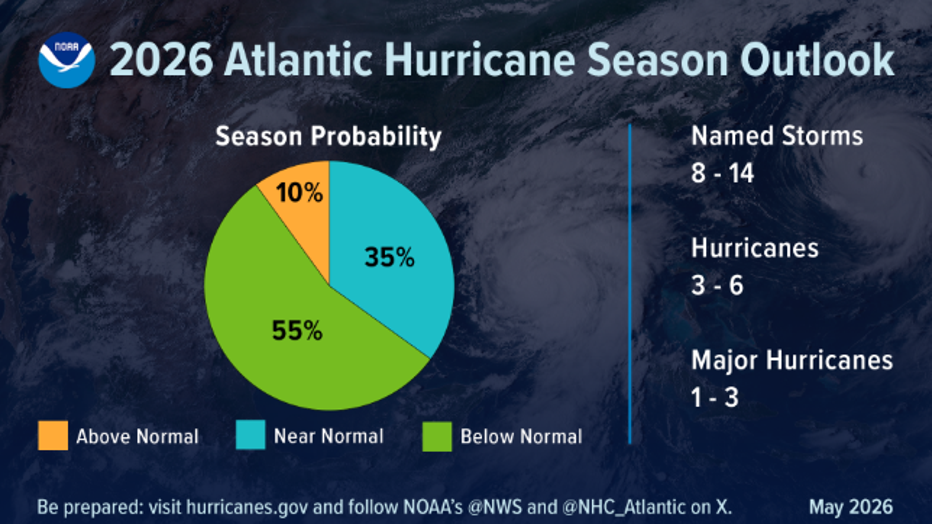
The National Oceanic and Atmospheric Administration (NOAA) released its tropical forecast for the 2026 Atlantic hurricane season, predicting a below-normal season, citing a strong El Niño weather pattern, warmer ocean temperatures, and weaker trade winds. NOAA predicts 8-14 named storms, 3-6 hurricanes, and 1-3 major hurricanes (Category 3 or higher). The Atlantic hurricane season runs June 1 – November 30, 2026.
LAKELAND, Fla. – The National Oceanic and Atmospheric Administration (NOAA) released its tropical forecast for the 2026 Atlantic hurricane season, predicting a below-normal season, citing a strong El Niño weather pattern, warmer ocean temperatures, and weaker trade winds.
“The Atlantic season is expected to be below-normal due to competing factors. El Niño is expected to develop and intensify during the hurricane season, while ocean temperatures in the Atlantic are expected to be slightly warmer than normal and trade winds are likely weaker than average. El Niño conditions tend to support less tropical storms and hurricanes, while warmer ocean temperatures and low winds support a more active year,” NOAA said in a news release.
NOAA: Below-normal hurricane season expected. Here’s what that means.
By the numbers:
Here is NOAA’s prediction for the 2026 Atlantic hurricane season’
- 8-14 named storms
- 3-6 hurricanes
- 1-3 major hurricanes (Category 3 or higher)
What is an average hurricane season?
An average hurricane season sees 14 named storms, 7 hurricanes, and 3 major hurricanes (Cat. 3 or higher).
What’s driving the quieter forecast?
An El Niño is expected to develop and strengthen during the summer and fall. El Niño typically brings stronger wind shear across the Atlantic that can rip apart developing tropical systems. While Atlantic waters are slightly warmer than normal (which favors storms) the El Niño effect is forecast to dominate.
When is hurricane season?
The Atlantic hurricane season runs from June 1 to November 30, 2026.
The most active months are typically between August, September, and October. The Atlantic season has two peaks: mid-September and mid-October, though activity tends to drop quickly after the second peak.
New forecast cone: Here’s what to know
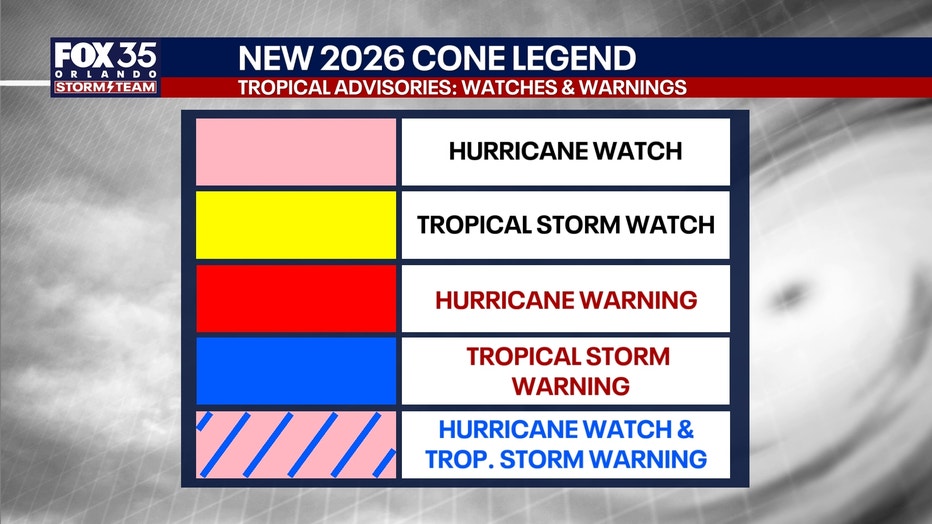
For the 2026 season, the National Hurricane Center said its forecast cone would now include:
- Tropical Storm watches and warnings (yellow for watch, blue for warning)
- Hurricane watches and warnings (pink for watch, red for warning)
- Adds diagonal blue/pink lines to indicate areas under a tropical storm warning and a hurricane watch
- Uses single shading for the 5-day outlook
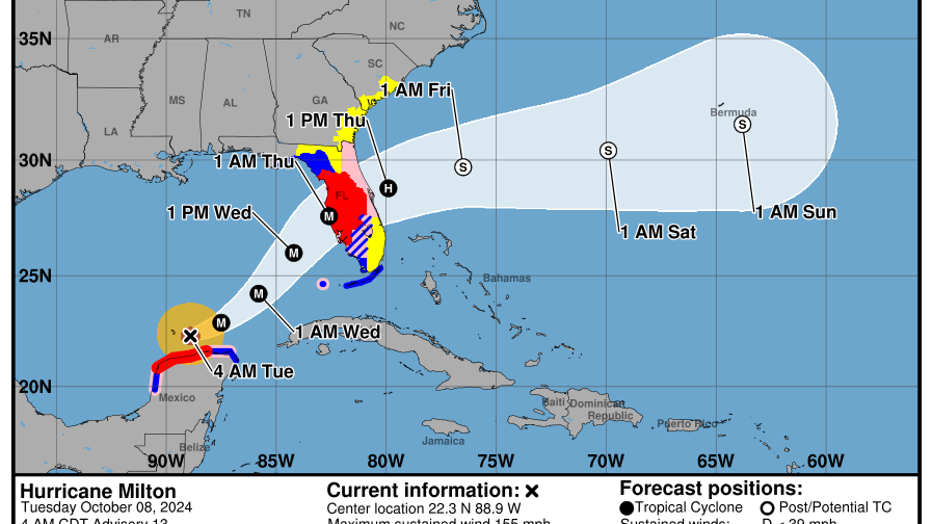
Here’s how that would look, using 2024 Hurricane Milton as an example
2026 hurricane season predictions
Colorado State University issued its first outlook for the 2026 hurricane season, and called for a below-average season, citing a strong El Niño.
Here is Colorado State University’s tropical outlook:
- 13 named storms
- 6 hurricanes
- 2 major hurricanes (Category 3 or higher)
An average hurricane season sees:
- 14 named storms
- 7 hurricanes
- 3 major hurricanes (Category 3 or higher)
Hurricane Season 2026: Storm names
Every hurricane season, there are 21 names issued, which are used to help the public and forecasters track a particular system, especially when there are multiple being tracked at a time. The names rotate every six years (unless a name is retired following an extremely destructive or damaging storm).
Here are this year’s storm names:
- Arthur
- Bertha
- Cristobal
- Dolly
- Edouard
- Fay
- Gonzalo
- Hanna
- Isaias
- Josephine
- Kyle
- Leah
- Marco
- Nana
- Omar
- Paulette
- Rene
- Sally
- Teddy
- Vicky
- Wilfred
If all 21 names are used in a season, there is a reserve list with an additional 21 names.
The Source: The National Oceanic and Atmospheric Administration (NOAA) will reveal its tropical outlook for the 2026 hurricane season on May 21, 2026.