



Picture Credits: Netflix / Getty Images
It would be easy to assume that just because a film image embraces naturalism – natural lighting, a simpler handheld style over more obviously complicated rigging, longer set pieces – that it would take less preparation, be more purely spontaneous. Kim Ji-yong, the cinematographer for Lee Chang-dong’s masterful upcoming film Possible Love (out on Netflix in November), approached the audience at a masterclass at the Busan International Film Festival and Netflix’s Creative Asia event to clarify that it took more planning than usual.
Kim, who has also worked on films such as Decision to Leave, noted that this was in part because Possible Love was a rather radical departure from his usual style, something he had been hoping for: “How can I make it different from my previous work? That was my starting point,” he says of his early meetings with Lee. “I should start by limiting what I have,” he says of his thought process around differentiating Possible Love from his previous work. This meant limiting artificial lighting for a start, and leaning more into natural light where possible. The more they minimised, the more other elements stood out.
The session ran through several scenes from Possible Love, with Kim providing context on each – beginning with the very opening.
“Usually the opening scene really matters because it defines the overall tone,” he said. “From the very first scene, we didn’t want [the cinematography] to be too sophisticated; we wanted it to be natural to the eyes.” Kim explained that “looking natural” took a lot of planning, even including the distance of the actors from the camera when trying to be “aloof” in observation of them. “If we’re too close it feels exaggerated; too far and it seems like we’re peeking,” Kim explains. To make it feel like they are in these environments with them, rather than working strictly to spec, they reacted to the actors.
As his camera observes the child in the backseat, even when paying attention to this young character’s perspective, it’s not a viewpoint they wanted to stress too much.
Naturalism of course doesn’t mean an absence of VFX work, as Kim explained, saying they had to do a little bit of combination later on with a shot of the child throwing a bag out of the car window. But there had to be some restraint. “This is not a Marvel movie,” Kim cheekily quipped, while noting that even with subtle VFX it is often still easy to pinpoint such moments, and so they were careful. Post-production still plays an important part. During the audience Q&A following the session, Kim responded to an audience question about colour temperature, saying “we have to add a lot of artificial work to make it look natural to the eyes. I don’t think I’ve ever planned this much before!”
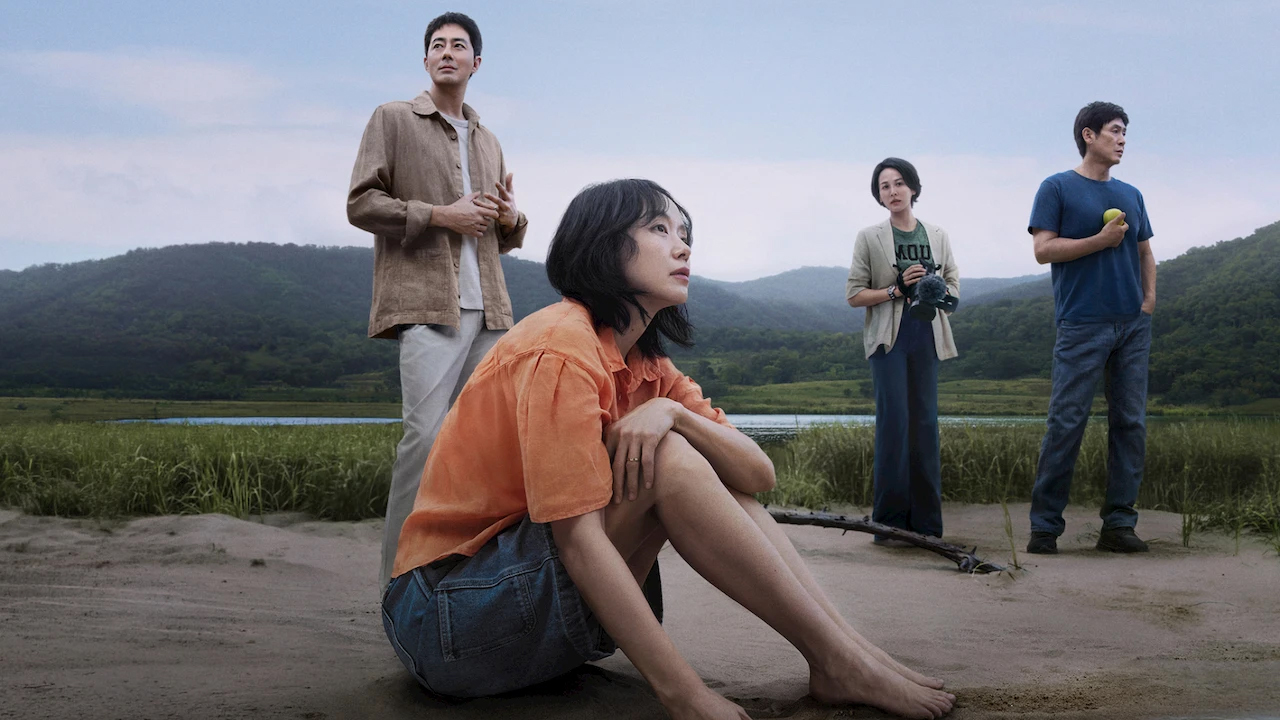
Picture Credit: Netflix
A lot of the film had a long lead up, including the scripting itself. “10 years ago [Lee Chang-dong] was trying to prepare for this movie and then he stopped,” Kim explained. The director had felt that these themes – ones of class divides, abuse of workers – were “sensitive” and he was unsure if he was the right person to portray them.
Part of what’s interesting about Possible Love is that the invasiveness of the camera is written into the very script, with a documentary filmmaker following the main family around in an attempt to create a film about a group of workers who suffered after their company cracked down on a strike. A second clip concerned a sequence where Mi-ok (Jeon Do-yeon) describes the day she met her husband, where the style of shooting changes slightly.
“What is trivial ends up being a highlight,” Kim says regarding this scene, which stands out as a little more beatific than the earlier scene used as a case study. Because they made a lot of the film under the premise that the audience are looking upon these events with their naked eye, any visual stylisation stands out. That even includes very basic uses of shallow depth of field, which Kim utilised in the second sequence in emphasis of Mi-ok’s nostalgic feelings about this period in her life.
The construction of Possible Love’s naturalism is even more meticulous than the lensing. During the third clip of the session, Kim highlights the location of the holiday home of the documentary maker, a mansion house near the sea. They actually built the place, Kim says, finding the land from a real estate agent who posted videos on YouTube (a favoured channel of Director Lee’s, Kim also claims).
That bespoke space meant that they could essentially construct the house to suit their needs for filming. “When we were first building the house we were thinking about the size of the windows, colour of the wallpaper,” Kim says. They were looking at how sunlight got into the house, designed to accommodate more natural light and less artificial light for shooting (Kim did also stress that artificial lighting was still used in “supportive” ways throughout). That control over the environment they shot in was also a highlight of Kim’s discussion of the subsequent clip, a moment in the forest by the house after sundown.
The team had been hoping for wind, having apparently heard of stormy weather reports for the time of shooting, as Kim felt that the landscape was “fascinating” in the wind. They stayed at the location for around a month, only expecting about two days of the level of wind they hoped for. (Kim at this point mentions Director Lee’s other favourite YouTube channel where he checks the weather.) “We waited for the spectre, the spirit of movies, but he did not come,” Kim joked about how they waited on good fortune and the right weather conditions. (“We weren’t able to meet the spirit of movies, but if I get to work with Lee Chang-dong again, I hope I get to meet them,” he says later.)
So they of course created those conditions instead: the trees swaying in the background of the shot shown was because of the crew going into the forest and swaying the trees themselves so to “create the wind”. “I’ve been in the industry 20 years and that was one of the most memorable moments,” Kim says.