







Fewer than half of the recommendations from a landmark public inquiry into Quebec’s youth protection services have been fully or largely implemented, says a five-year progress report released Tuesday.
The Quebec government launched the inquiry in 2019 following the death earlier that year of a seven-year-old girl from Granby, Que., about 80 kilometres east of Montreal, who had died of asphyxiation after being wrapped in layers of duct tape.
The child had been known to youth protection officials, who had left her in the custody of her father despite several reports of violence. The killing sparked outrage, raised questions about the province’s ability to protect vulnerable children, and led to a wide-ranging inquiry into the youth protection system.
Five years after the publication of the inquiry’s report in 2021, the government says that aside from the 29 recommendations largely or fully realized, another 27 have been partially fulfilled.
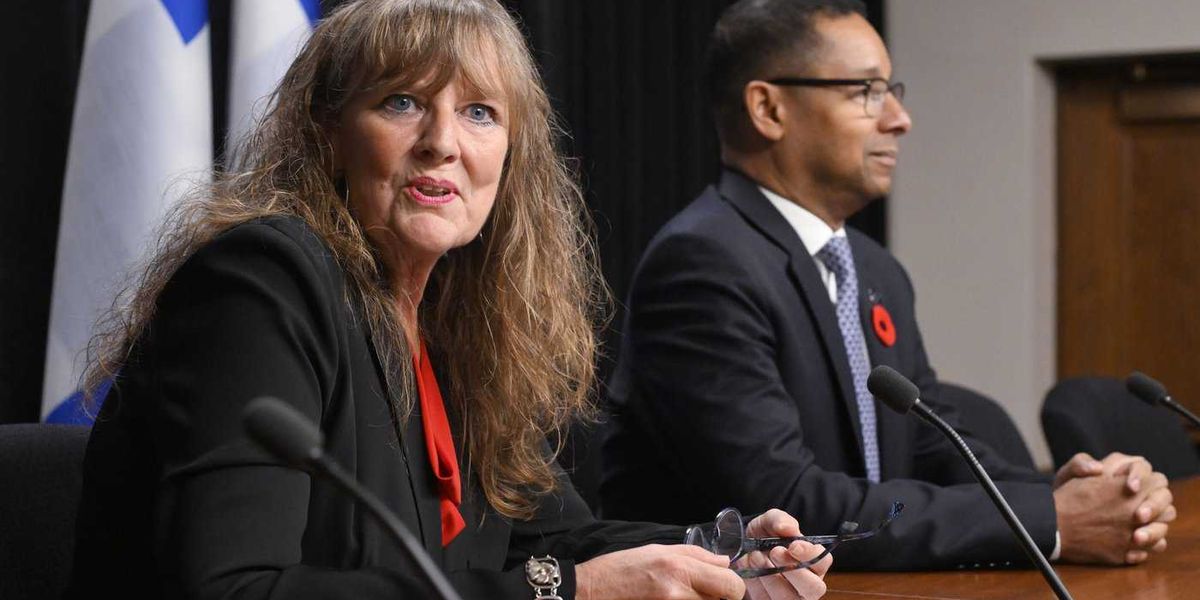
At a news conference on Tuesday, Social Services Minister Lionel Carmant said “significant progress” had been made on addressing the problems in the youth protection system. “But it also serves as a reminder that the work is not yet complete. Transforming a system like this requires time, rigour, and consistency.”
Lesley Hill, national director of youth protection, told reporters there have been improvements, but “the job is not yet done.”
“It’s a challenge; we’re still dealing with a system under pressure. We do have some turnover among our staff,” she noted.
Tuesday’s report indicates that the government has made little or no progress on eight recommendations. Among them is the consolidation of youth intervention teams; the report says these teams are not deployed evenly across the province.
However, the government says its new strategy, launched in April, calls for a provincewide rollout of youth intervention teams for complex cases, particularly involving neglect. Hill said calls about child neglect account for half of all cases handled by the youth protection system.
“It’s very dangerous for young children to be neglected in terms of their development and even their survival in certain situations,” Hill said.
Carmant says that aside from reforming the youth protection system, the government needs to work on changing the culture. The public is sometimes too quick to call child protection, he said.
“The main cultural change we have to keep hammering home is that the Youth Protection Act is an exceptional law. We talk about neglect, but I could give you hundreds of calls (to youth services) about a child eating the same thing every day, or an autistic child refusing to get dressed.”
Carmant said the government is working to improve front-line service providers, including family doctors, social workers and psychologists, so that people have more options before they call youth protection.
He said that in the past, calls to youth protection were growing by 10-15 per cent per year. Carmant said that there was another slight increase in calls to youth protection this year, about a 1-2 per cent increase, and that he is hoping to see a decrease soon.
About a year ago, Quebec appointed its first commissioner for children’s well-being and rights, Marie-Ève Brunet-Kitchen. She released her first report last week, urging elected officials to adopt a Quebec charter of children’s rights, which is among the recommendations of the public inquiry.
Carmant said he doubts a charter can be adopted during this legislative session; that work, he said, must be done following the October election.
—
The Canadian Press’s health coverage is supported by a partnership with the Canadian Medical Association. The Canadian Press is solely responsible for this journalistic content.
By Katrine Desautels | Copyright 2026, The Canadian Press. All rights reserved.