![12th Jul: Susana and Elvira: No Plan B (2026), 1hr 54m [TV-MA] (6/10)](https://occ-0-533-1007.1.nflxso.net/dnm/api/v6/0Qzqdxw-HG1AiOKLWWPsFOUDA2E/AAAABeJp7nJY0feiLlsES9eq0lPwh3kS63aFt5nh2eiHlnJRLj74Dv3DiqMkHh1Z2l8iEZPUj78IfIOq_11JTlGCRnePQOfnvk3eG7AAtRenpffQgm4Iv3sEcvwmbB8v7Rki-nBKq-US_Dv-RGT3-Kq2ISby5QCmdJWPunJ-p12ytRlizw.jpg?r=41c "12th Jul: Susana and Elvira: No Plan B (2026), 1hr 54m [TV-MA] (6/10)")






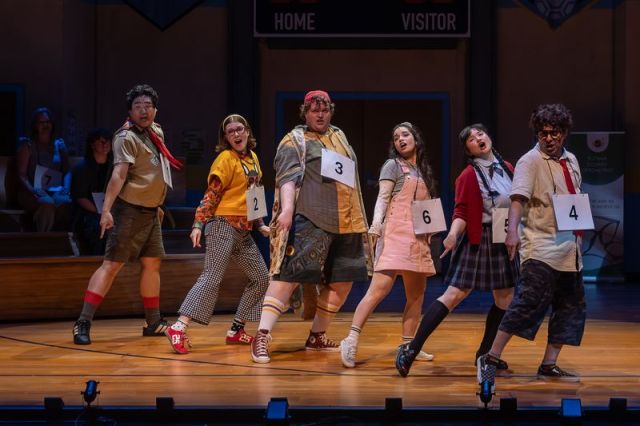
Four Indigenous characters share the stage in a musical number, standing apart but held in the same frame. Voices both external and internal interrogate them from everywhere at once: “Are you prepared to make a statement?” The number cuts to black.
This question lingers past the curtain call of the new musical On Native Land, and I found myself thinking about how it might also reflect back on its creator, Corey Payette. After consistently bringing Indigenous-centred narratives into Canadian theatre, Payette — a member of the Mattagami First Nation, with French-Canadian and Irish ancestry — has carved out a visible, mainstream presence, and that visibility feels hopeful, even as it carries its own burdens.
History is never far from his work. Les Filles du Roi, co-written with Julie McIsaac, stages fictional encounters between Indigenous women and French settlers in 17th-century Quebec; Children of God explores the impact of the residential school system on an Oji-Cree family.
Audiences and critics have frequently labeled Payette’s plays as essential viewing, which feels earned because of the histories and ongoing realities they present, and because this kind of work — large-scale, self-authored musical theatre — is rare in Canada. But to call a work essential is to put a certain pressure on it, an expectation to represent something bigger than itself.
That tension sits at the centre of On Native Land, co-produced by Raven Theatre and Urban Ink, which recently made its world premiere at the York Theatre in East Vancouver. Set in the present and moving between three urban Indigenous storylines, the musical tracks how it builds and closes in. In development since 2019, the show unfolds as something layered and multi-perspectival, moving between individual stories and a more panoramic awareness of larger forces at play.
The first force it names is the land itself, embodied here as a character. Land (a delightfully lively Wahsontí:io Kirby) moves through the show as narrator and presence. The character introduces an early sequence that calls back to 1886, when a huge fire tore through newly incorporated Vancouver, and women from the Squamish Nation paddled out to rescue settlers fleeing into Burrard Inlet.
This history comes alive through traditional-inspired drumming and chanting, a contrast to the mostly Broadway-leaning score that follows. The sequence is less about exposition than setting the tone for an unfinished story reaching into today.
Three Indigenous figures are our anchors. Blood (Dustyn Forbes), a young, gay pop singer on the cusp of stardom, and Rielle (Amanda Trapp), a high-profile lawyer establishing a reputation through land-back cases, first come into focus in a shared musical number. Their voices move in and out of each other as they sing about the strain of “walking both worlds,” setting up the tensions their characters carry. Chief (Taninli Wright) arrives later, as Rielle’s client, with her lifelong fight to defend her nation’s land returning to the courtroom.
Payette and his collaborators achieve sprawl and cohesion across these concurrent narratives. Alaia Hamer’s set is spare: a large halo of twisted branches hangs overhead, suspended above an open stage framed by soft drapery, scattered chairs, and dried grasses, and as Kirby’s Land moves beneath them, the branches become a material echo of that presence, watchful and continuous.
A haze drifts through the space, allowing lighting designer Jonathan Kim to sculpt scenes with dramatic tableaux and saturated washes of colour. Light filters down through the branches, casting an ethereal glow on the York’s relatively intimate stage.
The 12-person cast remains on stage for almost the entire show, creating a sense of simultaneity, with different moments unfolding at once and the ensemble lingering at the edge of scenes. Jera Wolfe’s choreography gives that simultaneity much of its dynamism (Wolfe also performs in the show). During a concert scene, as Blood belts a personal, anthemic rock ballad, the public’s adoration turns suffocating, then hostile, after he refuses to disclose the details of his heritage. Connection and disconnection play out physically through the choreography as bodies close in, swarm, and pull away. The swirling, forward momentum of the first act settles into something more subdued and inward in the second. But a sense of collectivity persists, especially in the music. A four-piece band (Dean Edward Thiessen, Sarah Ho, Chris Fraser, and Emilio Suarez) backs the show’s songs, supporting the action, always in step without overpowering it. The ensemble sings in beautifully arranged polyphony and textured, syncopated rhythms from the energized opening number to the final swell.
The narrative, as in most musicals, follows the emotional arcs of its characters. Payette centres figures who, whether by choice or circumstance, are made to navigate demands that feel both their own and imposed.
Lyrics recur — “you must hate who you’ve become”; “repairing, like the damage was mine” — circulating among the cast rather than belonging to any one character. They map a shared terrain of conflict. Rielle is asked, in her legal work, to leave her Indigeneity outside the room, while Blood negotiates a fraught relationship with his Indigenous identity as he approaches fame, where the charge of “pretendian” is directed at him. It reads as a slur from settlers, but carries a different weight when spoken by a world-weary Chief who carries a lifetime of public scrutiny as an Indigenous leader.
As the Chief’s daughter, Jenna Brown delivers a clear, wrenching account of her family’s suffering within the Canadian legal system. On opening night, Forbes was initially shaky during his solos, but found better footing during the musical’s second act. Zac Bellward as Blood’s white boyfriend, Jakob, provides a grounded counterpoint to his significant other’s rawer and more reaching vocal register.
Trapp as Rielle delivers the most consistently effective performance, balancing empathy with visible exhaustion. Chief has no singing parts apart from the chorus, but Wright’s performance is so emotionally resonant it holds its own even against the musical’s strongest vocal moments.
The show’s pacing occasionally strains as the book moves between smaller, more intimate moments and the larger circumstances or systems that inform them. That tension seems partly built into the writing as it moves between its collective, multilinear structure and a more traditional, character-driven mode; the two don’t always sit easily together. I felt this the most in Blood and Jakob’s romantic arc: transitions in and out of it feel abrupt at times, even as it remains a tender and alive part of the show.
That aliveness and tenderness feel as central as anything else. Openness and generosity — some of Payette’s defining artistic impulses — are still very much here, but running up against something more resistant, that refuses to make itself clear. The friction is exciting and expansive. It doesn’t weaken the hope present in On Native Land, but thickens it.
On Native Land ran at Vancouver’s York Theatre from April 8 to 19. More information is available here.
Intermission reviews are independent and unrelated to Intermission’s partnered content. Learn more about Intermission’s partnership model here.

WRITTEN BY
Angie Rico
Angie Rico (she/her) is a Mexican-born cultural worker, currently living and working in so-called Vancouver. She holds a BFA in film, video and integrated media from Emily Carr University and is a past participant of Neworld Theatre’s Critical Futures training program. She is currently a cohort member of Page Turn, an inaugural theatre criticism program. She likes to write about theatre, film, and visual arts.
LEARN MORE