



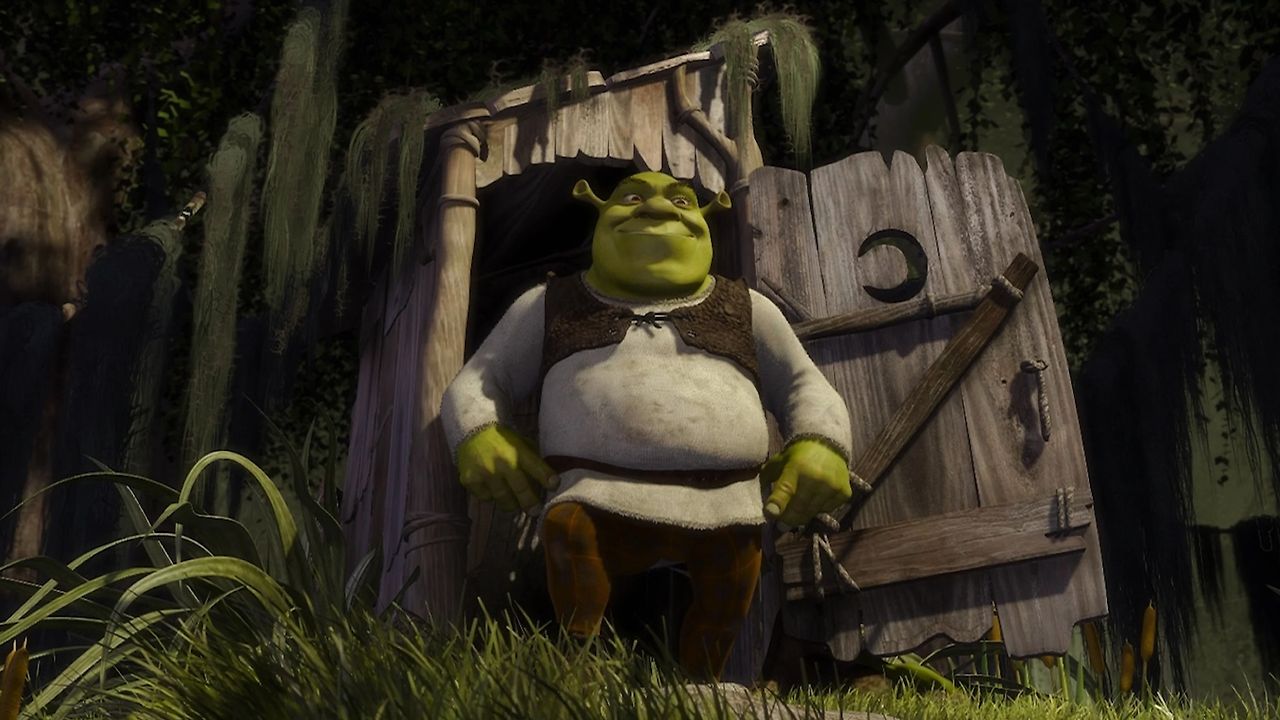
Pushing the humor is a huge reason that Shrek is so beloved. Not only is it an extremely comforting movie rife for re-watching (“wish i had letterboxd in 2004 so i could’ve logged the excessive rewatches,” writes Haley) but it somehow gets funnier each time you see it. When watching Shrek and thinking about what animation was like in the early 2000s, it’s hard not to be struck by thoughts of “I can’t believe they got away with this!” Its foundation is a subversion of fairy-tale tropes, but its rebellious attitude and flurry of slapstick, gross-out gags, sarcasm, adult-oriented jokes and pop-culture references set a whole new standard for animated films.
“It was really the seat of our pants,” Jenson says about developing Shrek’s unique sensibilities. “We looked at a lot of indie movies for how much you could make modern references and not lose your film. That includes the music. This is the first time needle drops were used in an animated movie, meaning songs that already exist, instead of ones that were written for the movie. It was the same with the humor. It was trial and error.” When someone delivered an idea everyone liked, they wouldn’t waste time, immediately dissecting it to make it as funny as possible. “For example,” Jenson explains, “when Shrek is being attacked by the guards, it becomes a wrestling match. The idea came from one of the animators. We did a quick reboard. We did it immediately and came up with all the wrestling gags we could. That was how we worked; it was organic.”
How did Shrek get away with it all? A lack of supervision was key. And that lack wasn’t a design flaw, but a purposeful decision to get the most out of the film’s creatives.
“One thing that was awesome about DreamWorks is that there was only one person we had to deal with, who was Jeffrey Katzenberg. And he’s a very creative person,” Jenson says. Many animation studios have a board, partners (such as Netflix), or a group of other creatives to give feedback and shape the story, like the Brain Trust at Pixar or Disney’s Story Trust. “Once you invite that much help in a project,” explains Jenson, “you get a lot of opinions. Different movies get stuck in people’s heads, and it can be very hard to put them all together. You have so many writers, so many directors commenting and getting involved, and the story can get diluted by so many different takes.” But Shrek had no such oversight, and the team remained a “nice, tight team, all on the same page, without having to invite so many voices in,” explains Jenson.
Such free-flowing creativity allowed the artists free rein to create a world where just about anything could fit organically, whether that was Princess Fiona implementing moves reminiscent of The Matrix to beat up Robin Hood, an epic slow-motion escape from a raging dragon, or Lord Farquaad choosing his future wife in a Dating Game send-up. It’s often absurd, and yet completely grounded within the film’s universe. Together, it shouldn’t make sense. But it does.